Drug Regulatory Authority of Pakistan Introduces Mehfooz Dawa App
The Drug Regulatory Authority of Pakistan has urged consumers to use its Mehfooz Dawa app to check whether medicines are genuine and verify their prices before buying them. This digital tool arrives as part of a broader government push to protect public health and bring transparency to the national pharmaceutical sector. Citizens frequently face challenges regarding inflated prices and questionable product quality when purchasing healthcare items from local pharmacies.
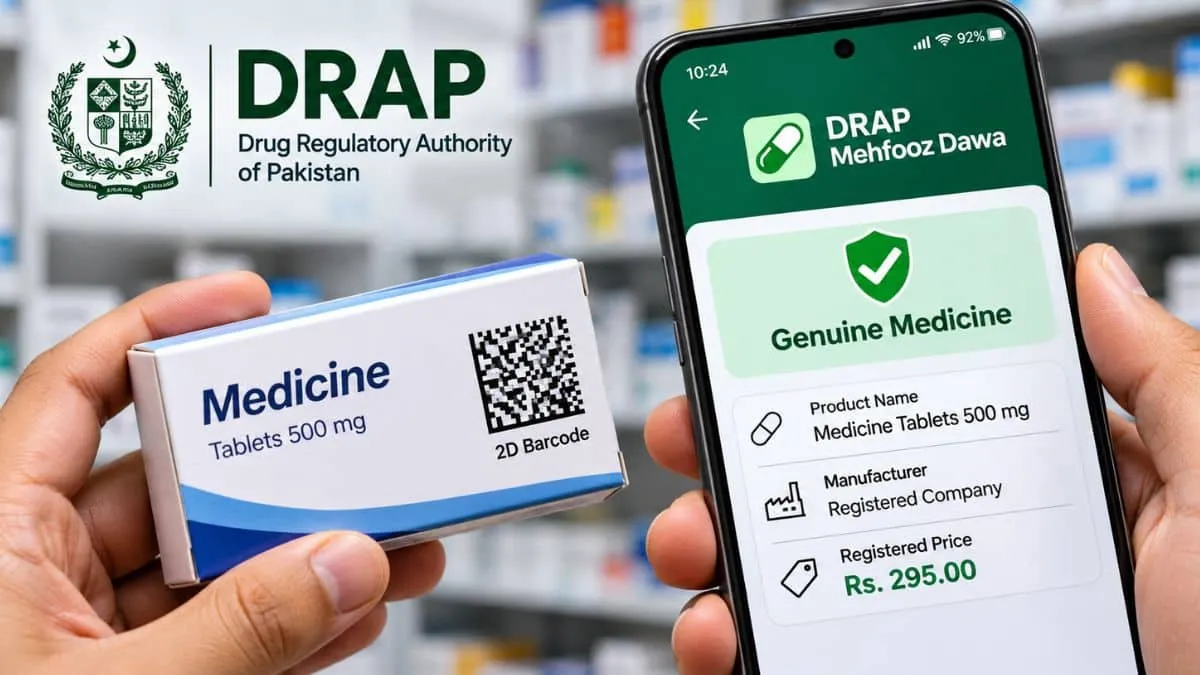
The application relies on a modern 2D barcode system that enables smartphone users to scan medicine packaging and instantly retrieve official data concerning the registered product. By putting verification tools directly into the hands of ordinary buyers, the initiative seeks to curb counterfeit medicines, overpricing, and other illegal practices in the pharmaceutical market. The Ministry of National Health Services has emphasized that the government remains committed to improving access to safe, effective, and quality medicines across the country.
Registration Scope of DRAP and Pharmaceutical Companies
Ministry of National Health Services spokesperson Sajid Shah stated that around 800 pharmaceutical companies and more than 90,000 medicines are registered with DRAP. This extensive registry forms the backbone of the regulatory framework governing the manufacture, import, and sale of therapeutic goods throughout the nation. Ensuring that every approved product complies with strict safety standards requires constant oversight from federal health regulators.
Consumers can scan the barcode printed on medicine packs through their smartphones to verify product details and check the registered price. This direct link between the consumer and the central database removes guesswork at the pharmacy counter. Buyers can immediately confirm whether a drug is legally authorized for sale and whether the retailer is charging the correct government-approved rate.
Operation of the Centralised Track and Trace System
The centralised Track and Trace System for medicines distributed across Pakistan became operational on October 9, 2026. This infrastructure works behind the scenes to monitor the physical movement of pharmaceutical products from manufacturing plants and import hubs down to wholesale distributors and retail pharmacies.
Besides helping consumers, the system allows regulators to monitor medicines as they move through the supply chain. This visibility helps authorities track inventory flow and detect suspicious irregularities in distribution patterns. This could make it easier for authorities to identify and recall specific products if complaints, safety problems, or quality issues emerge.
Step-by-Step Guide to Using the Verification System
Consumers need a smartphone equipped with a camera and internet access to use the verification system effectively. They can scan the 2D barcode on a medicine pack through the Mehfooz Dawa app. The system then displays details about the product and its price.
This gives buyers a way to check whether the medicine matches DRAP registered information and whether the price being charged is correct. If a scanned product yields no data or shows discrepancies, consumers can report the anomaly to regulatory authorities for investigation.
History of Delays Facing the Barcode Mechanism
Pakistan first proposed introducing the medicine barcode system in 2015 as a measure to secure the supply chain. The federal cabinet approved the initiative in 2017, but administrative delays prevented its full implementation for several years, leaving the market vulnerable to illicit trade.
Health Minister Mustafa Kamal later took notice of the prolonged delay and directed authorities to introduce the system without further postponement. DRAP had subsequently set October 1, 2026, as a cut-off date for launching the barcode mechanism as part of efforts to tackle counterfeit and expired medicines as well as black marketing.
Ongoing Regulatory Alerts Against Fake Medicines
The digital verification system comes as DRAP continues to issue alerts over counterfeit, substandard, adulterated, and unregistered medicines circulating in various markets. Illicit manufacturers often exploit gaps in physical distribution networks to sell harmful or ineffective formulations to unsuspecting patients.
In a November 5 alert, the regulator advised consumers to purchase therapeutic products only from authorised or licensed outlets and carefully check their authenticity and condition. Authorities continue to conduct inspections across retail pharmacies to penalize establishments engaging in the sale of unverified drugs.