Pakistan Ministry of Health Launches Track-and-Trace System
Medicines in Pakistan cannot be imported or sold without a 2D barcode under a new nationwide track-and-trace system the Ministry of Health has begun enforcing to eliminate counterfeit drugs.
Prime Minister Shehbaz Sharif will formally inaugurate the system and the "Mehfooz Dawa" mobile app today, a ministry spokesperson said.
The spokesperson said the requirement, which took effect on October 9, is now being implemented. Every medicine must carry a unique 2D barcode and serial number, allowing it to be identified with a single scan.
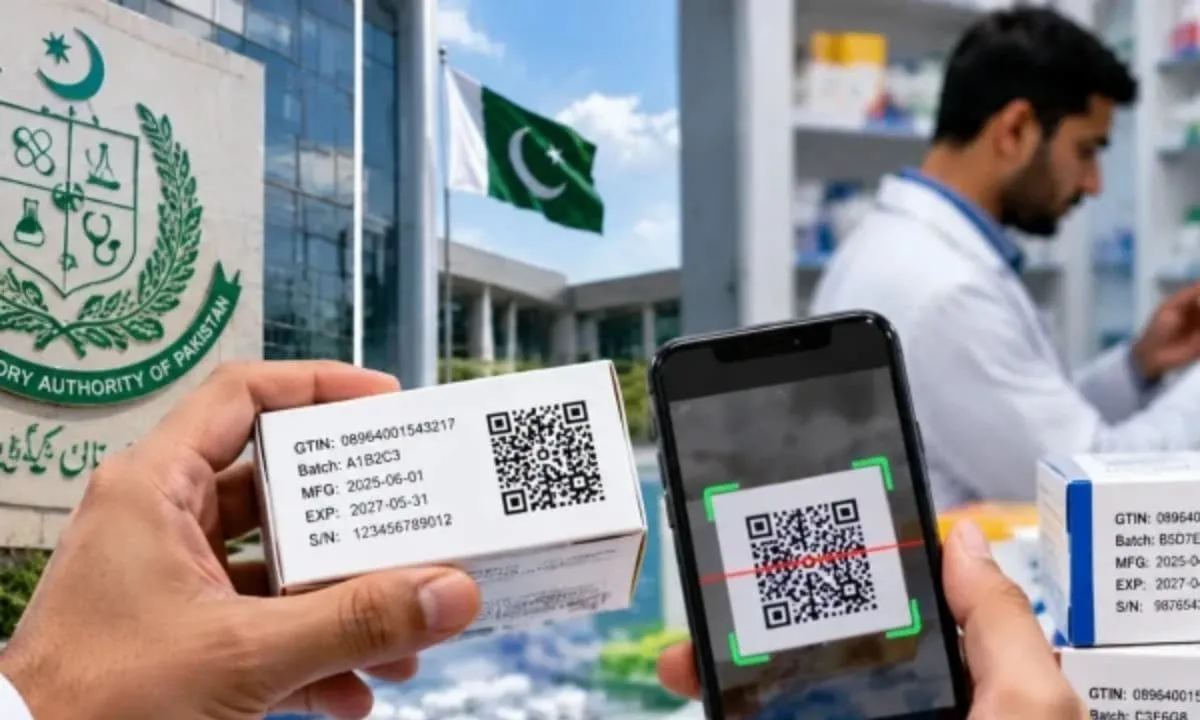
Through the app, citizens can scan the barcode to check whether it is genuine or fake without leaving home. The app also provides verified details on the medicine's origin, expiry date, price and usage, and helps identify and prevent counterfeit drugs.
How the Mehfooz Dawa App Works for Consumers
The introduction of the Mehfooz Dawa application marks a shift in how everyday consumers interact with pharmaceutical products in the local market. Citizens can download the software onto their mobile devices and use the camera to scan the unique 2D barcode printed on drug packaging.
This scanning process instantly cross-references the serial number with the central database maintained by the federal government. Users receive immediate confirmation regarding the authenticity of the pharmaceutical item they intend to purchase.
Beyond verifying whether a product is genuine or fake, the application displays critical data points. Consumers can view the exact origin of the manufacturing facility, the official expiry date, the regulated price, and standard usage guidelines.
This transparency empowers patients and their families to take direct control of their health safety. People no longer have to rely solely on the verbal assurances of local vendors or pharmacists when buying remedies.
Combating Counterfeit Drugs in the Pharmaceutical Supply Chain
The proliferation of fake medications has long presented a severe public health challenge across the nation. Unregulated or imitation pharmaceuticals often contain incorrect dosages, harmful substances, or no active ingredients at all, putting vulnerable patients at risk.
By tying the legal sale of every medicinal product to a track-and-trace mechanism, regulatory authorities gain unprecedented visibility over the supply chain. Manufacturers, importers, distributors, and retail pharmacies must comply with strict serialisation standards.
Inspectors can track the movement of pharmaceutical boxes from the factory floor down to the chemist's shelf. Any discrepancy in the serial numbers immediately alerts monitors to potential illicit activities or smuggling operations.
The Ministry of Health designed this infrastructure to dry up the market for fraudulent operators. When consumers stop buying unverified goods, the financial incentive for producing counterfeit medical supplies diminishes rapidly.
Implementation Timeline and Mandatory Enforcement
Regulatory frameworks require careful planning and phased rollouts to ensure compliance across thousands of retail outlets and distribution hubs. The policy officially took effect on October 9, establishing a firm legal basis for the new rules.
Federal authorities are now actively enforcing the requirement across all provinces and administrative territories. Pharmacies and medical stores face strict scrutiny regarding their inventory and the presence of proper 2D barcodes on stock.
The formal inauguration by Prime Minister Shehbaz Sharif signals the highest level of governmental backing for the initiative. Officials expect that public awareness campaigns will drive adoption of the scanning software among the general populace.
Businesses operating within the health sector must align their inventory management systems with the federal database. Failure to adhere to the serialization mandates risks legal penalties and the seizure of unverified medical stock.
Impact on Patients and the Retail Pharmacy Sector
Local pharmacies and medical stores must adapt their operational practices to accommodate the verified product stream. Retailers must ensure that their suppliers provide fully serialized goods that register correctly on the national network.
For patients, the practical benefit lies in enhanced safety and consumer protection. Chronic patients who buy regular prescriptions can now verify each batch of medication independently at home.
Families purchasing remedies for children or elderly relatives gain peace of mind through instant verification tools. The system bridges the information gap between pharmaceutical manufacturers and the end consumer.
Public health advocates view this measure as a necessary step toward standardizing pharmaceutical safety. As enforcement continues to expand, authorities expect compliance rates among distributors to reach near total coverage.