Pakistan and Portugal Forge New Economic Ties at Islamabad Business Forum
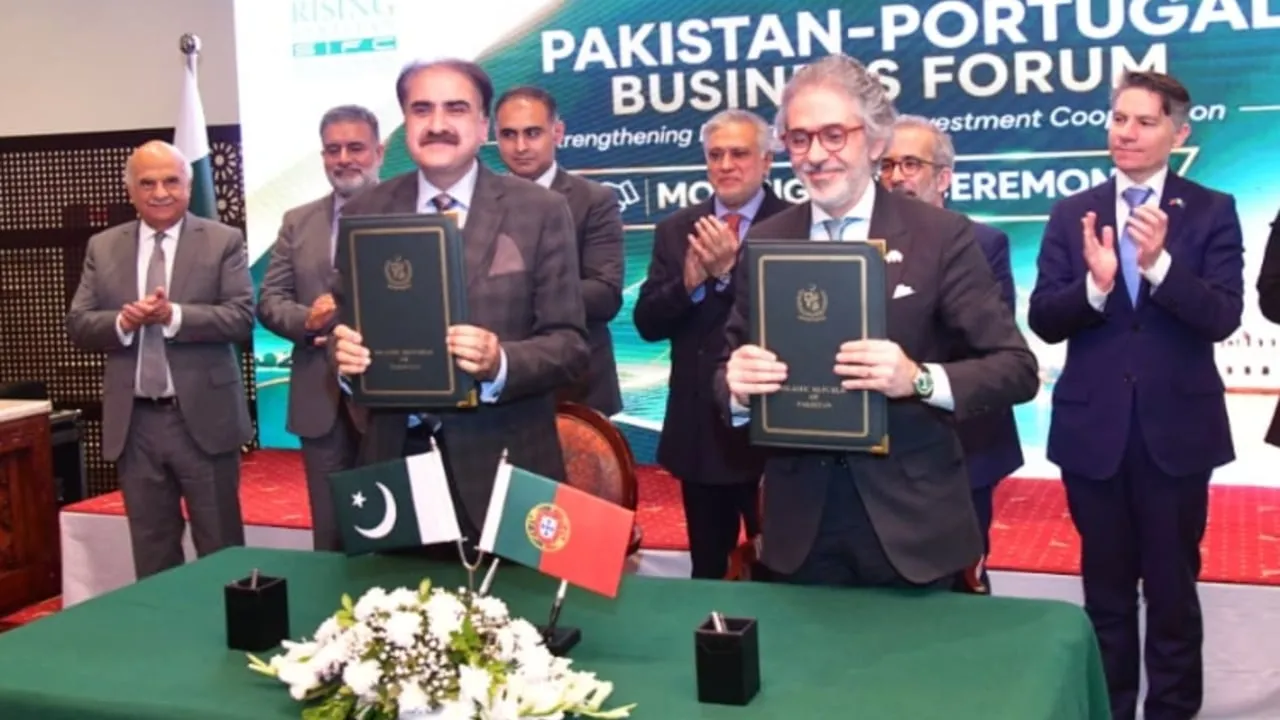
The Pakistan–Portugal Business Forum convened in Islamabad, marking a notable milestone in bilateral economic relations. Hosted by the Special Investment Facilitation Council, the event gathered government officials, investors, and corporate leaders to forge new commercial partnerships. The primary achievement of the gathering was the signing of a formal Memorandum of Understanding on Investment Protection between Pakistan's Board of Investment and Portugal's Agency for Investment and Foreign Trade.
This new accord creates a structured mechanism for cooperation between the respective investment promotion agencies of both nations. By establishing clearer guidelines, the agreement seeks to support bilateral investment flows and encourage long-term business partnerships between Pakistani and Portuguese enterprises. Around 20 Portuguese firms participated in the sessions alongside local business representatives, engaging in direct discussions to identify joint ventures and commercial opportunities.
Role of the Special Investment Facilitation Council in Economic Diplomacy
The Special Investment Facilitation Council functioned as the primary convener for the high-level dialogue in Islamabad. Operating through a coordinated, whole-of-government framework, the council connects international investors with relevant domestic institutions. Its mandate involves highlighting national investment potentials and removing bureaucratic hurdles for foreign enterprises.
During the forum, business-to-business meetings allowed participants to exchange proposals and establish direct commercial contacts. The organization stated that it remains dedicated to facilitating international business partnerships, supporting investor engagement, and promoting national economic opportunities across key sectors. This institutional backing provides foreign investors with a reliable point of contact when entering the domestic market.
High-Level Diplomatic Presence During Portuguese Minister Visit
The business forum coincided with the official visit of Portugal's Minister of State and Foreign Affairs, Paulo Rangel, to Pakistan. Deputy Prime Minister and Foreign Minister Senator Mohammad Ishaq Dar joined the Portuguese foreign minister at the business engagement. Senior government officials and prominent corporate representatives from both nations also participated in the proceedings.
Diplomatic channels have long maintained friendly relations between the two countries, and this high-level visit aimed to translate those ties into tangible commercial cooperation. The presence of senior leadership signaled strong political backing for private-sector collaboration. Both governments emphasized the importance of continuous dialogue to sustain the momentum generated by the forum.
Target Sectors for Bilateral Cooperation and Technology Exchange
Discussions during the sessions spanned multiple economic pillars, reflecting a broad scope for collaboration. Key areas identified for partnership include agriculture, textiles, renewable energy, information technology, tourism, maritime services, education, and skilled labor mobility.
Agriculture emerged as a prominent sector for mutual growth, with specific focus directed toward olive cultivation, agricultural processing, and value addition. Officials noted that Portuguese agricultural technology can complement domestic farming capabilities. Industrial collaboration and renewable energy development also received significant attention from participating corporate delegations.
Complementary Economic Strengths of Pakistan and Portugal
Portugal brings established capabilities in modern technology, advanced agricultural practices, renewable energy systems, and industrial development to the partnership. These strengths align with the structural needs of the Pakistani economy as it seeks to modernize various production lines.
Pakistan offers a large domestic consumer market, a capable and skilled workforce, robust industrial capacity, a strategic geographical location, and diverse natural resources. Leaders from both sides expressed confidence that private-sector engagement can successfully bridge these complementary assets into profitable commercial ventures.
Next Steps for Bilateral Investment and Commercial Growth
The newly signed investment protection memorandum and the completed business-to-business meetings establish a firm foundation for ongoing institutional engagement. Businesses in both nations now possess a clearer framework to explore proposals and establish direct commercial operations.
Observers will monitor how effectively the investment promotion agencies implement the new framework. Continued dialogue between the Board of Investment and the Agency for Investment and Foreign Trade will determine the speed at which proposed joint ventures materialize into active projects across the targeted economic sectors.