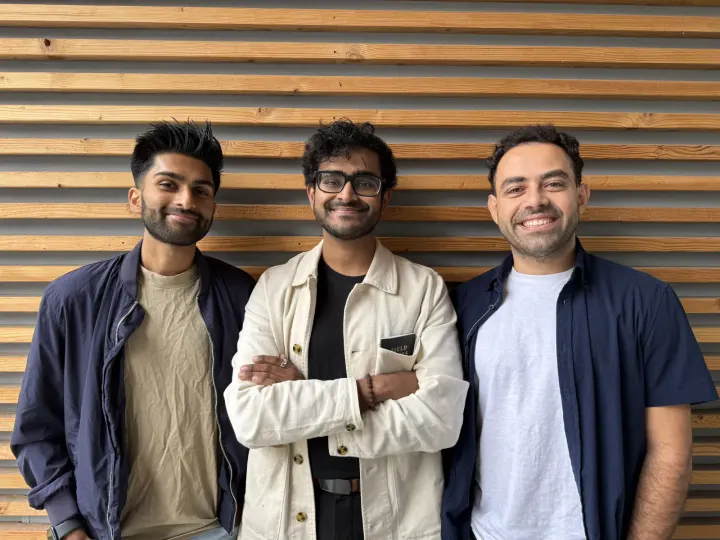
A Pakistan fintech startup named EquiDash wants to be the 'Uber of investing,' but its current numbers tell a story Pakistan has heard before. Spending Rs4,500 on Instagram ads and free ride credits to sign up one LUMS student who then invests Rs500 into a money market fund is not a business model. It is a fast lane to the same cliff that swallowed Airlift in 2022. Understanding why matters for every founder, investor, and observer of Pakistan's tech scene right now.
The contemporary financial technology ecosystem in South Asia experiences rapid transformations, yet fundamental economic laws remain unyielding. When ambitious concepts outpace basic financial realism, companies risk sudden collapse, regardless of how modern their applications appear or how large their target markets might be. Observers across Lahore and Karachi are carefully watching whether new market entrants will learn from past failures or repeat expensive mistakes.
The EquiDash Pitch and Its Uncomfortable Math
Profit by Pakistan Today reported on 3 November 2026 that the founders of EquiDash, a recently incorporated Lahore-based fintech, are aiming to become the "Uber but for financial investment," apparently unaware their venture is on a familiar trajectory. The goal itself is not absurd. Pakistan has a huge unbanked population and very low retail investment rates. The problem is the path chosen to get there.
According to internal projections reviewed by Profit, EquiDash's unit economics involve burning Rs4,500 in targeted Instagram ads and free Careem credits just to convince a single university sophomore to invest Rs500 into a money market fund. That is a nine-to-one loss on every customer before a single rupee of revenue is counted. If this sounds familiar, it should.
Why the Pakistan Fintech Startup Scene Has Seen This Before
The Airlift story is the closest comparison, and it is not a flattering one. In 2021, Airlift secured $85 million in Series B financing, the largest raised by any startup in Pakistan, the Middle East, and North Africa at the time, bringing its total funding to $110 million at a valuation of $275 million. It looked like a triumph. The numbers underneath told a different story.
In the first quarter of 2022, Airlift reported $21.9 million in gross revenue but just $900,000 in net revenue, a 4% margin, while burning $5.3 million in cash at the adjusted EBITDA level. In June 2022, the founders said Airlift was "remarkably close to profitability." Weeks later, the company was gone. A planned Series C collapsed when investors said they needed over two months to wire the money. Airlift did not have two months. On 12 July 2022, it ceased all operations permanently.
Airlift's quick-commerce model masked weak economics with heavy marketing subsidies, costly warehouse networks, and fleet costs that fundamentally outpaced revenue in Pakistan's highly price-sensitive market. EquiDash's customer acquisition costs are a different product in a different sector, but the structure of the problem is identical: spending far more to get a user than that user will ever generate in returns.
The Bigger Picture for Pakistan Fintech Startups in 2026
The context around any Pakistan fintech startup in 2026 is genuinely complicated. On one hand, the sector has real momentum. Pakistan now has roughly 450 fintech firms that have collectively raised around $391 million in venture capital, and digital banks like Easypaisa are launching at scale. On the other hand, the capital environment has tightened severely.
Pakistani startups have raised $133.7 million across 10 deals in 2026 so far, with Q3 funding reaching $74.7 million, according to i2i Ventures. However, the headline figure was heavily driven by Fasset, which raised $68 million in a Series C round, accounting for around 91% of Pakistan's Q3 funding total. Strip that one deal out and the picture is much leaner. Excluding Fasset, startups raised roughly $6.7 million in Q3, a reminder that early-stage capital in Pakistan remains scarce even as a few companies attract large global rounds.
What Survival Actually Looks Like for a Pakistan Fintech Startup
The startups that have survived and grown in this environment share one trait: revenue that does not depend on the next funding round. PostEx, a logistics-and-fintech company, survived the funding winter precisely by being sustainable rather than spectacular. Haball, a supply-chain and payments fintech, raised a $52 million pre-Series A round combining $5 million in equity led by Zayn VC with $47 million in strategic financing from Meezan Bank, marking a major bank-fintech collaboration. That is a business with real transaction volume behind it, not a marketing spend hoping for future monetisation.
The lesson is not that ambition is wrong. Pakistan genuinely needs better retail investment tools, and the market opportunity is real. Fintech accounts for 34% of all Q1 2026 deal flow in Pakistan and has dominated every year of the funding cycle, including the contraction. In 2024, fintech alone secured $30.5 million, over 80% of all capital deployed. Investors still believe in the sector. They just no longer believe in growth at any cost.
The State Bank of Pakistan open banking rules are creating genuine infrastructure for fintechs to build on, which means there has never been a better time to launch a product with real unit economics. But building on that infrastructure still requires that the core numbers work. Rs4,500 spent to generate Rs500 in invested assets does not work at any scale, in any market, under any funding conditions.
Navigating Modern Financial Regulations and Investor Expectations
For founders, the hard question is not about the grand vision because every enterprise possesses one. The critical inquiry remains purely financial: at what specific customer threshold does operations stop losing money? If the answer requires a miracle funding round, the product needs to change before the pitch deck does. Observers can monitor the push for enhanced investor protection across digital finance platforms to witness how regulatory oversight is catching up swiftly with high-burn models.
Institutional participants, including corporate treasuries and specialized funds, evaluate risk with heightened caution. They look for verifiable cash generation and sustainable operational efficiency rather than vanity metrics such as raw app downloads or superficial sign-ups. Building trust in digital wealth management requires transparent reporting, stable technological architecture, and compliance with all central bank mandates.