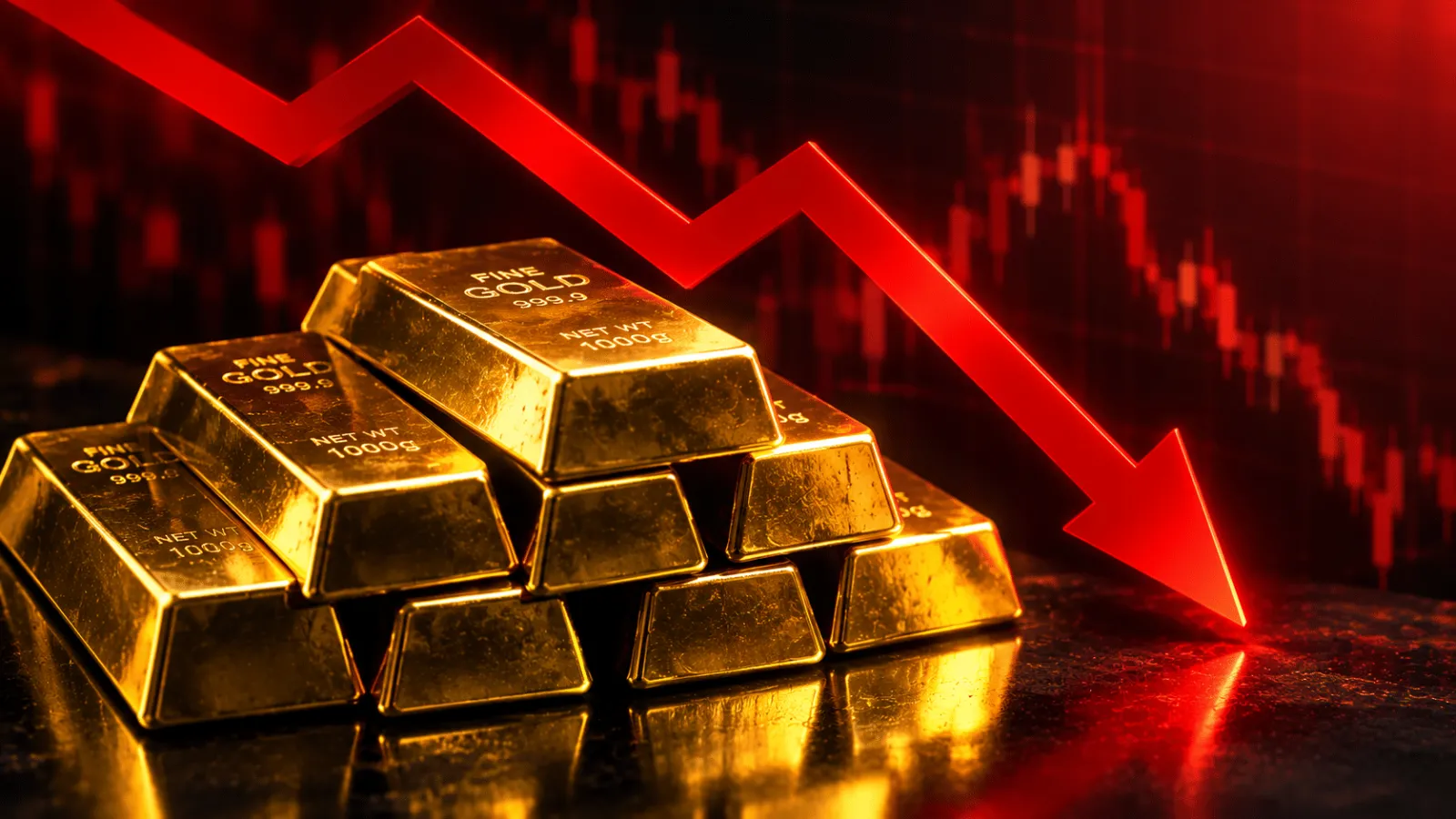
Gold Prices Decline Sharply Across Pakistan Markets
Gold prices declined in Pakistan on Wednesday, with the price of 24-karat gold falling by Rs. 3,400 per tola to Rs. 427,436. This latest downward movement marks a continuation of a negative trend for precious metals in local trading hubs, impacting buyers, sellers, and investors alike across the country. Financial analysts and market participants closely monitor these daily fluctuations, which dictate the purchasing power of domestic consumers looking to acquire bullion for investment or personal use.
According to the All-Pakistan Gems and Jewellers Sarafa Association (APGJSA), the price of 10 grams of gold also decreased by Rs. 2,915 to Rs. 366,457. The APGJSA serves as the primary representative body for jewellery and gemstone traders in the country, publishing official daily rate sheets that guide commercial transactions from major metropolitan centers to smaller provincial towns.
The decline followed a Rs. 1,500 decrease in the per-tola price on Tuesday, when gold dropped to Rs. 430,836. This consecutive two-day retreat reflects mounting selling pressure in physical trading arenas, catching some retail market observers by surprise following weeks of unpredictable volatility in domestic commodities.
International Market Drivers Behind Domestic Gold Price Drops
In the international market, gold prices fell by $34 to $4,049 per ounce, contributing directly to the decline in local rates. Pakistan relies heavily on global bullion benchmarks to determine its internal pricing structure, meaning domestic sarafa markets adjust rapidly whenever foreign spot rates shift up or down.
Global bullion pricing operates on complex macroeconomic factors, including currency valuations, central bank monetary policies, treasury yields, and geopolitical risk assessments. When international institutional investors sell off bullion positions on London or New York exchanges, the resultant spot price contraction flows downstream into developing markets within hours.
Because Pakistan imports raw bullion to meet domestic consumption demands, local merchants must price their inventory based on prevailing import parity costs, international shipping expenses, and current exchange rates. A drop of $34 per ounce abroad instantly alters the landed cost of precious metals entering Karachi and Lahore vaults, forcing local associations to mark down retail boards.
How the All-Pakistan Gems and Jewellers Sarafa Association Sets Rates
The All-Pakistan Gems and Jewellers Sarafa Association calculates daily domestic rates by factoring in international ounce valuations alongside the prevailing exchange rate of the Pakistani rupee against the United States dollar. This mathematical formula ensures that local bullion remains aligned with global parity, preventing illicit smuggling or arbitrage opportunities between domestic and foreign markets.
Retail jewellers rely on these official association notifications to price ornaments, biscuits, and bars for everyday customers. Members of the association include prominent bullion dealers, goldsmiths, and market elders who convene daily to verify international closes and translate them into local weights such as tolas and grams.
Understanding these institutional procedures helps consumers comprehend why prices shift so rapidly from one afternoon to the next. Market transparency remains a core objective for the association as it publishes updates across media outlets and trade networks.
Silver Prices Diverge With Local Gains in Pakistan
Meanwhile, silver prices increased by Rs. 45 per tola to reach Rs. 5,768 in Pakistan. While gold experienced a sharp contraction on both local and international fronts, silver demonstrated independent market behavior by moving in the opposite direction during the trading session.
Silver serves both as a precious investment asset and an essential industrial input, particularly in electronics, solar technology, and chemical manufacturing. This dual demand profile often causes silver price trajectories to decouple from gold during specific economic cycles.
Domestic silver traders adjusted their boards upward to reflect local supply constraints and sustained industrial demand within provincial manufacturing sectors. Consumers purchasing silver ornaments or industrial grade material faced higher costs despite the concurrent discount observed in gold counters.
Economic Impact on Retail Buyers and Investors
Fluctuations in precious metal prices carry profound implications for ordinary citizens and commercial investors across Pakistan. Gold has historically functioned as a secure store of value and a preferred hedge against inflation for households saving for weddings, emergencies, or long-term financial security.
When per-tola rates decline by thousands of rupees over a 48-hour window, retail buyers often interpret the dip as a favorable entry point to acquire physical ornaments or investment bars. Conversely, individuals who purchased bullion at higher peaks face short-term paper losses, illustrating the inherent risks associated with commodity investments.
Jewellery businesses also experience operational shifts during sharp price corrections. Foot traffic in major bazaar hubs often increases as bargain hunters evaluate discounted inventory, though overall market sentiment remains cautious as participants wait to see whether international bullion will stabilize or extend its downward trajectory.