Analyzing the State of Pakistan ODI Cricket Before the World Cup
Recently, another one-stop solution was proposed for Pakistan cricket problems, and the decision-makers deserve credit for designing it to solve a specific issue. The objective is not to create a permanent fixture similar to the Duleep Trophy in India or to reverse the worldwide decline of List A cricket. Instead, the focus remains squarely on evaluating what needs fixing within the national 50-over setup as preparation intensifies for the global tournament hosted in Africa, particularly South Africa, under vastly different environmental conditions.
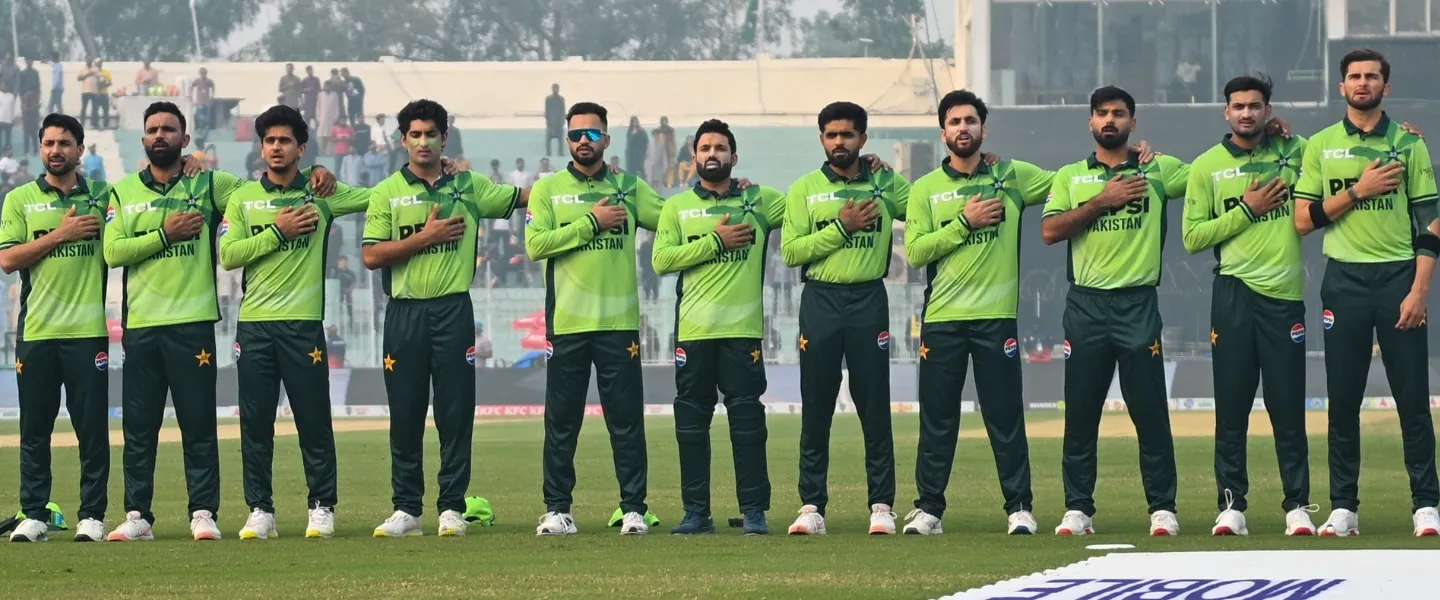
Under the captaincy of Shaheen Afridi, the national team has completed four ODI series, all staged in Asia. While the squad secured victories in three home series, the ultimate test lies in adapting to foreign pitches. Reviewing every slot from the opening partnership down to the bowling attack highlights the urgent decisions facing team management.
Opening Pair Dilemmas and Emerging Contenders
At the very top of the order, management tested three different opening combinations across the four recent series. The two primary openers who featured and scored the most runs, Fakhar Zaman and Saim Ayub, missed the last two ODI series against Australia and Bangladesh due to fitness concerns. In their absence, Haseebullah Khan, Maaz Sadaqat, and Sahibzada Farhan received opportunities.
Haseebullah appeared in only one match, but Maaz Sadaqat and Sahibzada Farhan received six games each to stake their claims. Maaz displayed notable attacking flair, particularly when countering Nahid Rana in Bangladesh and during a cameo against Australia. On a slow pitch during a small chase, he took the attack to the opposition with drives through the off side against spinner Kuhnneman, who had previously tied down other batters.
Displaying such glimpses on quicker surfaces in Bangladesh and slower home surfaces against Australia could cement Maaz as the third opener behind Saim and Fakhar. An added advantage for Maaz is his bowling ability, which provides a backup for Saim in case of emergencies. Meanwhile, Saim struggled across other formats and experienced a slump in 50-over cricket, including underwhelming performances in the Champions Cup. His return to the opening slot depends heavily on recovering his batting form.
Sahibzada Farhan failed to accumulate substantial runs in international 50-over fixtures, yet he shone brightly in the National Champions Cup to complicate selection choices. Management must weigh domestic success against international output as preparations continue.
Babar Azam and the Middle Order Transition
Moving down the batting lineup, Babar Azam experienced a significant statistical decline over a three-year period. However, his rhythm appears to be returning with runs flowing across multiple formats. For a long stretch, his last ODI century dated back to Nepal in 2023, a jinx he finally broke after more than 30 innings.
Despite breaking that century drought and scoring 69 in one of four recent innings, Babar has not fully escaped his prior slump. Even so, his performance graph is trending upward, and his presence at number three for the World Cup remains one of the few certainties in the national setup. The priority now is ensuring his sustained consistency.
Mohammad Rizwan offers another vital presence, though his status suffered when he was dropped from ODIs prior to the home series against Australia. Critics often target his approach in T20 cricket, but in the 50-over format, he stands out as a premier wicketkeeper-batsman. Stripped of the captaincy in this format, Rizwan responded by scoring three fifties in nine games, all during successful run chases, remaining unbeaten twice against Sri Lanka and averaging 44.5.
Some observers questioned giving chances to Ghazi Ghouri, who falls short of Rizwan standards behind the stumps. Nevertheless, Ghazi performed valuable cameos under tough conditions, and with Rizwan facing off-the-field controversies, Ghazi is likely to receive an extended run.
Salman Ali Agha and the Number Six Conundrum
The most successful recent batter in the lineup is Salman Ali Agha, who anchors the number five position. His workload is substantial, having played more matches than captain Shaheen Afridi while occasionally stepping in to lead when the left-arm fast bowler rested. Salman remains the only batter in the current ODI setup to score multiple centuries for Pakistan.
Despite debates surrounding his captaincy and batting in the shortest format, Salman proves vital across other formats through sheer versatility. He understands how to take an innings deep and exploit favorable matchups. Demonstrating immense dedication, he transitioned to domestic red-ball cricket and scored a triple century to refine his technique.
Conversely, the number six spot represents a major problem area. Across ten innings under Shaheen's leadership, four players occupied this position. Hussain Talat scored the most runs in six innings, but his strike rate sat at 78. Salman Ali Agha played two innings here, while Arafat Minhas and Abdul Samad played one each, combining for a mere 11 runs.
In the Champions Cup, only Khushdil Shah and Shadab Khan registered fifties at this position, while Arafat Minhas provided a few starts. Khushdil previously enjoyed a productive stint last year, finishing as the top scorer in the home ICC Champions Trophy. His notable recent knocks included 69 off 49 balls against New Zealand and 38 off 39 balls against India at number seven, yet he was subsequently omitted from the squad.
Khushdil faces limitations with his shot selection against deliveries moving away from him, and he requires a period of settling in before accelerating. These traits make the 50-over format a better fit for him than T20 cricket, though questions remain about his long-term viability.
All-Rounders and the Bowling Attack
Shadab Khan is more likely to feature in the World Cup squad due to his all-round capabilities, despite fair criticism regarding his bowling. Since 2021, among 11 players batting at seven or eight with over 500 ODI runs, only Mohammad Nabi and Michael Bracewell boast a better average and strike rate than Shadab's 28.4 and 92.1. However, transitioning into a full-time number six batting all-rounder presents a demanding challenge.
Shadab's primary skill set has experienced a noticeable decline, particularly in taking wickets. Since the start of 2023, he has bowled 155.4 overs, joining Andy McBrine and Salman Ali Agha as spinners with an average exceeding 50 among those bowling at least 150 overs. Despite this bowling drop-off, his leadership qualities and fielding prowess keep him in contention.
Arafat Minhas emerges as a potential successor, averaging 30 with the bat in white-ball formats after three innings each. He made history by becoming the first Pakistani to claim a five-wicket haul on his ODI debut, accumulating 11 wickets at an average of 13.5. Combined with Saad Masood, the team possesses an abundance of talented all-rounders competing for limited spots, especially with specialist spinner Abrar Ahmed holding the number two ODI ranking.
In the pace department, Shaheen Afridi and Haris Rauf are automatic selections. Since November 2025, only Nahid Rana and Jayden Lennox have taken more wickets at a superior average than Rauf. The calendar year has seen Rauf average under 20 in ODIs, claiming 10 wickets across five matches. The identity of the third fast bowler remains open, with Mohammad Wasim Jr., Razaullah, and Shahnawaz Dahani serving as primary contenders.