Pakistan Sugar Deregulation Policy Sparks Concern for Cotton Sector
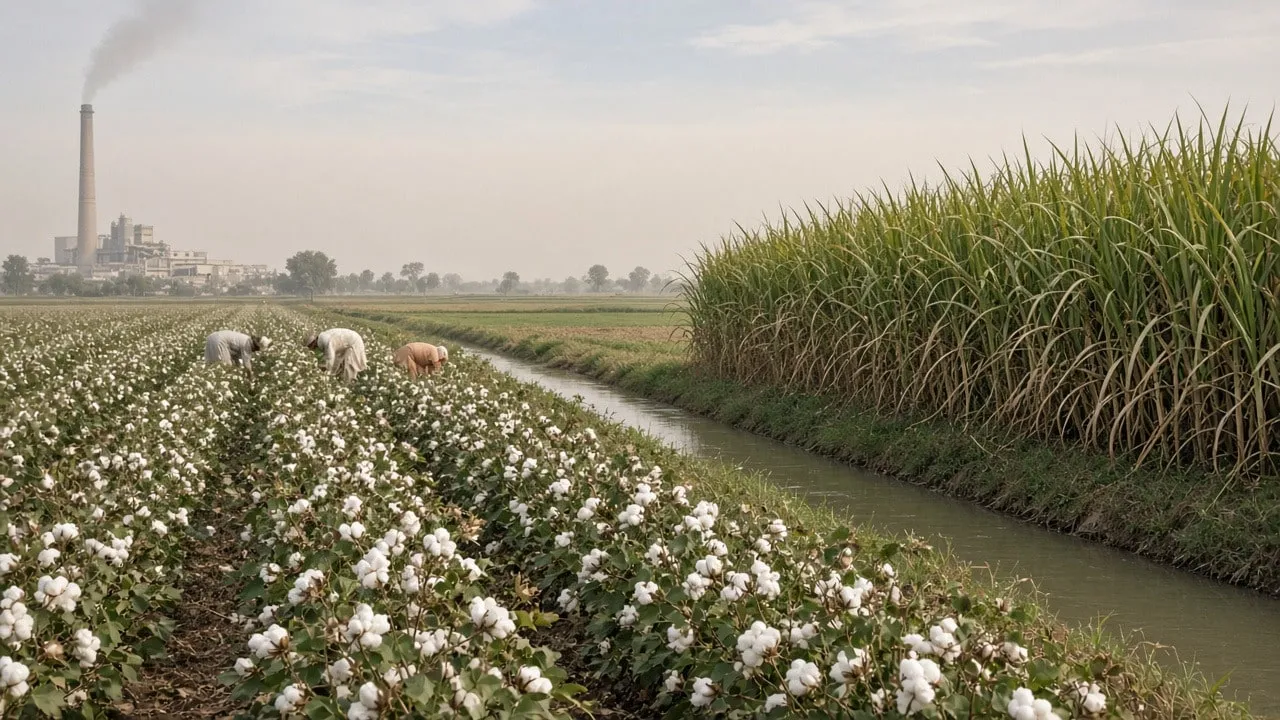
Pakistan's cotton sector has warned that the government's new sugar deregulation policy could push local cotton and wheat production down even further, and has demanded that the policy be revisited. The controversy centers on the shift in agricultural focus away from vital textile fibers toward increased sugar production.
Ihsanul Haq, Chairman of the Cotton Ginners Forum, said the policy lifts the ban on setting up new sugar mills and on expanding the capacity of existing ones. This, he warned, will push more sugarcane cultivation into cotton zones, cutting cotton and wheat output and hurting the quality of lint through environmental pollution.
He added that more sugarcane will strain canal water supplies and could leave thousands of acres of farmland hit by waterlogging and salinity. The policy, he said, risks promoting white poison instead of white gold in Pakistan.
Cotton Output Already Down by Nearly Two-Thirds
About 10 years ago, Pakistan produced around 15 million bales of cotton. The crop fed value-added textile exports worth billions of dollars, and high-quality local lint was also exported to India, Bangladesh, Vietnam, and African countries.
He said poor enforcement of crop zoning laws, combined with record subsidies and other incentives on sugar exports, has steadily expanded sugarcane cultivation across the country's cotton belt.
New sugar mills set up in cotton zones and major capacity expansions at older ones have added to the shift, and local cotton production is now limited to about 5.5 million bales.
Higher Import Bill Feared Across the Country
The cotton sector fears that a further fall in local output will force the country to import more cotton and edible oil, raising its import bill. Agricultural economists point out that relying on foreign markets for raw materials puts immense pressure on national foreign exchange reserves.
The government had announced the deregulation of the sugar sector last year. Cotton output has improved in parts of the country this season, with Sindh staying ahead as production crossed 4 million bales, but ginners say the new policy could undo those gains.
Without protective measures for traditional crop zones, the long term viability of domestic textile manufacturing remains uncertain. Industry leaders continue to press federal and provincial authorities for a balanced agricultural framework that protects all staple crops equally.
Historical Background of Crop Zoning in Pakistan
Agricultural planning in Pakistan has historically relied on designated crop zones to optimize water usage and soil health. The cotton belt, primarily located in Punjab and Sindh provinces, features arid to semi-arid climates ideal for long staple fiber production.
Over the past decades, economic incentives shifted landowners toward sugarcane due to guaranteed procurement prices and mill subsidies. This economic pull bypassed traditional zoning laws, allowing sugar mills to expand their footprints deep into traditional cotton territory.
The absence of strict regulatory enforcement allowed mill owners to establish operations close to raw material sources, further entrenching sugarcane cultivation in inappropriate climatic regions. Experts note that reversing this trend requires coordinated policy intervention between provincial agricultural departments and federal trade ministries.
Water Resource Management and Environmental Impact
Sugarcane is a highly water-intensive crop that requires significantly more irrigation cycles than cotton or wheat. In regions where canal water availability is already stretched thin, the expansion of sugarcane acreage deprives neighboring food and fiber crops of essential moisture.
Excessive flooding of sugarcane fields leads to rising water tables, causing severe waterlogging and soil salinity in productive agricultural districts. Salinity degrades soil fertility over the long term, rendering affected land useless for any agricultural activity without expensive reclamation projects.
Furthermore, the burning of crop residues and industrial processing waste from sugar mills contributes to regional air pollution. Cotton ginners argue that this environmental degradation directly impairs the quality of open-air lint during harvesting and processing stages.
Economic Implications for the Textile Industry
The textile sector is the backbone of Pakistan manufacturing, contributing significantly to industrial employment and export earnings. When local cotton supply drops, spinning mills must rely on imported lint, which increases operational costs and reduces profit margins for value-added exporters.
Higher production costs make Pakistani garments less competitive in international markets against regional rivals. Small and medium enterprises within the textile supply chain bear the brunt of these cost pressures, threatening factory jobs and community livelihoods.
Government planners face a delicate balancing act between supporting the sugar industry, which is dominated by influential political and economic figures, and protecting the broader export oriented textile sector. Industry stakeholders maintain that prioritizing sugar deregulation at the expense of cotton threatens the entire macroeconomic stability of the country.





