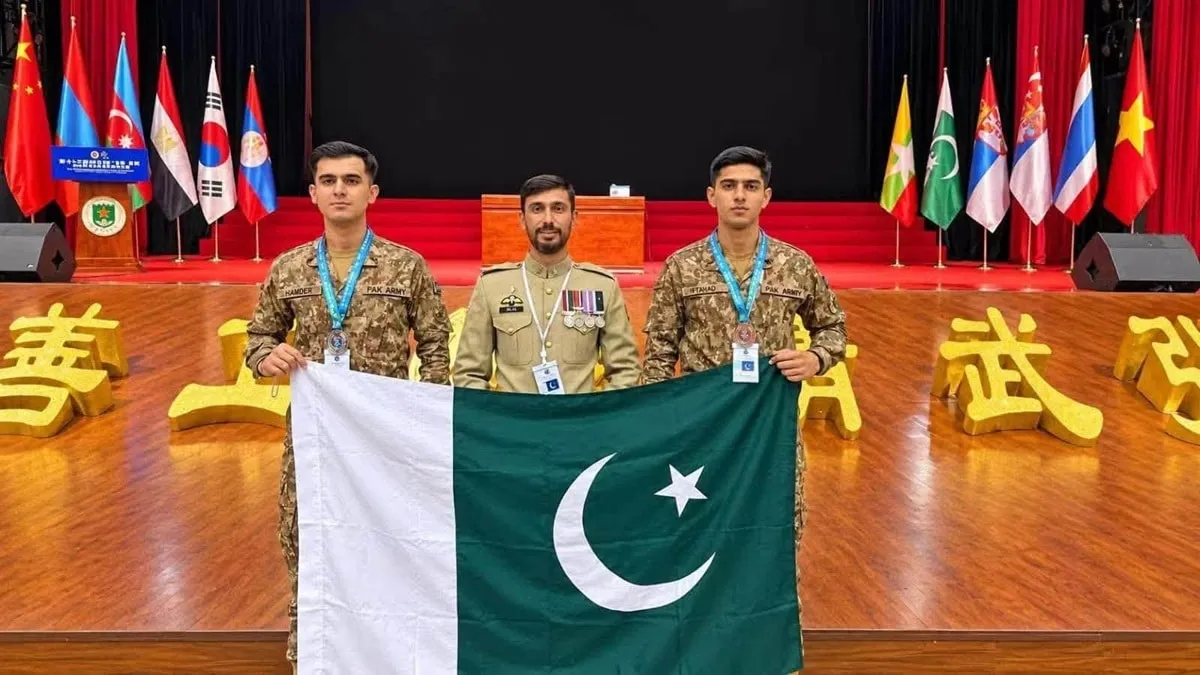
Pakistan Secures Silver Medal at International Military Competition in China
A team from the National University of Sciences and Technology has secured first position among foreign participants and won the overall silver medal at the 13th International Army Cadets Week in Nanjing, China. The event brought together military delegations from various nations to test their skills, tactical knowledge, and physical endurance in a competitive environment.
The competition was hosted at the People's Liberation Army Army Engineering University. During the multi-day event, the delegation from the university finished ahead of all other international attendees to claim the second place overall finish. The Pakistan Embassy in China confirmed the achievement on Thursday and congratulated the team in a post on social media platform X.
Details of the Award in Nanjing
The formal recognition came directly from diplomatic channels representing the country abroad. The Pakistan Embassy stated in its official post that the team from the College of Electrical and Mechanical Engineering earned the first position among foreign participating countries while securing the silver medal overall at the 13th International Army Cadets Week held at the Army Engineering University of the People's Liberation Army in Nanjing.
This performance highlights the rigorous training standards maintained by the institution. Engineering and tactical disciplines form a core part of the curriculum for participants from the institution, preparing them for joint multinational exercises and academic military environments. The competition in Nanjing evaluates both theoretical understanding and practical execution under strict evaluation criteria.
Broader Successes for Pakistani Military Personnel in 2026
The achievement in China follows a series of strong performances by Pakistani military personnel at international competitions this year. These events take place across different continents, showcasing the adaptability and high standards of training instilled in local cadets and officers. International military exchanges provide a platform for participants to demonstrate their capabilities against global peers.
In June, a Pakistan Army team representing the Pakistan Military Academy secured first place at the International Pacesticking Competition 2026. This specific event took place at the Royal Military Academy Sandhurst in the United Kingdom. Pacesticking is a traditional military drill that requires immense precision, coordination, and timing, making the top finish a notable accomplishment for the academy representatives.
Individual Recognition at Australian Military College
Individual achievements have also marked the calendar for national military trainees abroad. Pakistan Army cadet Sardar Arsam Abbas of the Pakistan Military Academy 152nd Long Course was named the overall best foreign military cadet by Australia's Royal Military College on May 6. This recognition followed the passing-out parade at Royal Military College Duntroon in Canberra on May 5, 2026.
The award presented to cadet Sardar Arsam Abbas is given to the highest-performing foreign military cadet based on performance across all aspects of training. This includes academic evaluations, physical fitness tests, leadership assessments, and tactical field exercises. Such accolades reflect the thorough preparation cadets receive before deployment to international partner institutions for joint training programs.
Significance of International Military Exchanges
Participation in events such as the International Army Cadets Week serves multiple strategic and educational purposes. It fosters cooperation between different armed forces and allows cadets to experience diverse training methodologies. Educational institutions like the National University of Sciences and Technology integrate technical education with disciplined training, producing graduates capable of competing on international stages.
The consistent success of Pakistani teams in the United Kingdom, Australia, and China points to a broader pattern of excellence in foreign training modules. Observers note that these competitions build professional trust and mutual respect among participating nations. As defense diplomacy continues to evolve, academic and tactical exchanges remain a cornerstone of international military relations.