Faisalabad Metro Bus Project Saves Hundreds of Trees
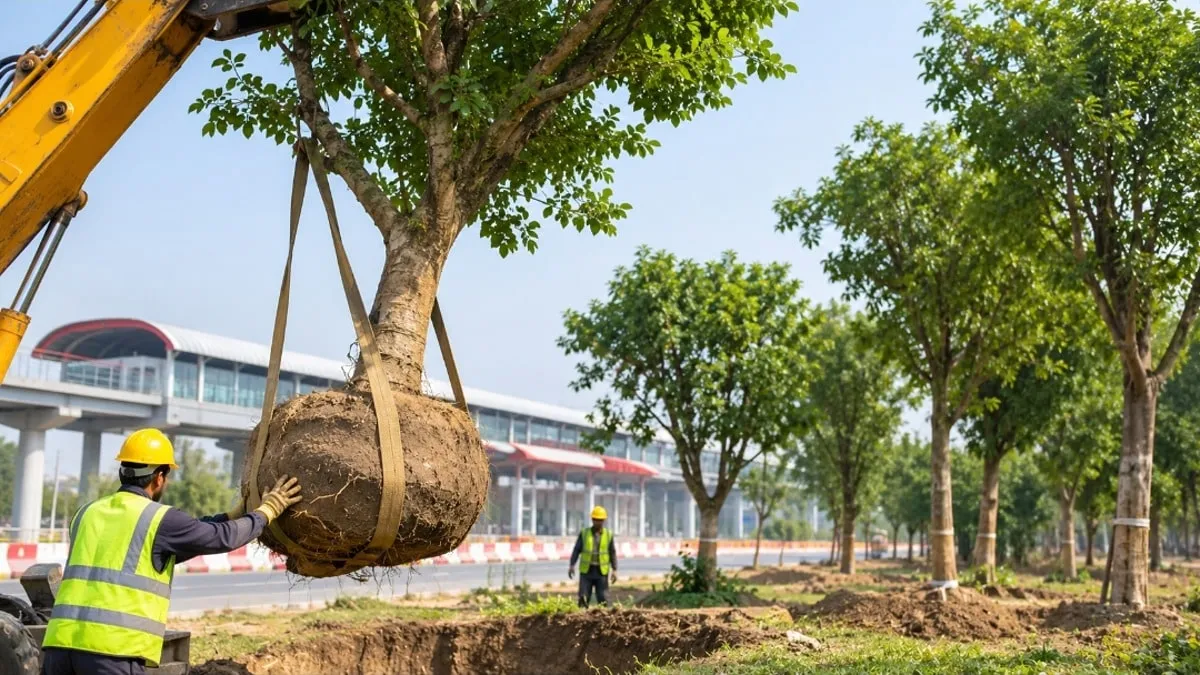
Urban development often brings difficult choices between infrastructure growth and environmental preservation. In Faisalabad, authorities have taken a distinct path regarding the Faisalabad Metro Bus project by prioritizing ecological protection alongside transit expansion. Officials confirmed that 670 mature trees affected by the construction work have been successfully transplanted to three designated locations across the city, while operations to relocate another 125 trees are currently ongoing.
This initiative represents a concerted effort to balance modernization with ecological responsibility. Large infrastructure projects traditionally result in the removal of established urban greenery, leading to habitat loss and diminished local air quality. By employing modern transplantation techniques, the administration aims to preserve the mature canopy that provides shade and environmental benefits to residents.
Where the Transplanted Trees Were Relocated
The successful relocation of hundreds of massive trees required careful logistical planning and specific recipient sites capable of supporting their root systems. Officials distributed the 670 preserved trees across three major public spaces within Faisalabad. These specific destinations were chosen for their soil quality, available space, and capacity to host mature flora.
The distribution of the transplanted trees includes:
- Kaleem Shaheed Park, which received 367 trees.
- Bagh-e-Jinnah, which received 166 trees.
- Dhobi Ghat Ground, also known as Iqbal Park, which received 137 trees.
Each of these locations offers adequate room for the root balls to recover and establish themselves in their new surroundings. Horticulture specialists and municipal workers monitor the sites regularly to provide necessary care during the critical recovery phase.
Official Oversight and Expert Inspections
High-ranking officials have closely monitored the transplantation process to guarantee high survival rates for the displaced flora. Project Director of the Punjab Mass Transit Authority Capt. (retd.) Zahid Saeed visited the Tree Transplantation Orchard at Bagh-e-Jinnah to inspect the ongoing efforts. During this visit, Commissioner Faisalabad Dr. Imran Hamid Sheikh provided a detailed briefing on the initiative and the methods used to safeguard the trees.
Capt. (retd.) Zahid Saeed praised the authorities for relocating and preserving the trees instead of cutting them down. He stated that the transplanted trees could regain their greenery by next spring. Furthermore, he urged other districts to adopt the same approach for trees affected by development projects. Dr. Imran Hamid Sheikh added that officials were monitoring each transplanted tree to ensure its survival and growth.
Relocating Utility Infrastructure Along Metro Routes
Alongside environmental preservation, the construction teams face the complex task of clearing underground and overhead utilities along the Metro Bus project routes. This preparatory work involves shifting electricity poles, gas installations, and water and sewerage pipelines. Multiple regional utility providers play a role in this phase, including FESCO, SNGPL, and WASA.
Coordinating among these various agencies requires precise scheduling to prevent prolonged service disruptions for local residents and businesses. Capt. (retd.) Zahid Saeed directed the relevant departments to maintain safety standards and speed up the relocation work to keep the project on schedule. Efficient utility shifting remains essential for laying the foundations of the transit corridor without damaging existing municipal networks.
Mitigating Smog and Dust During Construction
Construction activities in urban centers frequently stir up dust and particulate matter, which can severely worsen local air quality. This concern is particularly acute in the region given seasonal weather patterns. To counter this environmental hazard, the administration has enforced strict operational guidelines for contractors and field workers.
The commissioner ordered water sprinkling along the construction routes every four hours ahead of the anticipated smog season. This routine helps suppress dust particles raised by heavy machinery and excavation work, protecting public health and reducing atmospheric pollution while the transport infrastructure takes shape.