Balochistan Launches First Digital Nikah Registration System
The government of Balochistan has officially introduced its first digital marriage registration services, marking a major shift in how vital statistics are recorded in the region. Authorities issued the inaugural Marriage Registration Certificate at Haji Ghaibi Road Union Council, Ward 22, operating under the Quetta Metropolitan Corporation.
This rollout brings an end to decades of entirely paper-based record-keeping for unions in the area. By moving to an electronic database, the administration hopes to secure family law documents against loss, tampering, and forgery. Citizens in the pilot zone can now interact with a streamlined bureaucratic procedure.
Partnership Between Balochistan Government and NADRA
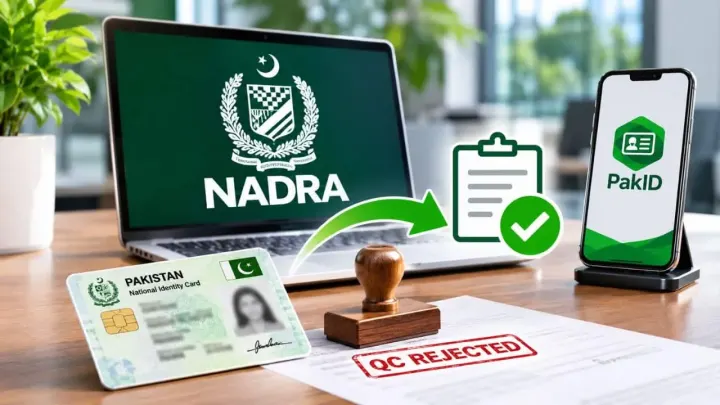
The initiative is a joint effort between the provincial government of Balochistan and the National Database and Registration Authority. NADRA provided the technical infrastructure required to implement digital registration for nikah registrars alongside a secure digital solemnization module.
NADRA brings its extensive national identification network and database security expertise to the project. This collaboration ensures that marriage records link directly with broader civil registration systems. Officials from both organizations spent months preparing the framework before testing it in the provincial capital.
Timeline of the Quetta Pilot Project
The pilot phase followed a strict schedule to test the technical capabilities of the new infrastructure. On October 28, 2026, authorities issued a digital license to Maulvi Samiullah, making him Balochistan's first digitally registered nikah registrar.
Following his licensing, Samiullah solemnized and registered the first marriage through the new electronic system on October 29, 2026. Government authorities completed the process by issuing the official Marriage Registration Certificate on October 30, 2026, proving the end-to-end functionality of the platform.
Key Officials Behind the Digital Rollout
Several administrative figures steered the pilot project to its completion in Quetta. Dr Nausheen Khan served as the deputy director at the Quetta Metropolitan Corporation, overseeing municipal coordination.
Dawood Momand acted as NADRA's assistant director for Civil Registration and Vital Statistics, managing the technological integration. Muhammad Arif contributed as the field officer for Quetta district, handling ground implementation alongside Maulvi Samiullah, who executed the first registration.
How the Pak ID Mobile App Handles Marriage Registration
The operational workflow relies heavily on consumer-facing mobile technology. Under the new rules, authorized nikah registrars submit marriage details and required documents directly to the relevant union council through the Pak ID mobile app.
This removes the physical journey to government offices for the registrar during the initial document submission phase. The application interface standardizes the data collection process, ensuring all necessary fields are complete before submission.
Verification and Issuance of the Marriage Registration Certificate
Once a registrar transmits the file, the workflow moves to municipal verification. The union council secretary reviews the submitted information, cross-checks the documentation, and grants approval inside the system.
After approval, the platform automatically generates the Marriage Registration Certificate without manual certificate drafting. The registrar, the bride, and the groom can each download and print the official document independently through their personal Pak ID accounts.
Objectives of Modernizing Civil Registration
The provincial administration designed the system to overhaul traditional bureaucratic hurdles. The initiative aims to make marriage registration more transparent, efficient, secure, and faster for everyday citizens.
By reducing manual processing steps, the government expects to cut down administrative delays. Providing modern digital services also aligns local administrative functions with national electronic governance standards.