Pakistan-China Friendship Reaches Space as First Astronaut Announced
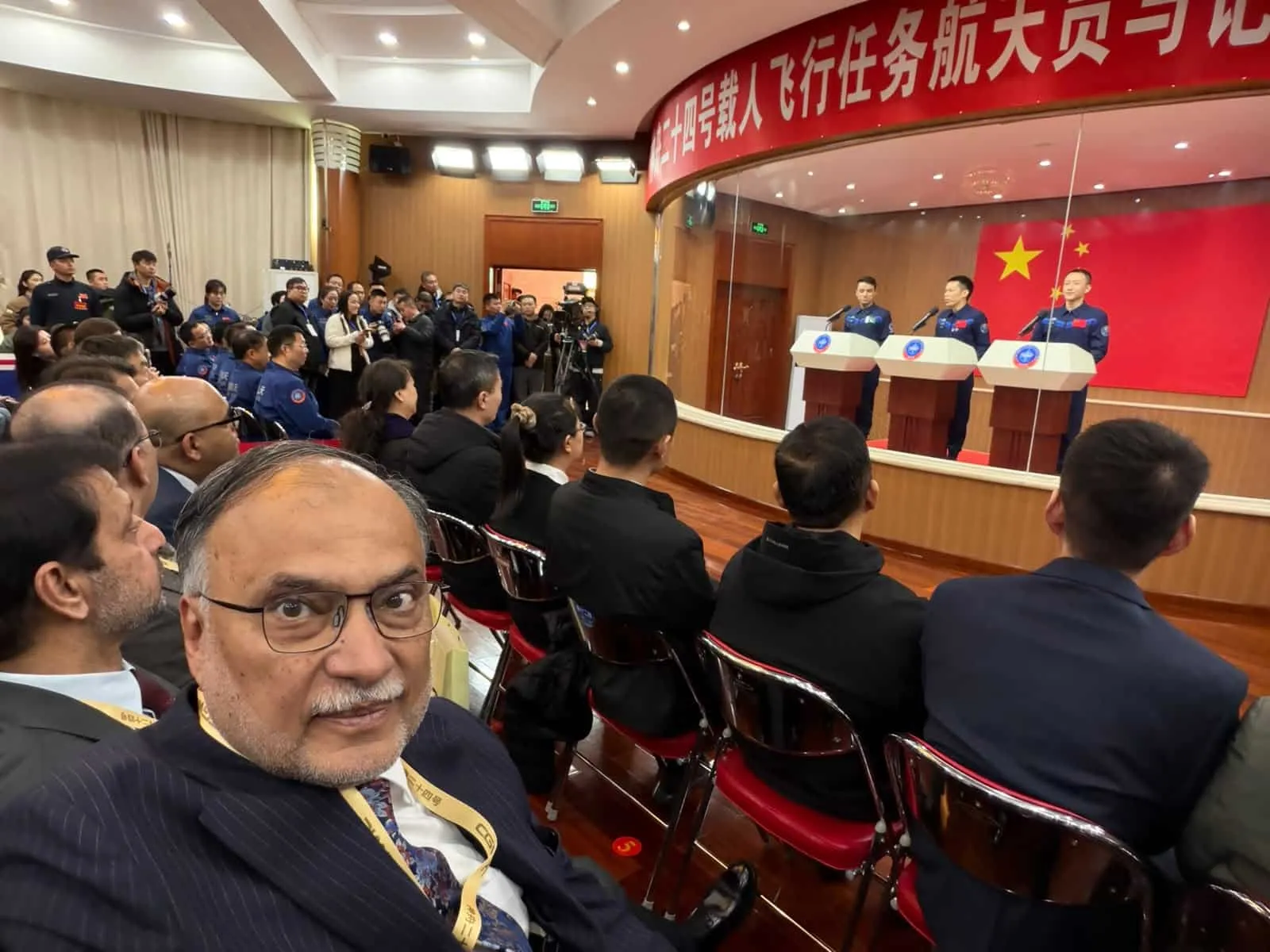
Federal Minister for Planning Ahsan Iqbal has described Pakistan-China friendship as reaching beyond the skies as Pakistan prepares to send its first astronaut to China's Tiangong Space Station. Speaking at the Jiuquan Satellite Launch Centre in China on November 24, Iqbal stated that the upcoming Shenzhou-24 mission would take bilateral cooperation into space. The milestone marks a major expansion of the strategic partnership between Islamabad and Beijing into the field of human spaceflight.
The minister attended the official astronaut media briefing, where Muhammad Zeeshan Ali was announced as a member of the three-person Shenzhou-24 crew. The mission is scheduled to launch on November 25, 2026. This announcement solidifies years of deepening technological exchanges between the two nations, translating terrestrial diplomatic ties into orbital cooperation.
Details of the Historic Shenzhou-24 Space Mission
Ali is expected to become the first foreign national to visit China's Tiangong Space Station, according to the official announcement. The Tiangong facility serves as Beijing's permanent crewed outpost in low Earth orbit, regularly hosting taikonauts for long-duration scientific research. Participation in this flight places Pakistan alongside a select group of nations capable of sending citizens beyond the atmosphere.
The Planning Minister congratulated Ali and wished the crew success ahead of the launch. He also praised the Pakistani astronaut candidates who completed rigorous training programs in China, including Ali and Khurram Daud. These candidates underwent extensive preparations to meet the strict physical and technical requirements of orbital flight.
What Ahsan Iqbal Said About Space Cooperation
Addressing officials and media gathered at the launch site, Iqbal emphasized the symbolic and practical weight of the upcoming launch. "Pakistan-China friendship has always stood higher than the Himalayas. This historic space mission will now carry that friendship beyond the skies," he said. The rhetoric highlights the enduring alliance between the two countries, which spans economic, military, and now technological domains.
Expanding on the theme of cosmic exploration, Iqbal offered a forward-looking perspective on national ambitions. "The sky is no longer our limit. It is our launching pad," Iqbal said. This sentiment reflects a concerted effort by state planners to elevate the nation's profile in advanced scientific fields.
The Broader Impact on Science and Technology in Pakistan
Pakistan's participation in the mission comes through its growing space cooperation with China. The minister said the mission reflected expanding collaboration between the two countries in science and space technology. Joint satellite ventures in the past laid the groundwork for this crewed flight, demonstrating a steady progression in technical capability.
Beyond geopolitical symbolism, state officials anticipate practical domestic benefits from the endeavor. He also said the journey could encourage young Pakistanis to pursue education and careers in science and technology. By placing a national citizen aboard an orbital laboratory, authorities hope to inspire a new generation of students to enter STEM fields.
Timeline and Execution of the Shenzhou-24 Flight
The Shenzhou-24 mission is scheduled to carry three astronauts to China's space station. If the launch proceeds as planned, it will mark Pakistan's first participation in a human spaceflight mission. Mission controllers at the Jiuquan facility continue final preparations ahead of the November 25, 2026 lift-off date.
The three-person crew will execute a series of operational and scientific tasks once docked with the Tiangong complex. Observers and space agencies worldwide will monitor the flight, noting the inclusion of the first foreign national aboard the Chinese orbital station. For Pakistan, the countdown to launch represents the culmination of specialized training and bilateral coordination.