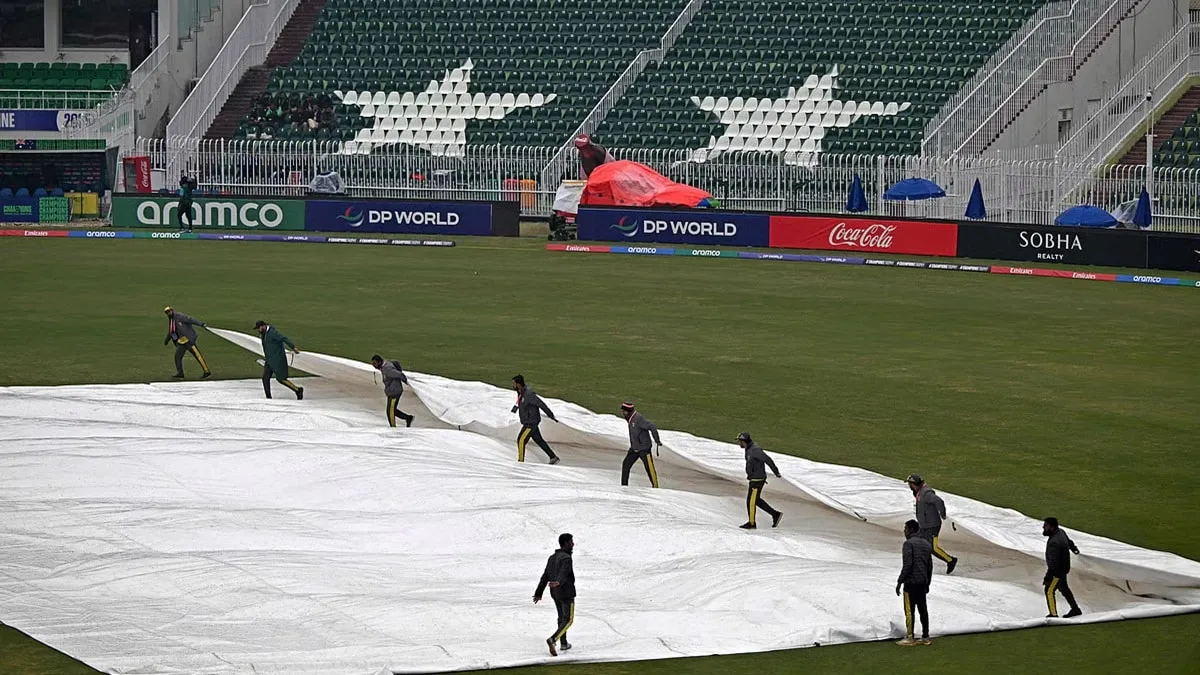
Weather Forecast for Pakistan vs Sri Lanka Test in Rawalpindi
Rain is expected to disrupt the fourth day of the first Test between Pakistan and Sri Lanka at the Rawalpindi Cricket Stadium on November 12, with heavy showers forecast for the afternoon. Sports enthusiasts and cricket fans closely monitor the skies above the venue as the match enters its crucial fourth day.
According to AccuWeather, cloudy conditions are expected in the morning, with temperatures around 21°C and a 25% chance of rain. Winds will blow from the south-southeast at 7 km/h, allowing the possibility of an uninterrupted morning session.
However, the chances of rain will increase sharply to 92% in the afternoon, with heavy showers expected to last around two and a half hours. Rainfall could reach 14.6 mm, while southerly winds may reach 9 km/h, with gusts of up to 24 km/h.
Temperatures are expected to remain around 21°C, with cloud cover ranging from 88% to 98% throughout the day. Visibility could also drop to 3 km during the afternoon.
Despite the unfavorable forecast, a complete washout appears unlikely, as both teams could get a substantial amount of play in the morning before rain interrupts proceedings later in the day.
How Sri Lanka Fought Back on Day Three
The weather threat comes as Sri Lanka have fought back strongly after an early collapse on the third day, with Dhananjaya de Silva and captain Kusal Mendis frustrating Pakistan's bowling attack.
De Silva remained unbeaten on 104, while Mendis was batting on 38 after the visitors lost Kamindu Mendis and two other batters. This partnership proved vital for the visiting side as they sought to steady their innings against a disciplined bowling unit.
Test cricket often demands sessions of quiet attrition mixed with aggressive intent. The resilience shown by the Sri Lankan batters on the third day shifted the momentum slightly, forcing the home side to rethink their bowling strategies.
Captains often need to balance aggressive field settings with defensive protection when set batters dig in. The pitch at the Rawalpindi Cricket Stadium has offered various challenges to both seamers and spin bowlers over the course of the match.
Pakistan First Innings Performance and Debutant Impact
Earlier, Pakistan declared their first innings at 434-9 after 106.3 overs, with five batters, including three debutants, scoring half-centuries to give the hosts a strong start.
Selectors and team management placed faith in younger players for this series, and the decision paid dividends during the batting display. Reaching a total above 400 runs in the first innings sets a solid foundation in traditional five-day cricket.
Establishing a commanding total places immediate pressure on the opposing batting lineup. The inclusion of debutants who immediately perform at the international level injects fresh energy into the national squad.
Coaching staff often emphasize the importance of building partnerships during early Test appearances. The ability of the debutants to handle the pressure of international competition bodes well for the future of the team.
Understanding Rawalpindi Cricket Stadium and Weather Patterns
Rawalpindi Cricket Stadium has a long history of hosting international cricket fixtures across multiple formats. Situated in the garrison city near Islamabad, the ground frequently experiences varying weather conditions during the autumn and winter months.
Cricket administrators and ground staff work continuously to manage pitch covers and drainage systems to ensure matches resume as quickly as possible after precipitation stops. Modern venues employ sophisticated cover techniques to protect the square and run-ups from sudden downpours.
Meteorological data plays a significant role in modern sports planning. Teams and match officials review hourly forecasts to strategize around potential rain delays, Duckworth-Lewis-Stern calculations in limited-overs matches, or time-saving tactics in red-ball fixtures.
Local fans turn out in large numbers to support international fixtures at Rawalpindi. The atmosphere inside the stadium remains vibrant despite interruptions, reflecting the deep passion for the sport across the country.
Tactical Implications of a Rain-Shortened Day
When weather reduces the available playing time in a Test match, captains often alter their tactical approach. Bowlers may be pushed into shorter, more intense spells to maximize movement in overcast conditions.
Batters must quickly assess whether the changing light and humidity assist swing bowling. Artificial lights at the venue help maintain visibility when heavy cloud cover darkens the sky during afternoon sessions.
Coaches analyze the state of the game to determine if safety-first batting is required or if accelerating the run rate becomes necessary to force a result. Every session lost to weather alters the mathematical possibilities of securing a victory or saving a draw.
As the fourth day unfolds, both squads must remain adaptable. The ability to concentrate through weather delays and sudden shifts in atmospheric conditions separates successful Test teams from their competitors.