Pakistan's first VXR Festival, dedicated to virtual and extended reality art, opened at the Alliance Française de Lahore on Sunday, bringing together 70 artists from Pakistan and several other countries.
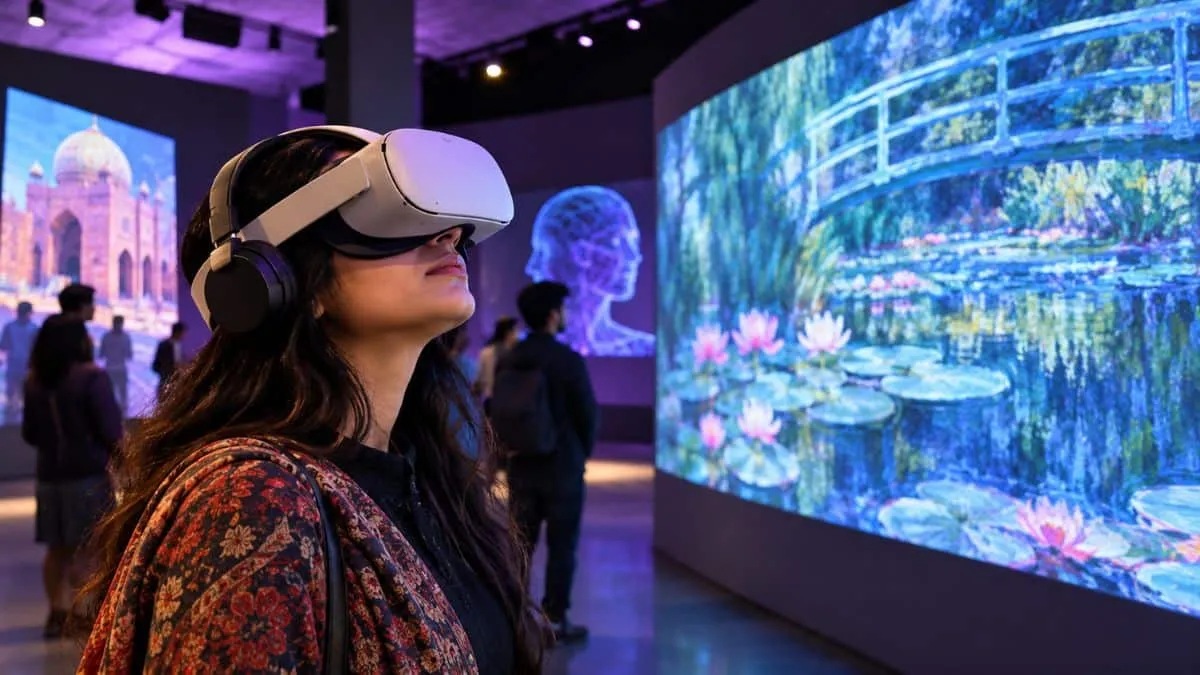
The inaugural event, titled "Between the Prompts // V.1," offers visitors the chance to experience artworks through virtual reality (VR) headsets, augmented-reality (AR) screens and other immersive technologies.
Who Curated the Festival and Who Supported It?
The festival was curated by Dr Najamul Assar and Sarah Rajper, with Zainab Aamir serving as assistant curator. Financial and logistical support came from the Embassy of France in Pakistan, Alliance Française de Lahore, Institut français, the Embassy of Spain in Pakistan and AECID, in collaboration with UNESCO.
Which Artists Are Showcasing Their Work?
Sixteen artists were featured during the opening programme. They included Adriaan Lokman, Amna Tariq, Anusha Khalid, Asma Kazmi, Che-Kuang Chuang, Jérémy Griffaud, Jill Miller, Lola Zoido, Manel Pascual Bafaluy, Mansoor Ali, Marie Lienhard, Marion Pédebernade, Nicolas Thépot, Pierre-Alain Pédebernade, Sana Akram and Sandrine Deumier. The broader roster spans creators from Pakistan, France, Spain, Canada, the United States and other nations.
What Does the Festival Offer Visitors?
Unlike a conventional art exhibition, the VXR Festival allows visitors to experience artworks using VR headsets, screens and AR technology. The "Between the Prompts" theme examines the relationship between human instructions and machine-generated visual output, probing how artists respond to algorithms and emerging technologies that increasingly influence image creation.
A meet-the-artists session was also held during the opening, featuring AB Rehman, Anusha Khalid, Lola Zoido, Mansoor Ali, Marie Lienhard and Sandrine Deumier.
How Does the Festival Blend Traditional Art with New Technology?
Several projects reinterpret traditional art, cultural heritage and storytelling through immersive tech. A major attraction is a Claude Monet virtual reality experience, presented in Pakistan for the first time via the Institut français collection. The experience transports visitors from Monet's garden in Giverny into his famous Water Lilies works at the Musée de l'Orangerie.
Pakistani artist Sana Akram's "Sun" adapts the Urdu Tilismi Dastan storytelling tradition into an immersive environment, while AB Rehman's "Al Buraq 2.0" places a figure rooted in cultural and religious memory into a futuristic setting.
Other works include Jérémy Griffaud's "Under the Sky," which incorporates almost 300 water-colour paintings created in Borneo, and Faqeha Nadeem's "Every Day," which uses AR to animate drawings from a sketchbook.
Where Will the Festival Travel Next?
After its opening at Alliance Française de Lahore, the festival will continue at several venues in the city, including R Space at the Mariam Dawood School of Visual Arts and Design and Beaconhouse National University. A program is scheduled at BNU on November 12.
The festival will then move to Islamabad from November 13 to 15, giving audiences there another opportunity to engage with the VR and XR installations.
What Is the History Behind This Initiative?
The VXR Festival is an initiative of the team behind the Lahore Digital Arts Festival, which has promoted digital art and creative technology in Pakistan since 2019. Over the past four years the Lahore Digital Arts Festival has grown from small pop-up showcases to larger multi-venue events, laying the groundwork for a dedicated XR festival.
Virtual and extended reality have been gaining traction in Pakistan's creative sector. Universities such as the National College of Arts and Beaconhouse National University now offer courses in interactive media, while start-ups are developing VR content for education, tourism and gaming. The government's Vision 2025 plan includes a focus on digital innovation, making the timing of the VXR Festival aligned with broader policy goals.
How Do VR and AR Technologies Work in an Art Context?
Virtual reality immerses the viewer in a computer-generated three-dimensional environment, typically experienced through a headset that tracks head movements and sometimes hand controllers. Augmented reality overlays digital elements onto the real world, often using a smartphone or tablet screen. In an art exhibition, these tools allow artists to create experiences that cannot be rendered on a flat wall, such as walking through a recreated historic garden or interacting with algorithmic visualizations.
For curators, the challenge lies in balancing technical reliability with artistic intent. Headsets must be calibrated, hygiene protocols observed, and content streamed at sufficient frame rates to avoid motion sickness. Organisers of the VXR Festival have worked with technical partners to ensure that each installation meets these standards.
Who Stands to Benefit From the Festival?
Artists gain a platform to experiment with emerging media and reach new audiences. Visitors, students, professionals and the general public, receive hands-on exposure to technologies that are reshaping creative practice. Educational institutions can incorporate the festival into curricula, while cultural ministries see an opportunity to showcase Pakistan's growing digital-art ecosystem on an international stage.
What Are the Next Steps for the Festival and Its Participants?
Following the Islamabad leg, the organisers plan to compile a catalogue of all works and publish a report on audience engagement metrics. They also intend to host a series of workshops on XR creation techniques in partnership with local universities. No specific dates have been announced for a second edition, but the team has indicated that they will assess feedback before setting a future calendar.
For artists, the exposure may lead to commissions, collaborations with tech firms, or invitations to international festivals that focus on immersive media. For the broader creative community, the festival signals a growing acceptance of XR as a legitimate artistic medium within Pakistan's cultural landscape.