How the Pakistan Innovation Quest Expands Robotics Access
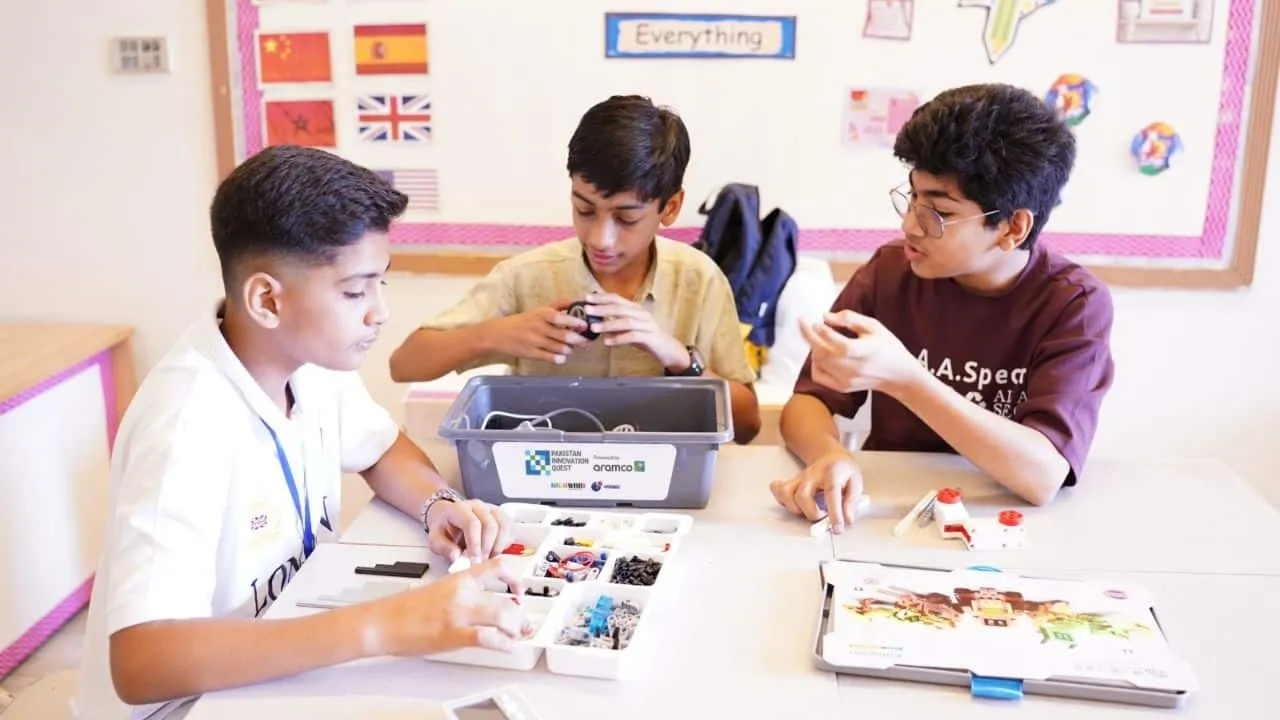
The Pakistan Innovation Quest is working to bring science, technology, engineering, and math learning to young people throughout the country. Implemented by the Pi Space Science Education Centre in partnership with the World Robot Olympiad Association and powered by Aramco, the project addresses long-standing divides in technical education. Historically, specialized fields such as robotics remained out of reach for many youths due to high costs, remote geography, gender imbalances, or physical disabilities. By removing financial and structural barriers, the national initiative creates structured avenues for students to discover technical disciplines.
The core objective involves reaching 10,000 learners and 300 teachers through more than 60 RoboStarter Sprints, six regional competitions, and a National Showcase. Students follow a clear progression, moving from their initial encounter with robotics kits to developing original solutions for practical, real-world problems. Successful participants advance through regional events and progress toward the World Robot Olympiad Pakistan platform. Financial backing from Aramco allows the program to deliver free training sessions across public schools, private institutions, low-income neighborhoods, community organizations supported by non-governmental groups, and all-girls schools.
Reaching Deaf Learners and Fostering Inclusion
A core principle of the project involves demonstrating that technical inclusion must encompass physical ability as well as socioeconomic factors. At Deaf Reach School, deaf students recently participated in hands-on robotics training sessions. These sessions featured specialized support from interpreters and instructors fluent in sign language. For many participants, this marked the initial opportunity to handle a robotics kit directly, shifting their roles from passive observers to active builders, problem-solvers, and technological innovators.
"Talent is universal. Access is not, and that is the divide Pakistan Innovation Quest was created to close," said Zartaj Ahmed, CEO and Co-Founder of PSSEC and National Organizer of WRO Pakistan. He added that the collaboration with Aramco reaches specific demographics: "We are reaching the child who has never held a robotics kit, the girl who has never imagined herself as an engineer, and the deaf learner who deserves to innovate without barriers."
Structure of RoboStarter Sprints and Teacher Development
The educational framework relies on RoboStarter Sprints, which pair practical instruction in robotics with the project cycle established by the World Robot Olympiad Future Innovators program. Students work steadily toward official certification through the organization. At the same time, participating educators receive dedicated professional development training. This dual approach ensures that schools can sustain long-term robotics programs within their own classrooms long after the formal workshops conclude.
Hussain N. Hanbazazah, Aramco Vice President of Communications Operations & Corporate Citizenship, explained the corporate perspective on the initiative. "At Aramco, we see STEM education as an investment in the innovators, problem-solvers, and leaders of tomorrow. Through our Global STEM Education Program, we aim to expand access to meaningful learning opportunities and reach young people globally," he said. He noted that the partnership brings 10,000 robotics opportunities to students, turning curiosity into capability and building an impact that outlasts student participation.
Current Milestones and Geographic Reach Across Pakistan
To date, the movement has already provided training to more than 6,000 learners and 518 teachers. The geographical reach spans multiple major urban and regional centers, including Karachi, Lahore, Hyderabad, Gujranwala, and Kasur. Approximately 60 separate educational institutions have integrated into the growing network. Organizers maintain a strict target of achieving more than 40 percent female participation across all activities. Furthermore, the program plans to donate 100 physical robotics kits directly to underserved institutions, ensuring that hands-on learning continues long after the initial sprint events conclude.
Pathways to the National Showcase and Future Competitions
Following regional competitions, winning teams and teachers advance directly to the Pakistan Innovation Quest National Showcase. At this high-profile event, participants present their engineered solutions to audiences composed of school leaders, government representatives, science and technology partners, and international stakeholders. The strongest projects secure official pathways to subsequent competitions organized by the World Robot Olympiad platform.
Through this structured progression, young participants across the nation gain the chance to view themselves not as passive consumers of modern technology, but as active creators and designers. The sustained backing from international and local partners ensures that technical education reaches communities that previously lacked any exposure to advanced engineering concepts.