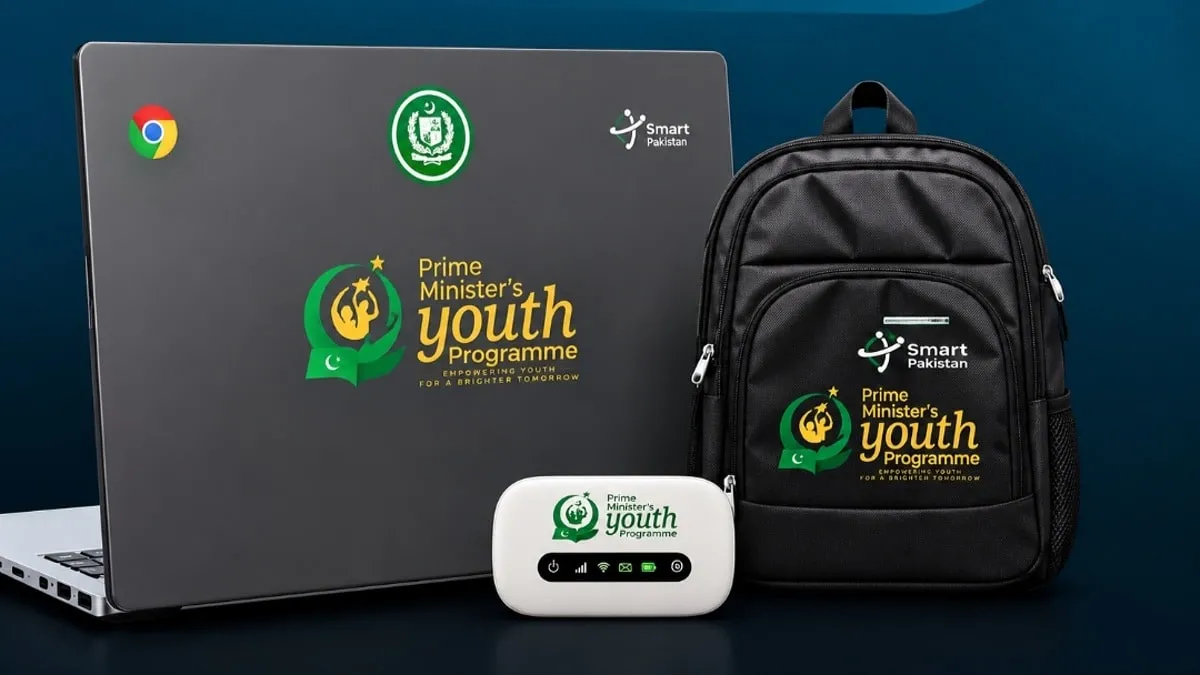
Students enrolled in private educational institutions have been seeking clarification about their eligibility for the Prime Minister's Youth Chromebook Scheme, which aims to distribute hundreds of thousands of devices among talented students across Pakistan.
The government launched the initiative to improve access to digital education and provide students with modern technology and internet connectivity.
However, the eligibility information published on the official registration portal currently limits applications to students enrolled in government schools.
What the Official Portal States About Eligibility
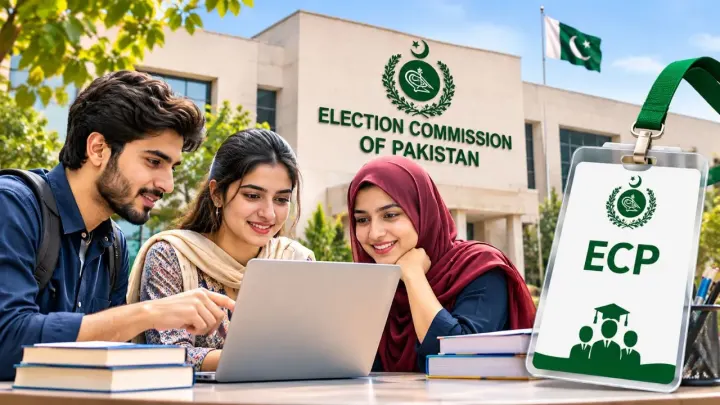
According to the IBCC application website, only top-performing Grade 9 students from government schools in Punjab, Sindh, Khyber Pakhtunkhwa and Balochistan will be considered based on their Annual Examinations 2026 results. For students associated with examination boards in Azad Jammu and Kashmir, Islamabad Capital Territory and Gilgit-Baltistan, the eligibility criteria also cover top-performing Grade 10 students. The portal specifically states that only students enrolled in government schools qualify under the published application criteria.
Why Confusion Exists Around Private-School Inclusion
Some reports published around the scheme's launch described a broader eligibility arrangement that included students from private schools supported by provincial education foundations and registered religious seminaries. The government's launch announcement also referred to providing devices to students from schools and madrassas. However, the current IBCC registration portal does not list private-school students as eligible applicants. It specifically identifies government-school enrollment as a requirement.
Students should therefore distinguish between the broader announcements made at the launch and the eligibility rules currently displayed on the application website. Anyone seeking clarification about a particular institution should contact the relevant education authorities before assuming that enrollment makes them eligible.
The official registration portal is available at pmychromebooks.ibcc.edu.pk.
Background of the Youth Chromebook Scheme
The Prime Minister's Youth Chromebook Scheme was announced in early 2024 as part of a wider digital-education drive. The policy follows earlier government efforts such as the Digital Pakistan Initiative and the National Education Policy 2021, which emphasized the need for equitable access to technology in classrooms. By 2025, the Ministry of Information Technology reported that only 38 % of schools nationwide had reliable internet access, a gap that the Chromebook programme seeks to narrow.
Under the scheme, each selected student will receive a Chromebook device pre-loaded with educational software, a 4G data package for one year, and technical support through local education offices. The distribution is coordinated by the Inter-Board Committee of Chairmen (IBCC), which manages the central application portal and verifies academic performance against the 2026 Annual Examination results.
How the Application Process Works
Applicants must first register on the IBCC portal, providing their roll number, school identification code, and a scanned copy of their latest result sheet. The system then cross-checks the data with the official examination board records. Only students who rank within the top 5 % of their respective boards are automatically shortlisted. Those who pass the academic filter receive an email invitation to confirm their acceptance and to submit proof of residence.
After verification, the Ministry of Information Technology allocates devices based on provincial quotas. The rollout schedule is staggered: Punjab receives its first batch in March 2026, followed by Sindh in April, Khyber Pakhtunkhwa in May, and Balochistan in June. Azad Jammu and Kashmir, Islamabad Capital Territory and Gilgit-Baltistan receive devices later in the year, aligned with the Grade 10 eligibility window.
Impact on Students and the Education System
For government-school students, the scheme promises a tangible upgrade to learning resources. Chromebooks enable access to cloud-based textbooks, interactive simulations, and video lectures that align with the national curriculum. Early pilot tests in Lahore and Karachi showed a 12 % increase in homework completion rates among recipients.
Private-school pupils, who often already have access to personal laptops or tablets, may see less direct benefit. Nevertheless, the broader policy goal is to reduce the digital divide between urban and rural areas, where private-school enrollment is low. By concentrating resources on public-school learners, the government hopes to lift overall national performance in international assessments such as PISA.
What Parents and Students Should Do Now
Students in private institutions who wish to receive a Chromebook should first verify whether their school participates in any provincial education-foundation programmes that might qualify them under a separate allocation. If not, they can still apply for other government-run technology grants that are not tied to the Prime Minister's scheme.
All applicants, regardless of school type, must keep the following documents ready:
- Official result sheet for the 2026 Annual Examinations
- Proof of enrollment (school ID or admission letter)
- National identity card copy
- Proof of residence (utility bill or rent agreement)
Failure to meet any of these requirements will result in automatic disqualification.
Next Steps and What to Watch For
The Ministry has indicated that it will review the eligibility criteria after the first distribution phase, potentially expanding the list to include private-school students in provinces where digital infrastructure remains weak. Until an official amendment is published on the IBCC portal, the current rule stands.
Stakeholders should monitor announcements on the official website and watch for press releases from provincial education departments. Any change will likely be accompanied by a revised FAQ section and an updated application form.
For now, the safest course for private-school students is to seek clarification directly from their school's administration or the provincial education authority.