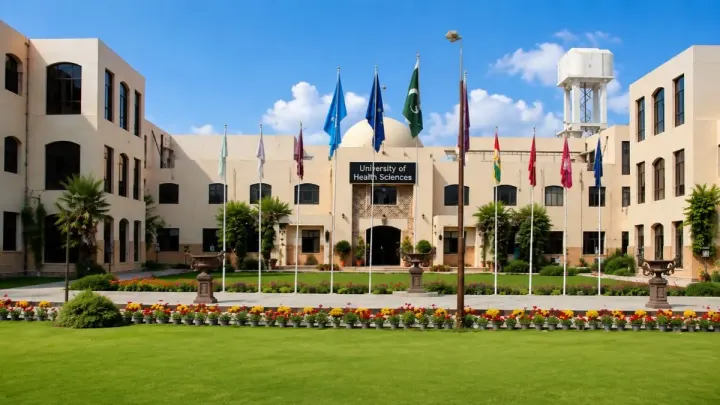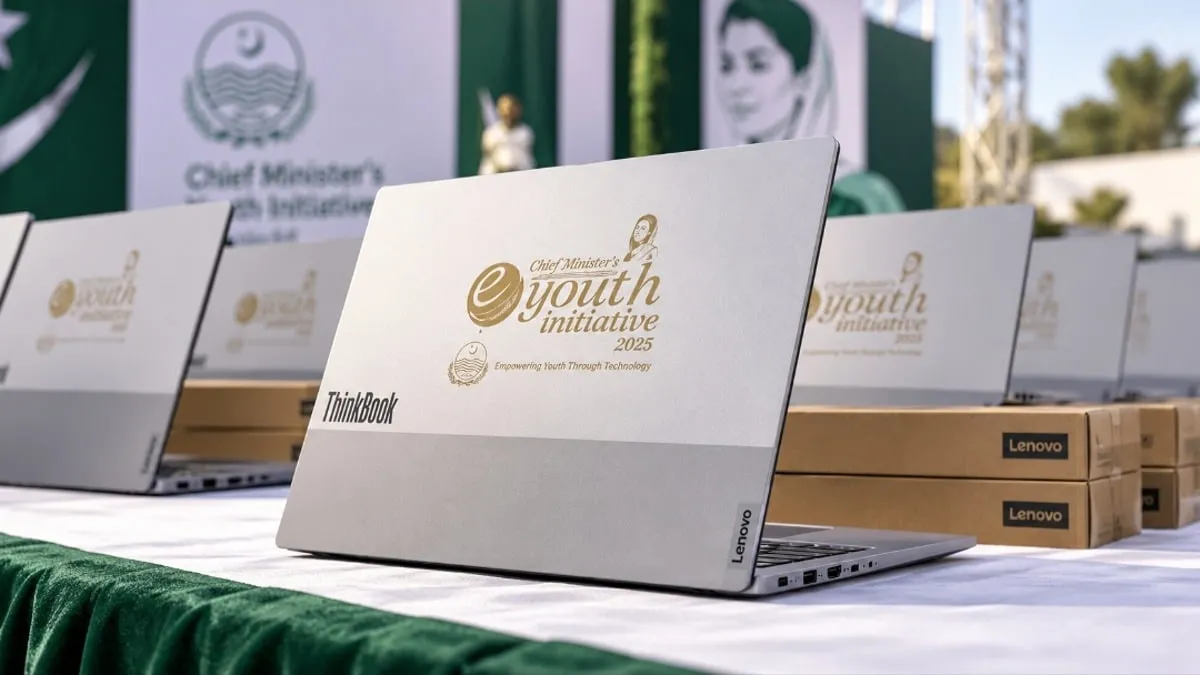
Punjab Chief Minister Maryam Nawaz Sharif announced on Tuesday that the provincial laptop distribution scheme will now aim to provide 112,000 devices, up from the original target of 40,000, during a ceremony at Pir Mehr Ali Shah Arid Agriculture University in Rawalpindi.
The announcement came while she presided over the 12th laptop and merit scholarship distribution ceremony, where 3,562 students from federally chartered universities in Islamabad received 13th-generation Intel Core i7 laptops and 451 students were granted scholarships worth a combined Rs. 41.48 million under the Honhaar Scholarship Program.
Maryam Nawaz said the decision reflects the government's commitment to providing talented students with educational resources and equal opportunities, stressing that laptops and merit-based scholarships are rewards for hard work, not favors.
What Is the Punjab Laptop Scheme and Why It Matters
The laptop scheme was launched in 2022 as part of the provincial government's broader digital-education push. It aims to bridge the technology gap for students in public and private institutions by supplying high-specification laptops that support online learning, research, and skill development. The original target of 40,000 devices was set based on enrollment data from higher-education institutions across the province.
Increasing the target to 112,000 represents a 180% rise and signals a shift toward universal digital access for higher-education students. The move aligns with Pakistan's National Education Policy, which emphasizes the integration of ICT tools in curricula and the need to prepare a tech-savvy workforce.
How the Expanded Laptop Distribution Is Being Implemented
The distribution follows a tiered eligibility framework. First-year university students with a minimum CGPA of 3.0, and those who have secured merit-based scholarships, qualify for a laptop. The selection process is overseen by the Punjab Higher Education Commission, which cross-checks academic records with university registrars.
Logistics are handled by the Provincial Procurement Department, which has negotiated bulk purchase agreements with Intel-certified manufacturers to secure 13th-generation Core i7 laptops at a subsidised rate. The devices are pre-loaded with educational software, including Urdu-language learning tools, Microsoft Office, and open-source programming environments.
Honhaar Scholarship Program: Scale and Scope
The Honhaar Scholarship Program, launched in 2021, provides financial assistance to meritorious students from low-income families. In its first phase, 30,000 students received awards. The allocation was subsequently raised to 50,000, and a second phase saw another 20,000 beneficiaries.
In the third phase, the program expanded to cover 53,488 students, a figure that includes matriculation and intermediate board position-holders and extends to deserving candidates from other provinces and regions. Scholarships are disbursed directly to bank accounts to cover tuition, books, and ancillary expenses.
The total monetary commitment for the 451 scholarships awarded at the Rawalpindi ceremony amounted to Rs. 41.48 million, illustrating the program's substantial financial footprint.
Impact on Students, Families, and the Provincial Economy
For students, access to a modern laptop removes a critical barrier to participating in virtual classrooms, accessing research databases, and completing assignments that require specialised software. Families benefit from reduced financial strain, as the cost of a high-end laptop can exceed Rs. 100,000.
From an economic perspective, the scheme stimulates the local ICT market by creating demand for hardware, software, and after-sales services. It also aligns with Punjab's goal of increasing the province's contribution to Pakistan's knowledge-based economy, which the government estimates could add up to 2% to provincial GDP over the next five years.
What Comes Next: Monitoring, Evaluation, and Future Phases
The provincial government has set up a monitoring committee that will publish quarterly reports on distribution progress, device utilization rates, and academic outcomes. Independent auditors from the Auditor General's office will verify that scholarships reach intended recipients without leakage.
Future phases may include expanding the laptop scheme to secondary-school students and integrating renewable-energy charging solutions for remote areas, though no official timetable has been released.
Practical Takeaways for Students and Parents
Students interested in receiving a laptop should ensure their academic records are up-to-date with university registrars and maintain a CGPA of at least 3.0. Applications for the Honhaar Scholarship must be submitted through the official portal, accompanied by proof of family income and academic merit certificates.
Parents can monitor the status of their child's application through SMS alerts provided by the Punjab Higher Education Commission. Both programmes emphasize merit, so consistent academic performance remains the key eligibility criterion.