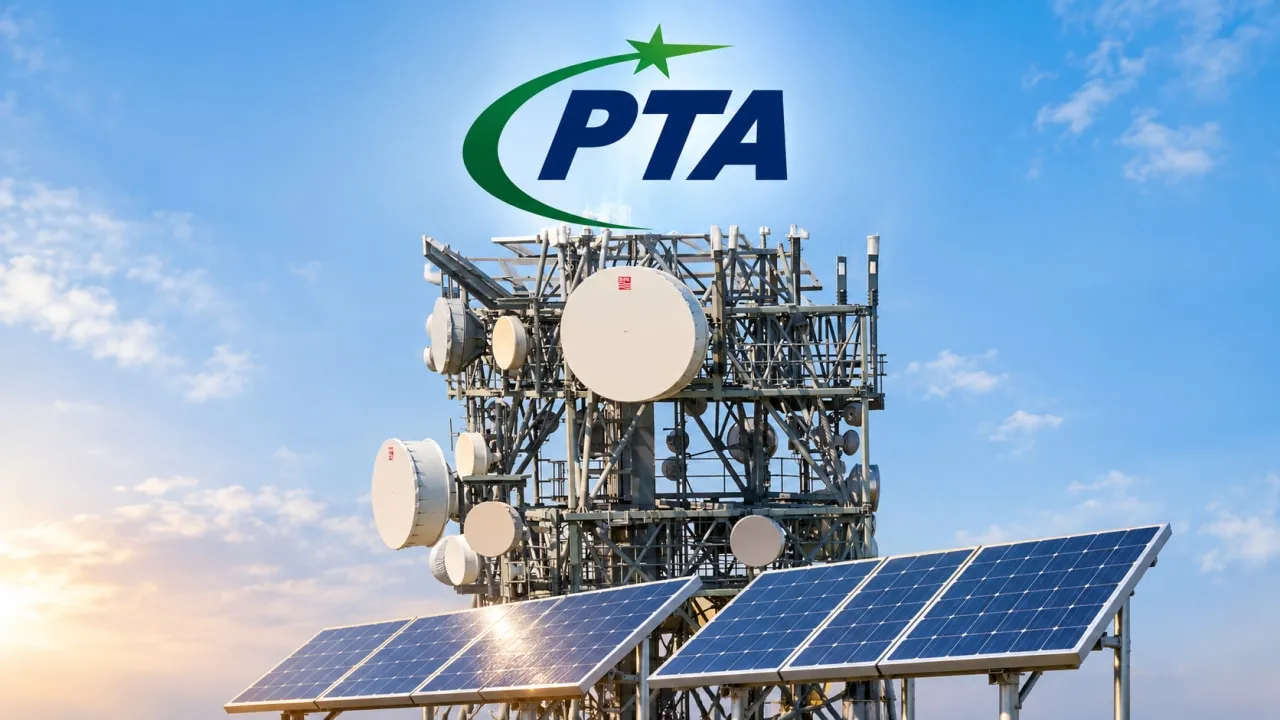
What the PTA Consultation Proposes for Mobile Tower Power
The Pakistan Telecommunication Authority (PTA) has opened a sector-wide consultation that could make solar power systems compulsory at mobile tower sites that suffer frequent electricity interruptions. Under the draft proposal, any tower that records power outages of five percent or more in a month within a union council would need to install solar panels and enough battery storage to keep the site operational through night, cloudy periods and even snowfall.
Stakeholders, including cellular operators, tower-infrastructure firms, tower companies and equipment vendors, must submit detailed proposals and site-level data by 4:30 p.m. on December 7 2026. The deadline is firm, and the regulator will use the responses to shape a sector-wide roadmap under Clause 7.9.1 of the Telecom Policy 2015.
Why Solar Power Is Being Targeted for Mobile Towers
Pakistan's power sector has long struggled with load-shedding and unreliable grid supply, especially in rural and semi-urban union councils. Mobile network operators rely heavily on diesel generators to bridge gaps, a practice that inflates operating costs and contributes to air pollution. By shifting to renewable energy, the telecom sector could reduce diesel consumption, lower carbon emissions and improve service continuity for millions of users.
According to the consultation, the PTA is also looking at incentives such as tax relief, easier import procedures for renewable-energy equipment, support for local manufacturing and carbon-credit mechanisms. These incentives aim to offset the upfront capital outlay for solar panels and battery banks, which can run into millions of rupees per tower depending on capacity.
How the Consultation Will Collect Tower-Level Power Data
Participating operators are required to provide a 30-day snapshot of power-outage data for each tower, indicating the percentage of time the site was without grid power. They must also disclose the tower's location, whether it is currently grid-connected or off-grid, and what backup arrangements, diesel generators, UPS units or existing solar setups, are already in place.
The data will be aggregated at four administrative levels: union council, tehsil, district and national. This granular approach allows the PTA to identify hotspots where outages are most severe and to prioritize interventions.
In addition, operators must pinpoint the 10 percent of their sites that consume the most diesel and propose phased plans to reduce reliance on fossil-fuel generators. The regulator expects these plans to outline timelines of one, two or three years for each site's transition to renewable energy.
What "Mandatory Solar" Would Mean for High-Outage Sites
If the PTA adopts the proposal, towers that cross the five-percent outage threshold would be legally obliged to install solar arrays sized to meet the site's peak load, together with battery storage capable of delivering power throughout the night and during periods of low solar irradiance. The requirement includes the ability to operate during cloudy weather and snowfall, conditions that can significantly reduce solar output.
Operators would need to submit engineering designs, cost estimates and deployment schedules for each affected tower. The regulator has indicated that it may consider a phased implementation, allowing towers with existing grid connections to adopt hybrid solutions before moving to fully solar-powered configurations.
Shared Solar Systems and Technology-Neutral Solutions
The consultation also entertains the concept of shared solar installations, where multiple telecom operators co-locate on a single tower and share the renewable-energy infrastructure. This model could lower per-operator costs, reduce land use and simplify maintenance.
PTA describes its approach as "technology-neutral," meaning that while solar is the primary focus, other renewable options, such as wind turbines, hybrid diesel-solar systems or fuel-cell technology, could be considered where appropriate. The regulator plans to coordinate with the National Electric Power Regulatory Authority (NEPRA) and distribution companies to align grid-integration standards and to mitigate load-shedding impacts over the next five years.
Reporting, Monitoring and Future Regulatory Steps
To track progress, PTA intends to introduce a standardized annual reporting mechanism. Operators will be required to submit updates on solar-installation status, battery-capacity levels, diesel-fuel consumption reductions and compliance with existing quality-of-service (QoS) benchmarks.
After the December 7 deadline, PTA will review all submissions, assess the feasibility of proposed timelines, and decide whether to set additional conversion targets or to formalize mandatory requirements through a new regulatory order. The authority has not yet announced specific conversion percentages or a definitive rollout schedule.
Practical Takeaways for Telecom Companies and Stakeholders
Operators should begin by auditing tower-level outage records and diesel usage to identify sites that will fall under the five-percent threshold. Early engagement with solar-equipment vendors can help secure competitive pricing and ensure that battery-storage solutions meet the required autonomy, typically 8 to 12 hours for most telecom loads.
Companies that already operate shared tower infrastructure may explore joint-venture models for solar farms, leveraging economies of scale. Those with high diesel consumption should prioritize the 10 percent of sites identified by PTA, as these are likely to attract the most regulatory attention.
Finally, stakeholders should monitor PTA's forthcoming roadmap, which will outline any incentive schemes, import-duty adjustments or carbon-credit frameworks that could affect project economics.
For submissions, interested parties can email renewable_energy@pta.gov.pk. The regulator's next public statement is expected later in 2026, once the consultation data have been analyzed.