Punjab Government Warns of Worsening Lahore Smog After Diwali in India
Senior Punjab Minister Maryam Aurangzeb has warned that large-scale fireworks across the border on Diwali could release fine particles and further increase regional air pollution, raising the risk of thicker smog in Lahore and the rest of Punjab over the coming days. The warning comes as the region already faces severe environmental pressures from changing weather patterns and localized pollution sources.
In a statement on X, she said a deep layer of fog and polluted air starting from the Bay of Bengal is already covering the region. Wind direction, wind speed, and how stable the air remains will also affect Lahore's Air Quality Index (AQI). Meteorological factors play a massive role in trapping particulate matter over the plains of Punjab during the transition from autumn to winter.
Government Response and Emergency Measures in Lahore
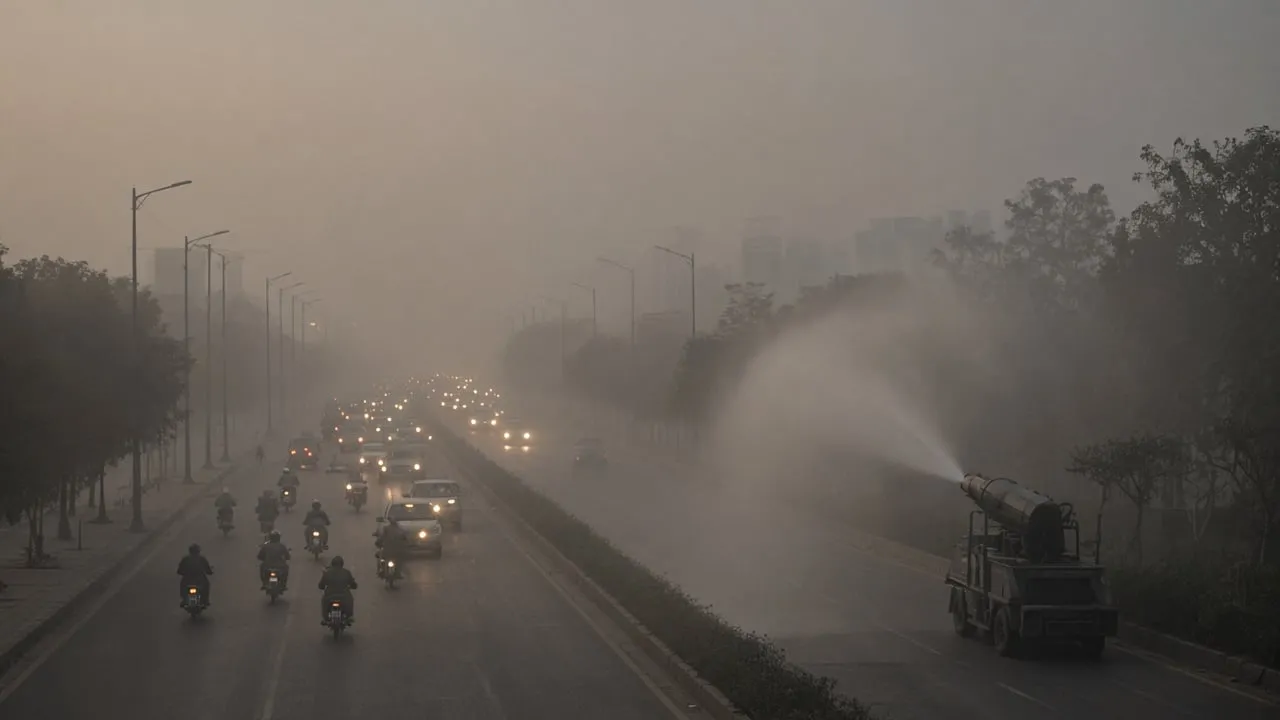
Maryam Aurangzeb said Chief Minister Maryam Nawaz Sharif has directed faster monitoring and anti-smog operations. Smog guns and water sprinkling have been intensified in potential high-AQI areas along the eastern corridor towards India. These tactical deployments aim to suppress dust and airborne toxins before they can settle densely over residential zones.
Authorities have mobilized specialized municipal units to target dust-heavy roadsides and industrial peripheries. The administration relies on real-time data feeds from environmental monitoring stations to deploy resources where pollutant concentrations spike most rapidly. Continuous water application helps reduce particulate suspension caused by vehicular traffic on major arterial roads.
Public Appeals and Citizen Responsibilities to Curb Pollution
She asked the public to help control local sources of pollution, completely avoid burning crop residue, especially rice stubble, and follow the ban on burning garbage, plastic, and other waste in the open. Citizen cooperation remains a cornerstone of municipal strategies to prevent hazardous air conditions from spiraling out of control.
She also urged residents not to bring smoke-emitting vehicles on the roads in the coming days and to avoid unnecessary travel. Private transport contributes heavily to nitrogen dioxide and carbon monoxide totals in urban centers, making voluntary reductions in driving an effective temporary mitigation tool for daily commuters.
Agricultural Enforcement and Crop Residue Monitoring
On the Pakistani side of the border, the department said crop-fire reports from October 1 to November 4 stood at 459, down 28 percent from 637 in the same period last year. This reduction reflects intensified administrative outreach and stricter penalties applied to farming syndicates that ignore seasonal bans on clearing fields through open flame.
Furthermore, 57 first information reports were registered for crop burning between October 1 and November 2. Officials stress that legal action serves as a deterrent against illegal clearing practices that historically plague the agricultural belt surrounding major urban hubs.
Round-the-Clock Environmental Protection Agency Surveillance
It added that enforcement has increased and EPA teams are monitoring smog around the clock, including at night. Inspector units patrol vulnerable districts to catch clandestine waste burning and industrial emissions that typically ramp up during cooler evening hours when atmospheric mixing slows down.
The Inspectorate coordinates closely with provincial police forces to ensure swift processing of environmental violations. Constant vigilance allows authorities to document infractions immediately and apply administrative fines or shutdowns where industrial units fail to operate mandatory scrubbers and emission controls.
Understanding the Regional Air Quality Crisis
Air pollution in the geographic basin shared by Pakistan and India follows predictable seasonal cycles driven by atmospheric stagnation and stubble burning. Cooler temperatures trap pollutants near the surface, forming a persistent grey haze that reduces visibility and creates severe health hazards for vulnerable populations.
Medical professionals consistently advise residents living in affected zones to wear protective masks and limit outdoor physical exertion during peak pollution events. Children, the elderly, and individuals with chronic respiratory conditions face the highest risks of hospital admission when particulate matter concentrations exceed safe global thresholds.





