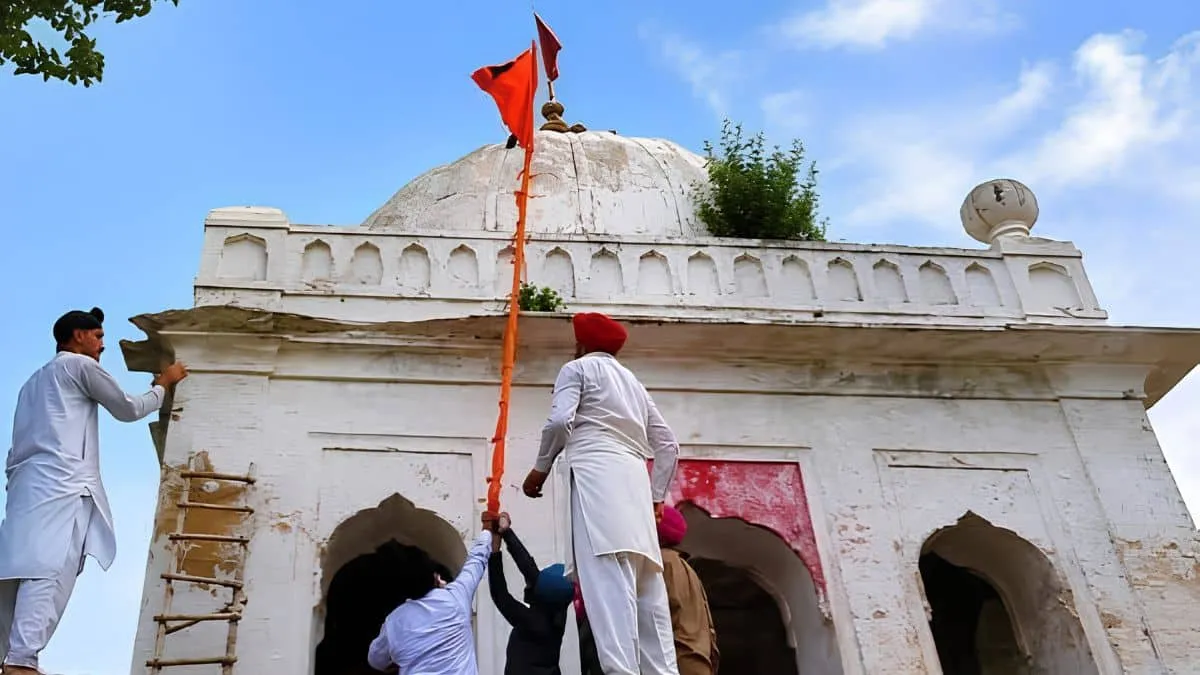
The historic Gurdwara Chhevin Patshahi Sri Guru Hargobind Sahib on Temple Road in Mozang, Lahore, reopened on Sunday after remaining closed since the Partition of 1947.
The Evacuee Trust Property Board (ETPB), Pakistan Sikh Gurdwara Parbandhak Committee (PSGPC) and the Punjab government jointly held a ceremony to mark the reopening after 79 years.
A large number of members of the Sikh community attended the event. Punjab Minister for Minorities and PSGPC President Sardar Ramesh Singh Arora, ETPB Secretary Nasir Mushtaq, Deputy Secretary Shrines Usman Khan, Deputy Secretary General Saadat Shehbaz and other officials were also present.
Why the Reopening Matters for the Sikh Community
The gurdwara's reopening ends a decades-long gap in religious practice for Lahore's Sikhs. After the 1947 Partition, Sikh worship at the site stopped, leaving the building unused and vulnerable to neglect. Restoring the shrine provides a dedicated space for prayer, community gatherings and cultural events, reinforcing the identity of a minority that once numbered millions in the region.
Historical Links to Guru Hargobind Sahib
The gurdwara is historically associated with Guru Hargobind Sahib, the sixth of Sikhism's ten gurus. Guru Hargobind, who lived from 1595 to 1644, is remembered as a warrior-saint who strengthened the Sikh community to defend itself against religious oppression.
According to Sikh historical accounts, Guru Hargobind Sahib accepted an invitation from the local Sikh congregation and stayed for three days at the home of Bhai Jiwan, a devotee living in Mozang, which was then located on the outskirts of Lahore.
Bhai Jiwan later converted his house into a gurdwara to honour the Guru's stay, creating the nucleus of today's Chhevin Patshahi shrine.
Connections to Bhai Bidhi Chand and Mughal History
The site also has historical links with Bhai Bidhi Chand, who is remembered for recovering two horses named Dilbagh and Gulbagh. Sikh accounts say the horses had been seized by the Mughal governor of Lahore, identified in different sources as either Khalil Beg or Qasim Beg, from a devotee who intended to present them to Guru Hargobind Sahib.
Bhai Bidhi Chand reportedly made two visits to Lahore and succeeded in retrieving both horses from the royal stables inside Lahore Fort. He is also believed to have stayed at the site of the gurdwara during those visits, adding another layer of reverence to the location.
Evolution of the Shrine from the Early 20th Century
In 1915 the local Sikh congregation expanded the gurdwara hall to accommodate a growing Sangat. Six years later, in 1921, members of the Sangat took control of the shrine's management after allegations of misconduct against Mahant Hari Singh and formed a local management committee.
The old gurdwara building was established in 1926 through the efforts of Sardar Mehar Singh. The following year, the Shiromani Gurdwara Parbandhak Committee (SGPC) assumed administrative control, integrating the shrine into a broader network of Sikh places of worship.
Architecturally, the original structure dates back to the period of Maharaja Ranjit Singh, reflecting the Sikh Empire's influence on Lahore's urban fabric. Regular Sikh worship at the shrine ended after the Partition in 1947, and the building fell into disrepair for decades.
Renovation Efforts and the Scale of Restoration Across Pakistan
Speaking at the reopening ceremony, Sardar Ramesh Singh Arora said restoration work on the historic shrine had been completed and it was now open to the Sikh community for religious worship. He added that more than 50 gurdwaras across Pakistan were currently undergoing renovation as part of efforts to preserve Sikh religious heritage and provide better facilities to pilgrims.
The renovation of Chhevin Patshahi involved structural reinforcement, roof replacement, plaster work, and the installation of new prayer hall furnishings that respect traditional Sikh design. Conservation experts consulted archival photographs to ensure authenticity, while modern safety standards were incorporated to protect worshippers.
ETPB's Commitment to Protecting Religious Heritage
ETPB Secretary Nasir Mushtaq said the restoration and reopening of Gurdwara Chhevin Patshahi would provide improved worship facilities to the Sikh community while also protecting Lahore's historical and religious heritage. He emphasized that safeguarding places of worship belonging to Sikh and Hindu communities is one of the ETPB's major responsibilities.
Mushtaq described the restoration as an important step in that direction and praised the contributions of Giani Balwant Singh and PSGPC committee member Professor Dr Mampal Singh in the restoration work.
He added that the ETPB's shrines department would continue efforts to restore historic gurdwaras and temples across the country, signaling a broader policy shift toward minority heritage preservation.
What the Reopening Means for Pilgrims and Tourists
With the shrine now open, Sikh pilgrims from Pakistan and abroad can include Chhevin Patshahi in their religious itineraries. The gurdwara's location on Temple Road in Mozang places it within easy reach of Lahore's historic core, allowing visitors to combine worship with tours of nearby Mughal monuments.
Local businesses anticipate increased foot traffic, especially from hotels and eateries that cater to pilgrims. The Punjab government has indicated that ancillary services, such as clean water, sanitation and security, will be maintained to ensure a dignified experience for worshippers.
Future Steps and Ongoing Monitoring
While the reopening marks a milestone, officials say ongoing monitoring will ensure the shrine's upkeep. The ETPB has set up a joint committee with PSGPC to oversee routine maintenance, address any structural issues promptly, and organize community events that keep the site vibrant.
There is no announced timeline for the completion of the remaining gurdwara renovation projects, but the public statements suggest a phased approach, prioritising sites with the greatest historical significance and those most frequented by pilgrims.
Practical Takeaways for Readers
- If you plan to visit, the gurdwara is open daily for prayer; dress modestly and remove footwear before entering the prayer hall.
- Community leaders recommend contacting the PSGPC office in Lahore for information on guided tours or special religious services.
- Local authorities have pledged to improve surrounding infrastructure, so visitors can expect better road signage and parking facilities in the near future.