Punjab Introduces New Safety Rules for School Trips
The Punjab School Education Department has introduced new safety guidelines for educational trips and recreational tours organised by public and private schools. These measures apply across the entire region, governing how both government-run and private educational institutions plan and execute excursions for students of all age groups. The framework addresses long-standing concerns regarding student transport, journey timings, and on-site supervision during extracurricular outings.
Under the new rules, schools must obtain prior approval from the relevant District Education Authority before arranging any educational tour. School administrators can no longer organise spontaneous or unchecked outings without official clearance from local education officials. This administrative check ensures that every planned journey undergoes formal scrutiny before students leave school premises.
Restrictions on Night Travel and Hazardous Routes
The department has banned travel on highways and in hilly areas at night during bad weather. This specific prohibition targets high-risk travel conditions where visibility and road safety are severely compromised. Transport schedules must now account for daylight hours, ensuring that buses and vans complete their transit before dark, particularly when traversing mountainous terrain or high-speed intercity corridors.
Weather monitoring has become a mandatory part of trip planning. If adverse weather conditions develop while a tour is underway, administrators must adjust their itineraries to avoid dangerous highways and vulnerable elevated regions. Transport operators working with schools must comply fully with these scheduling restrictions to maintain their contracts.
Parental Consent and Administrative Documentation
Schools must also obtain written consent from parents and collect emergency contact numbers before taking students on trips. No student can participate in an educational excursion without explicit, documented permission from a parent or legal guardian. This requirement ensures families remain fully informed about travel plans and destination details.
Administrations are required to share complete tour schedules, transportation details and student lists with the relevant authorities. District education officials maintain these records to track student locations and verify compliance with administrative rules. Having complete manifests ensures that emergency services can respond effectively if an incident occurs during the journey.
Supervision Ratios and Staffing Requirements
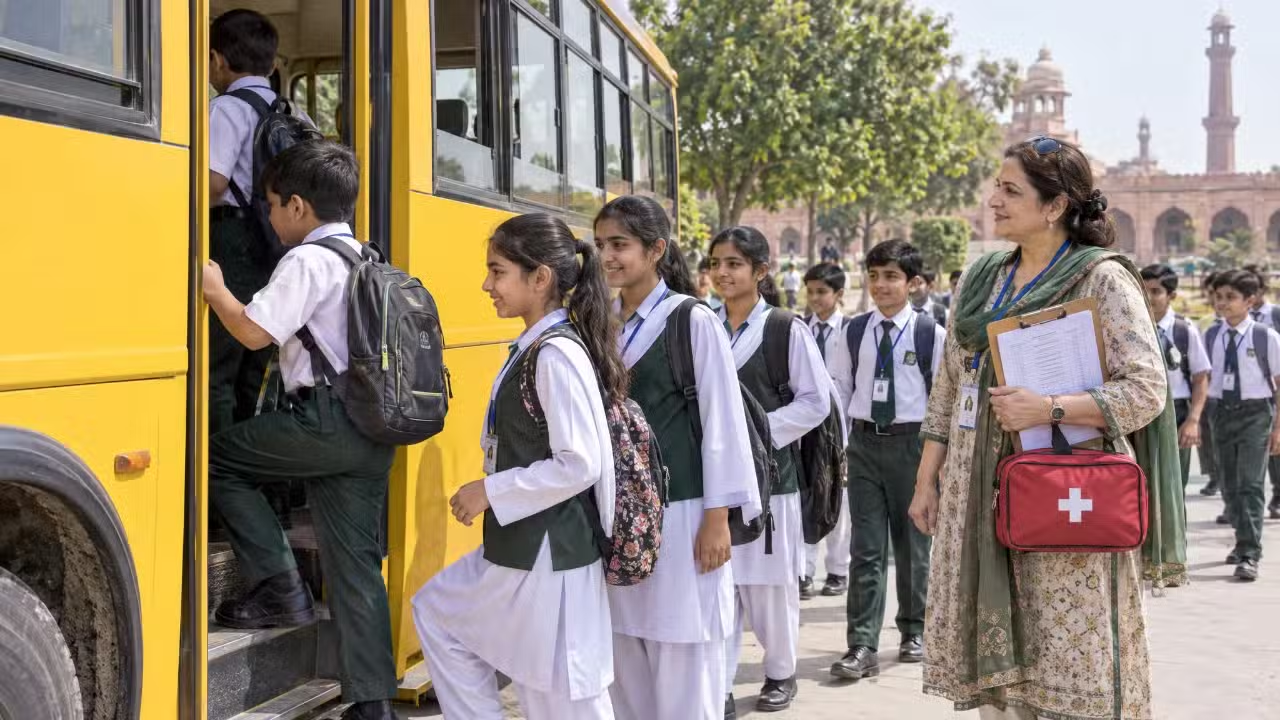
The new guidelines also make the presence of a senior teacher or group in-charge mandatory during every trip. Leadership accountability is built directly into the excursion structure, ensuring an experienced staff member oversees the entire itinerary. A senior female teacher must accompany female students, providing dedicated oversight and support for girls participating in overnight or day-long tours.
Schools must maintain a supervision ratio of one teacher for every 15 students. This numerical threshold ensures that educators can manage student behavior, monitor safety, and respond to individual needs effectively. Large groups require proportionally larger contingents of trained school staff to maintain order and security.
Vehicle Standards and Student Identification
Only vehicles with valid fitness certificates and commercial permits can be used for transportation. Schools are barred from using substandard buses, informal carpools, or vehicles lacking official commercial authorisation. Transport providers must present proof of regular mechanical inspections and roadworthiness before carrying students.
Students must carry school identity cards containing emergency contact numbers and blood group details. These identification tags allow medical personnel and emergency responders to access vital health information immediately if an accident or medical emergency occurs. Clear identification helps reunite separated students with their groups quickly.
Health Precautions and Prohibited Items
School staff are also required to carry first aid kits and maintain records of students' medical information. Teachers must be prepared to handle minor injuries, chronic conditions, and allergic reactions using documented medical histories provided by parents prior to departure. Access to basic medical supplies is now a mandatory requirement for all school-sanctioned travel.
During trips, students cannot visit unapproved locations or leave their groups, while carrying tobacco, weapons and other dangerous items is strictly prohibited. Itinerary deviations create security risks, making strict adherence to approved schedules compulsory. Banning hazardous items protects participants from potential violence, substance use, and accidental injury.
Post-Trip Academic Requirements
The department has further directed schools to collect a report, project or presentation from students after each trip. This requirement integrates recreational travel back into the academic curriculum, ensuring that excursions serve a genuine educational purpose. Students must reflect on their experiences and demonstrate what they learned during the outing.
The instructions will apply to all public and private schools across Punjab. Educational institutions must update their internal policies immediately to align with these mandates. Failure to follow the new framework exposes school administrators to regulatory penalties and administrative sanctions from the education department.