Punjab School Education Department Sets Strict Safety Rules for Educational Trips
The Punjab School Education Department has issued new guidelines for outdoor trips and recreational tours by public and private schools. These directives aim to protect students during travel and ensure that educational excursions follow strict safety protocols across the region.
Under the new directives, travelling on highways and in hilly areas at night in bad weather has been banned, while prior approval from the relevant District Education Authority has been made compulsory before educational tours. These measures address growing concerns over transport safety and accountability during school-organized travel.
Background on School Travel Regulations in Punjab
Educational excursions are a common part of the academic calendar in Punjab, offering students practical learning opportunities outside the classroom. However, previous lack of standardized oversight during transit often exposed young learners to preventable road risks. The education authorities previously relied on decentralized institutional policies, leading to inconsistent safety measures across different districts.
The absence of mandatory route clearances and vehicle checks prompted administrative intervention. By establishing uniform protocols, the government seeks to eliminate hazardous travel practices and ensure that both public and private institutions adhere to identical safety standards.
What Are the New Approval and Consent Requirements?
Schools have been instructed to obtain written consent from parents and emergency contact numbers before educational trips. The school administration will also provide the complete tour schedule, transport details, and list of students to the relevant authority. These documents create a clear paper trail for every excursion, ensuring that parents and officials remain fully informed.
Securing prior permission from the District Education Authority is now a mandatory legal step for institutions planning any outing. Educational administrators must submit their schedules well in advance to allow adequate time for official review and verification.
Supervision and Safety Rules During Transit
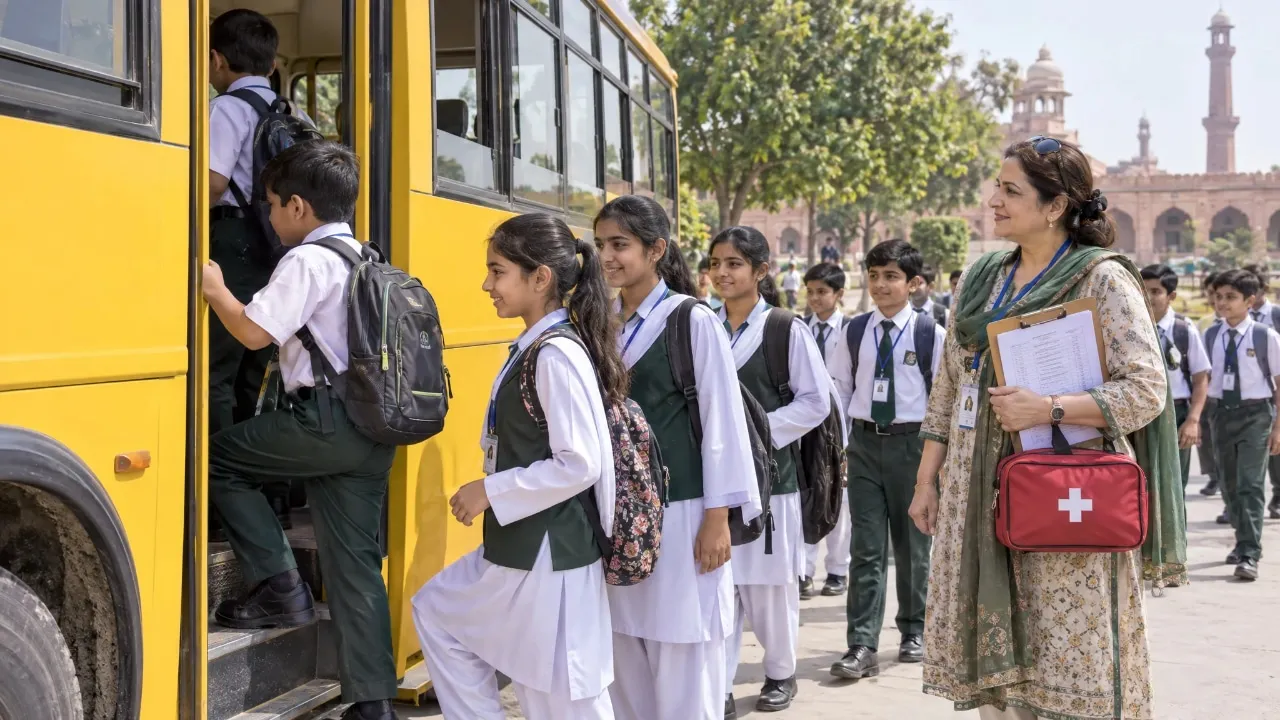
According to the guidelines, the presence of a senior teacher or group in-charge during educational tours will be mandatory, while a senior female teacher must accompany female students. A ratio of one teacher for every 15 students has been set to ensure proper oversight of all participants throughout the journey.
The department has directed that only vehicles with fitness certificates and commercial permits be used for educational tours. Students will be required to carry school identity cards bearing emergency contact numbers and blood group details.
School staff have also been instructed to carry a first aid kit and maintain a record of students' medical information. These provisions equip accompanying adults to handle minor injuries and medical emergencies promptly before professional help arrives.
Behavioral Policies and Prohibited Items
During tours, students will not be allowed to visit unapproved locations or separate from the group, while carrying tobacco, weapons and dangerous items has been completely banned. Group discipline remains a central focus of the regulatory framework to prevent accidents and maintain order in public spaces.
Institutions must brief students on these code of conduct rules before departure. Any deviation from the approved itinerary can result in administrative penalties for the negligent school.
Post-Trip Academic Requirements
The School Education Department has directed that upon return from a tour, students must submit a report, project or presentation. All issued instructions are to be strictly implemented in both public and private schools.
This academic requirement ensures that recreational excursions retain a clear educational value. Students must synthesize their experiences and observations into tangible learning outputs for evaluation by their instructors.