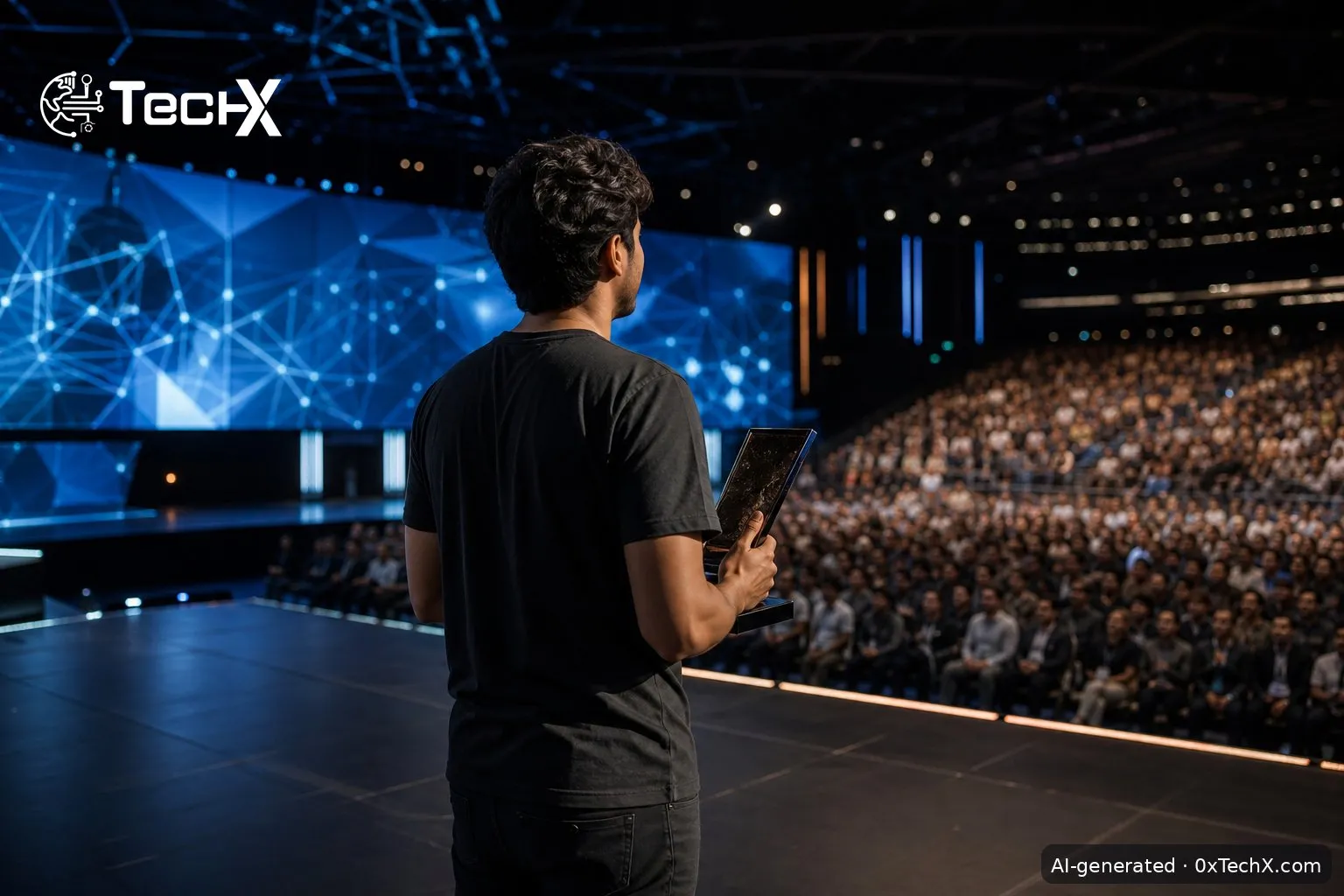
Pakistani startup RLabs and its founder Harris Ahmed achieved a milestone by winning the top prize at one of Silicon Valley's largest innovation summits, pitching to an audience of over 3,000 investors and executives. This victory brings international recognition to Pakistan's technology sector, proving that local innovators can compete and win at the highest global levels. The triumph highlights a broader shift in the country's economic landscape, moving away from simple software outsourcing toward proprietary intellectual property and deep technology development.
The achievement marks a turning point for founders working out of specialized hubs in Islamabad. By beating out thousands of global applicants, RLabs demonstrated the commercial viability of Pakistani engineering on an international stage. Industry observers note that this win could pave the way for increased foreign investor interest and broader validation of Pakistani deep tech.
What Is the RLabs GOAL Award and How Did It Happen?
RLabs secured the GOAL Startup Award during the Silicon Valley November Summit, which ran from November 2 to 5, 2026. The event was organized by Plug and Play, a prominent global innovation platform and venture capital firm. The startup earned its spot after being chosen as one of only 18 enterprises worldwide to participate in Plug and Play's Global Overseas Acceleration and Learning programme, selected from thousands of initial applicants.
The acceleration programme operates on an equity-free model, providing promising companies with access to corporate pilots, proofs of concept, and potential funding without requiring them to give up equity shares. Harris Ahmed noted that the summit concentrated heavily on artificial intelligence and deep technology, featuring live demonstrations and pitches from over 300 startups distributed across more than 20 industry programmes. Standing out in such a dense competitive environment required rigorous preparation and cutting-edge technology.
What Does RLabs Actually Build?
During the presentations, Harris Ahmed showcased the company's work in extended reality simulators, synthetic data, and machine training. In practical terms, the enterprise creates software infrastructure that enables developers to build complex simulation environments significantly faster than traditional methods, relying on artificial intelligence to handle demanding computational tasks.
According to the National Incubation Centre for Aerospace Technologies, RLabs has been training a proprietary Large Language Model. This model powers a modular, cross-platform simulation engine designed to reduce development time by 75 per cent. The National Incubation Centre for Aerospace Technologies, based in Islamabad, specializes in supporting ventures engaged in advanced engineering rather than basic consumer applications. This specialized institutional backing helps explain why the team focuses on heavy infrastructure projects.
Harris Ahmed graduated in 2018 from the National University of Sciences and Technology in Islamabad. The university has established a reputation as a reliable training ground for deep tech founders across the nation, and this latest international accolade adds further weight to that institutional track record.
What the RLabs GOAL Award Reveals About Pakistan's Startup Scene
This international recognition builds upon years of steady development within the domestic entrepreneurial ecosystem. Pakistan's startup ecosystem has crossed $4.77 billion in cumulative funding across 22,600 or more registered companies, with the first quarter of 2026 alone accounting for $62 million in deals alongside 18 new angel investors entering the market.
Furthermore, the country placed 16th out of 193 countries in the 2026 Global Outsourcing Talent Index by Ataraxis Management, positioning itself in the top 9 per cent globally. While the technical talent is clearly present, the central challenge has long been whether local creators could transition from providing services to building proprietary products. RLabs exemplifies this transition by focusing on intellectual property in artificial intelligence and extended reality simulation.
Earlier momentum laid the groundwork for this success, as four incubatees from the National Incubation Centre Lahore entered the same GOAL programme in 2025, marking the first time Pakistani founders integrated into Plug and Play's Silicon Valley network. RLabs has now advanced that progress by securing the overall award.
What Comes Next for RLabs?
Following the recognition in California, Harris Ahmed stated that the company is preparing for a formal launch in the United States. Entering the American market presents a notoriously difficult hurdle for international startups, where securing initial awards must quickly translate into paying enterprise clients.
While the credential provides valuable visibility, building a sustainable go-to-market strategy remains the next operational hurdle. Successful founders from emerging economies frequently use their domestic markets for initial validation while tailoring their commercial expansion toward North American or Gulf markets early in their lifecycle.
The network maintained by Plug and Play offers access to corporate partners and venture capitalists that most regional enterprises struggle to reach. For the wider technology community in Islamabad and beyond, the outcome demonstrates that the barrier between local incubation and international exposure is steadily shrinking.