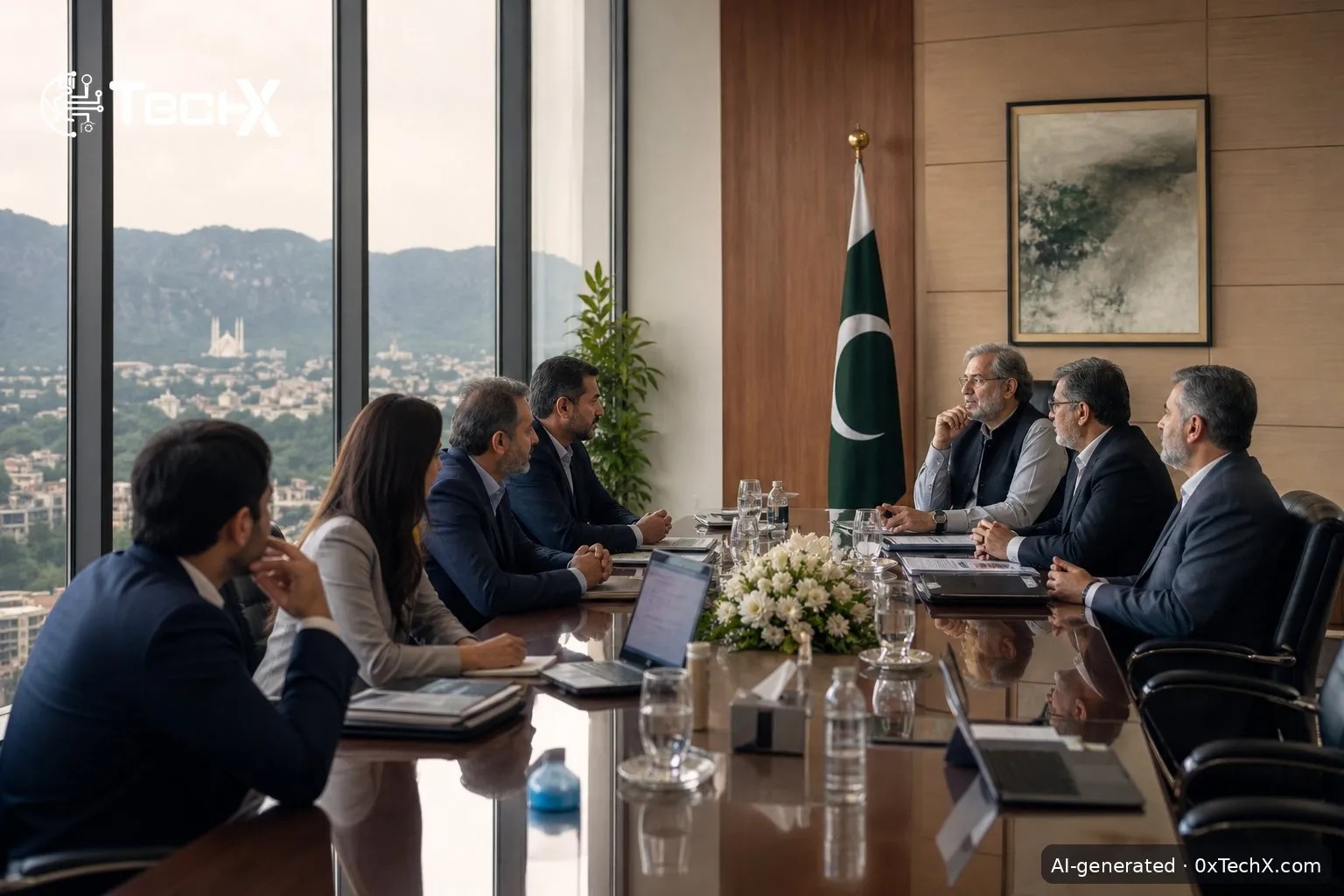
On 19 November 2026, the Special Investment Facilitation Council, commonly known as SIFC, sat down with a high-level delegation from Endeavor Pakistan to discuss strategies for linking domestic entrepreneurs with international venture capital. This high-profile engagement signals a distinct shift in government policy, treating early-stage enterprise funding as a core macroeconomic priority rather than a peripheral industry topic. The meeting addresses a long-standing structural deficit in the local market, where innovative business ideas outpace the availability of domestic risk capital.
The urgency behind this initiative stems from a stark mismatch within the national technology sector. While the combined enterprise value of domestic startups now exceeds USD 4 billion following years of steady expansion, actual financial backing remains severely restricted at around USD 57 million, with only USD 15 million flowing to breakout-stage firms. By comparison, neighboring markets secure billions in venture funding, leaving local founders rich in valuation but starved of the liquidity needed to scale operations regionally or globally.
What Happened at the SIFC-Endeavor Pakistan Meeting
The discussions at the SIFC offices brought together government officials and an Endeavor Pakistan delegation featuring notable figures such as Mudassir Sheikha and Amr El Abd from Egypt. The agenda centered on breaking down barriers to international venture investment and creating sustainable frameworks for cross-border partnerships. Participants analyzed ways to showcase Pakistani talent to overseas funds that typically overlook South Asian markets outside traditional hubs.
This institutional dialogue followed directly on the heels of another major policy event. Just a day prior, Prime Minister Shehbaz Sharif formally urged the wider Endeavor Group to deepen its engagement with Pakistani entrepreneurs by offering advanced international mentorship, capability building, and direct access to global investors. These consecutive high-level meetings demonstrate a synchronized effort across government branches to resolve the financing bottlenecks that have constrained the local ecosystem.
Why Pakistani Startups Need Global Investment Right Now
The funding drought presents a formidable barrier for companies trying to transition from promising local ventures into dominant international players. Although the broader technology sector has expanded significantly since 2020, the local pool of venture capital is far too small to support capital-intensive growth models. Startups in the country require substantial foreign inflows to compete globally, upgrade infrastructure, and retain top engineering and management talent.
The inclusion of Egyptian representative Amr El Abd in the talks introduced a valuable cross-regional perspective on emerging market dynamics. This collaboration points toward South-South cooperation, allowing Pakistani founders to learn from the scaling experiences of counterparts in North Africa and the Middle East. Exchanging entrepreneurial expertise across these developing tech corridors opens alternative pathways for market entry and capital acquisition.
What Endeavor Pakistan Brings to the Table
Endeavor is an established global non-profit organization dedicated to supporting high-impact entrepreneurs. Pakistan formally joined the network as its 40th chapter in 2023, though the local team has actively operated since 2022. Over the past four years, the organization has carefully selected eight Pakistani startups through a rigorous vetting process, granting them entry into a worldwide network of mentors and investors.
The roster of selected local companies features some of the most prominent names in the domestic digital economy, including Abhi, Bazaar, LAAM, SadaPay, and PostEx. The core methodology involves identifying founders with exceptional growth potential and integrating them into an international support system. Partnering with SIFC provides this proven model with the institutional backing required to accelerate operations and support a much larger cohort of businesses.
A useful historical parallel exists in Indonesia, where Endeavor established an office twelve years ago during a period when the local startup scene faced severe constraints. Today, Indonesia stands as one of the most vibrant technology markets in Southeast Asia. Pakistan aims to replicate that trajectory, using government facilitation to shorten the timeline for ecosystem maturity.
What SIFC Commits to Do
During the recent sessions, SIFC leadership reiterated its dedication to fostering an enabling investment climate and actively facilitating capital inflows into the domestic startup economy. The council emphasized that institutional backing, international alliances, and direct investor matchmaking are essential components for unlocking the dormant potential of local innovators.
Established as Pakistan's premier investment facilitation authority, SIFC operates with a primary mandate to drive foreign direct investment toward a target of USD 5 billion. Integrating venture capital and technology startups into this mandate expands the scope of government support. Founders now have a dedicated state entity working to attract foreign funds, reducing the burden on individual entrepreneurs who previously had to navigate complex international investor networks entirely on their own.
The timing aligns with Pakistan's broader economic fundamentals, which feature a population exceeding 252 million, a labour force numbering over 83 million, a youthful demographic distribution, and a cost-competitive workforce. These metrics offer a compelling value proposition for international venture capitalists seeking untapped growth markets.
What This Means for Founders in Pakistan
For the thousands of entrepreneurs currently building companies across major urban centers, this institutional push translates into tangible, practical benefits. The primary objective is to lower the friction that prevents foreign investors from deploying capital in local ventures due to unfamiliarity with regional regulatory environments. Founders can anticipate better structured mentorship initiatives, curated investor introductions, and stronger policy safeguards for complex cross-border transactions.
Despite the positive momentum, formal operational details remain undefined. Neither SIFC nor Endeavor Pakistan released a specific timeline, explicit funding volume targets, or a structured application process for founders hoping to participate in the new initiative. Observers will need to monitor upcoming announcements for concrete execution strategies following this foundational agreement.