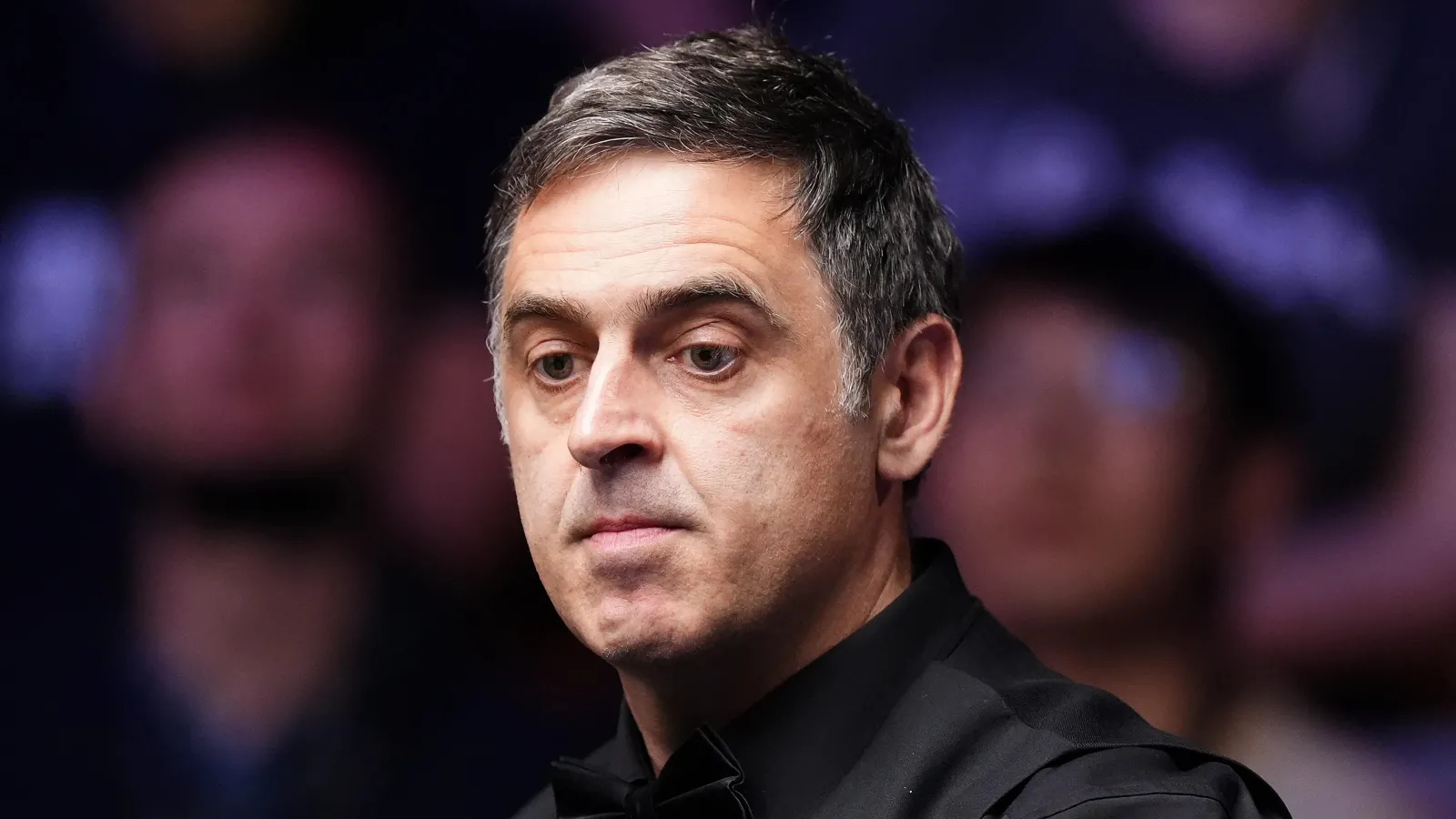
Seven-time world champion Ronnie O'Sullivan told The Telegraph that a large number of players on the professional snooker tour are "a bit thick" and that this mental simplicity can actually be an advantage in a sport dominated by relentless analysis.
The Rocket, who is widely regarded as one of the greatest "head-game" practitioners in snooker history, explained that the mental strain of the sport often outweighs the physical demands. He compared the mental fatigue of snooker to the endorphin rush of a football match, arguing that snooker offers no comparable feel-good release.
Why O'Sullivan Calls Some Players "Thick"
O'Sullivan said, "It takes its toll on you. It's a head game; you are better off sometimes getting punched in the face than having your mind playing tricks with you." He went on to describe how, unlike the physical exertion of football, snooker forces players to sit still for long periods while constantly over-analysing each shot.
"If you have a bad game of football, a bad run, you still feel good after because you have had the endorphins. It's a feel-good drug. Whereas snooker you don't. You are in your head, over-analysing, over-thinking," he added.
According to O'Sullivan, players who do not engage in that level of inner dialogue may actually perform better because they avoid the paralysis that comes from excessive self-questioning. "There are a lot of players on the tour who don't think a lot - they're just a bit thick. And you are better off being thick to play snooker," he said.
What It Means to Be "Thick" in Snooker
In O'Sullivan's view, being "thick" does not imply a lack of skill; rather, it denotes a mental approach that limits over-analysis. He suggested that a player who is "a bit thick" might be content to sit at world number five without the constant inner dialogue that can undermine confidence.
"I'd rather be a bit thick and maybe No5 in the world and you don't have the inner dialogue of questioning yourself or over-analysing it," he explained. By contrast, a player who constantly doubts each shot may lose rhythm and miss opportunities.
Snooker 900: A Faster, Less-Thinking Format
O'Sullivan is also an investor in the new Snooker 900 format, which caps each frame at 900 seconds (15 minutes). The rule changes are designed to reduce the time players spend deliberating and to encourage attacking play.
He said, "[In normal snooker] a lot of players will drag a frame out, knowing it's probably going to take more out of one player than the other. They try to kill your rhythm. They are not interested in winning, they'll stop you playing." The Snooker 900 format, by forcing a rapid pace, removes much of the opportunity for players to engage in the kind of prolonged mental battles that O'Sullivan criticises.
"It becomes less about who is the better player and more about who can change rhythms," he noted, comparing the strategy to the tactics used by football manager Jose Mourinho. O'Sullivan expressed a clear preference for fast, exciting sport, citing tennis legends Rafael Nadal and Roger Federer as examples of contrasting styles.
Historical Context: Mental Demands in Snooker
Snooker has long been described as a mental sport. The World Professional Billiards and Snooker Association (WPBSA) took control of the sport in the 1968-69 season, ushering in the modern era where televised matches amplified the psychological pressure on players.
Throughout the modern era, champions such as Steve Davis, Stephen Hendry, and O'Sullivan himself have spoken about the mental challenges of maintaining focus over long sessions. Hendry, for instance, has spoken about the "psychological battle" of staying sharp across a marathon tournament.
The list of world champions shows how the sport has evolved from the early dominance of Joe Davis in the 1920s and 1930s to the modern era where seven-time champions like Hendry and O'Sullivan share the record for most titles. This evolution underscores the increasing importance of mental resilience as the sport professionalised.
Impact on Players and the Tour
If O'Sullivan's viewpoint gains traction, it could influence coaching methods, with trainers placing greater emphasis on mental simplicity and rhythm rather than exhaustive tactical analysis. Younger players may be encouraged to adopt a more instinctive style, potentially reducing burnout.
Tour organisers might also see the Snooker 900 format as a way to attract new audiences who prefer faster, more dynamic viewing experiences. Faster frames could lead to higher broadcast ratings and more sponsorship opportunities.
What to Watch for Next
The Snooker 900 format is still in its early testing phase. Future tournaments will reveal whether the shortened frame length successfully curtails over-analysis and whether players who adopt a "thick" mental approach achieve better results.
O'Sullivan's comments also raise questions about how mental-training programmes will adapt. Watch for statements from the WPBSA, player unions, and sports psychologists on whether they will incorporate O'Sullivan's philosophy into official guidance.
In the meantime, fans can expect ongoing debate on social media and in snooker forums about the merits of thinking less versus the traditional, methodical approach that has defined the sport for decades.
Regardless of the outcome, O'Sullivan's candid remarks highlight a long-standing tension in snooker: the balance between strategic depth and the need for fluid, instinctive play.