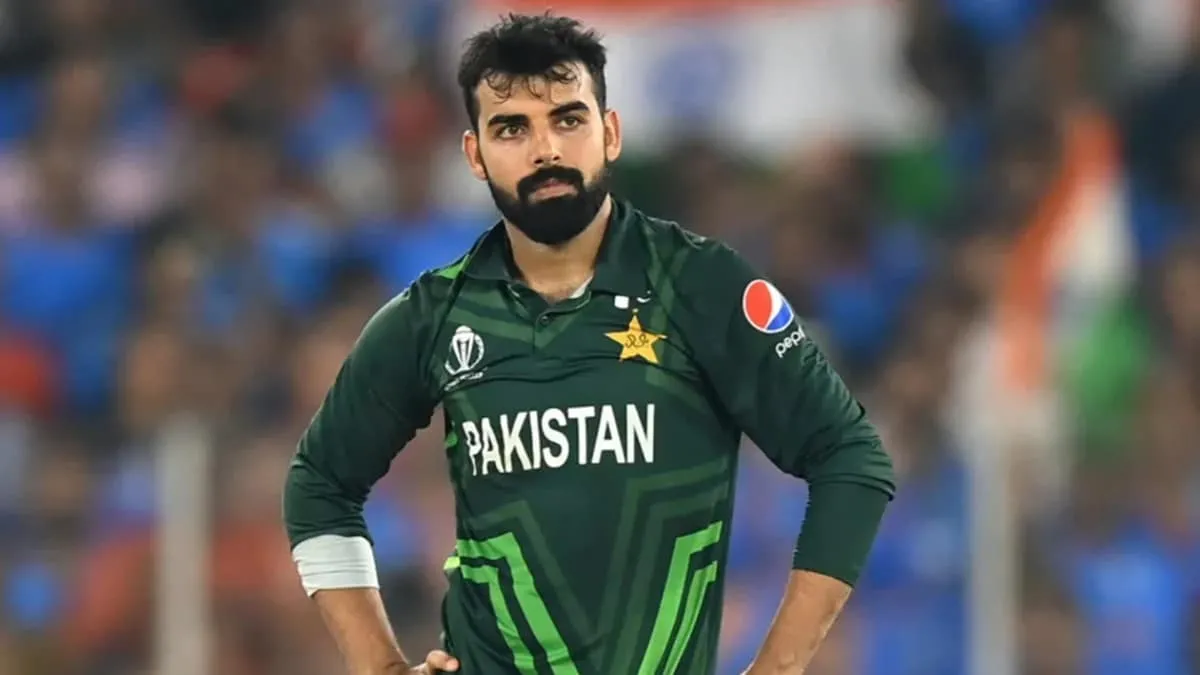
Saqlain Mushtaq Addresses Nepotism Allegations Involving Shadab Khan
Former Pakistan spinner Saqlain Mushtaq has strongly rejected allegations that he used his influence to secure a place for his son-in-law, Shadab Khan, in the national cricket team. The claims have circulated widely on digital platforms, prompting the former coach to clarify his stance on family ties and player selection.
Speaking to PTI, Saqlain clarified that he had never approached any selector or Pakistan Cricket Board official to influence Shadab's selection. He pointed out that the all-rounder was already Pakistan's vice-captain before marrying his daughter.
How Social Media Drives False Claims in Cricket
The former spinner blamed social media for spreading such claims, saying people often overlook facts when discussing cricket. Digital platforms frequently amplify rumors without verifying the underlying timelines or career achievements of athletes.
He also revealed that the two rarely meet, as he lives in the United Kingdom while Shadab is usually in Pakistan or traveling for cricket commitments. This physical distance makes claims of backroom manipulation entirely unfounded.
The Reality of Performance and Selection in International Sport
The former spinner maintained that no player could retain his place in international cricket without performing consistently. While acknowledging that he had publicly supported Shadab, he insisted that his opinions were based on cricketing knowledge rather than family ties.
He believes Shadab can be a valuable player for Pakistan if given a clearly defined role and used properly. Professional athletes require specific tactical deployment to succeed at the highest level.
Addressing Conflict of Interest and Team Dynamics
Saqlain also dismissed suggestions of a conflict of interest, explaining that he assesses Shadab's performances as a former player and coach, not as his father-in-law. Analytical evaluation remains separate from personal relationships in professional sports environments.
He added that Shadab has a strong personality and is not affected by controversies surrounding his selection. Mental resilience is a key trait for international cricketers facing public scrutiny.
Disappointment Over Pakistan Cricket Board Leadership Changes
During the interview, Saqlain also expressed disappointment over his removal as Pakistan's head coach following the appointment of Najam Sethi as PCB chairman in place of Ramiz Raja. Administrative transitions often trigger widespread restructuring within the national setup.
He claimed that a board official informed him his services were no longer required without providing an explanation. Despite repeatedly attempting to meet Sethi and expressing willingness to coach junior players, he received no response and was eventually asked to leave the National Cricket Academy.
Criticism of Instability and Comparison with India
Saqlain also criticized frequent changes in PCB leadership, coaching staff, and policies, blaming poor decisions for disrupting the team's progress from 2023 onward. Administrative continuity is widely considered essential for long-term sporting success.
He compared Pakistan's cricket administration with India's, highlighting the importance of consistent policies and allowing qualified individuals to work independently. Stable governance allows teams to focus entirely on on-field performance.
Reflections on Mentorship and Captaincy Support
The former spinner also praised Wasim Akram for helping him develop during his playing career and defended Babar Azam against allegations of arrogance, describing him as a captain who welcomed suggestions and discussions about team strategy. Constructive dialogue between captains and senior figures helps shape effective tactical plans.