Sindh Government Approves Outsourcing 750 Public Schools
The Public-Private Partnership Policy Board of the Sindh government on Tuesday approved the outsourcing of 750 public schools across the province to private parties under a 10-year agreement. Chief Minister Murad Ali Shah presided over the 53rd meeting of the board, which took major decisions regarding educational infrastructure, industrial zones, and regional transport connectivity.
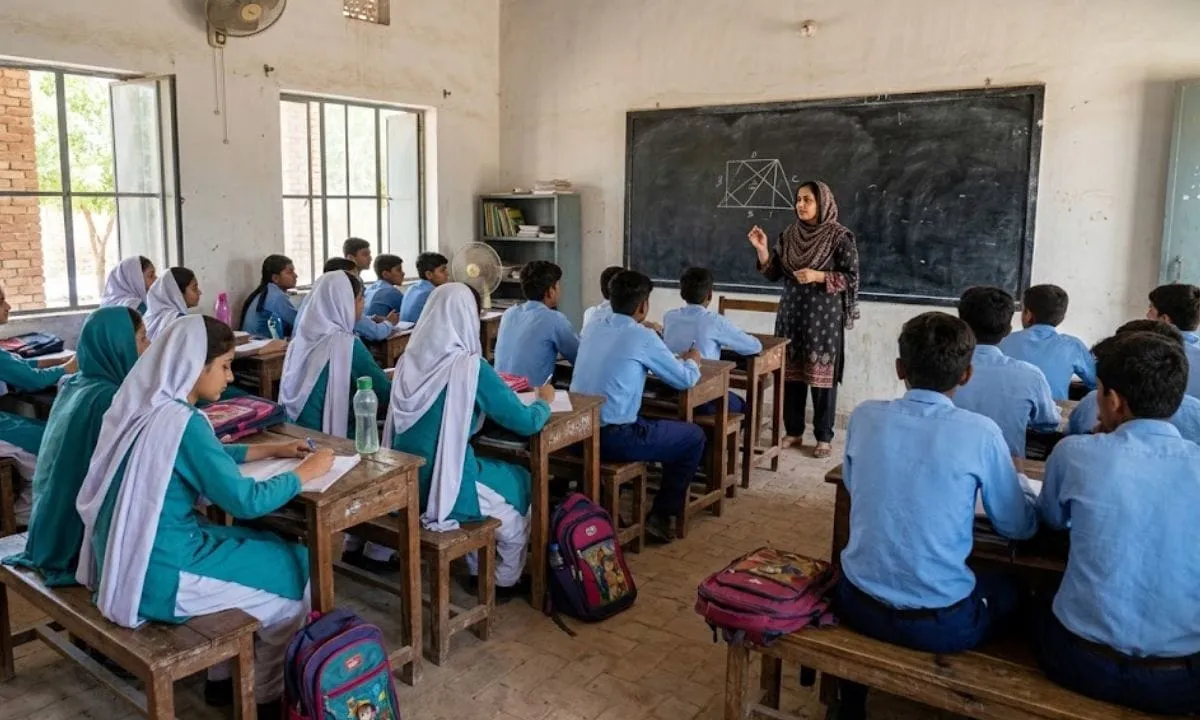
The move represents a substantial expansion of private sector involvement in managing public educational institutions within the province. Officials intend for the long-term contracts to improve management standards, enhance facilities, and lift educational outcomes for tens of thousands of students currently enrolled in government-run campuses across multiple districts.
Which Educational Programmes Are Included in the Outsourcing Plan?
According to an official statement, the schools fall under the Sindh Secondary Education Improvement Project, the Sindh Early Learning Enhancement through Classroom Transformation programme, and the Peoples Schools initiative. These umbrella frameworks guide public sector investments and educational reforms across the province with support from various development agendas.
The broad scope of the initiative encompasses several distinct operational categories:
- 453 schools under the Sindh Secondary Education Improvement Project, which includes 401 under additional financing and 52 under original financing.
- 295 schools operating under the Sindh Early Learning Enhancement through Classroom Transformation programme.
- Two English-medium Peoples Schools located within the provincial network.
Student Capacity and Operational Responsibilities Under the 10-Year Agreements
The targeted educational facilities possess a combined capacity of 345,940 students, while their current enrolment stands at 188,852 children. Under the terms of the 10-year agreement, private operators will assume full responsibility for teachers' salaries, non-teaching staff, operational expenses, uniforms, stationery, and other essential services.
While private entities manage day-to-day operations and academic delivery, the government will continue to provide the required funding to sustain the institutions. This division seeks to combine private sector administrative efficiency with public sector financial backing, ensuring that students do not face tuition barriers while benefiting from upgraded resources and instructional oversight.
How Private Operators Will Be Selected Through Competitive Bidding
To ensure transparency and fair competition, the board approved the formation of a Technical and Financial Evaluation Committee. Furthermore, authorities authorized open national competitive bidding through the e-PADS platform, using Quality and Cost-Based Selection criteria.
This procurement method evaluates bidders based on both their technical competence and their financial proposals. By employing digital procurement channels, the administration aims to attract qualified educational management organizations capable of meeting rigorous performance metrics established by the provincial education department.
Broader Infrastructure and Economic Decisions by the PPP Policy Board
Alongside the educational reforms, the board cleared several other regional initiatives aimed at strengthening infrastructure, expanding industrial investment, and introducing modern digital facilities. These decisions form part of a broader strategy to spur economic growth and improve public service delivery across Sindh.
Specific project approvals included a revised joint venture model for the Dhabeji Special Economic Zone and bridge financing amounting to Rs2 billion for the Ghotki-Kandhkot Bridge project. These transport and industrial measures run parallel to the educational outsourcing drive, reflecting a multi-sectoral approach to provincial development.
Background of the Education Management Organisation Model in Sindh
Sindh first introduced the Education Management Organisation model in 2015 under the Sindh PPP Act 2010. The framework initially began with 106 schools that were rebuilt by USAID following the devastating floods of 2010.
Over the past decade, the EMO model has gradually expanded to cover more facilities, allowing non-profit and private entities to run public schools with the goal of reducing dropout rates and improving learning indicators. The latest approval of 750 schools marks the largest single expansion of this public-private framework to date.