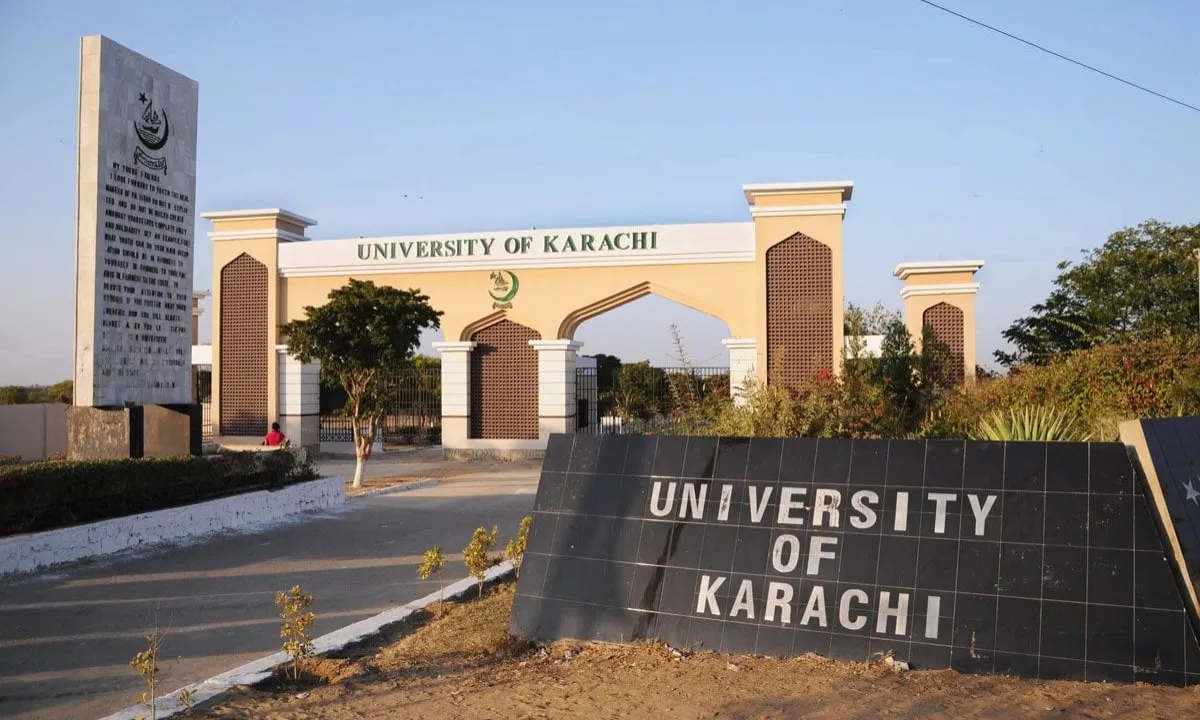
Sindh Assembly Opposition Leader Ali Khurshidi has alleged that the person appointed dean of the University of Karachi's Faculty of Law does not hold a master's degree.
What Allegations Did Ali Khurshidi Make?
Speaking to reporters, the Muttahida Qaumi Movement-Pakistan (MQM-P) leader said the newly appointed dean of the University of Karachi's Faculty of Law lacks the required master's degree. He added that the appointment process was not transparent and called for an immediate review by the university's governing bodies.
Why Is the Karachi Quota Issue Important?
Khurshidi questioned why Karachi faces a separate admissions quota if Sindh functions as a single unit. He highlighted that under the current quota system, Karachi students receive just 20 of the 953 seats at Mehran University, a proportion he described as disproportionately low.
The quota system was introduced to balance regional representation in public institutions. Critics argue that it has created a de-facto segregation of seats, limiting opportunities for students from the province's largest city.
How Do Domicile Practices Affect Medical Admissions?
Turning to medical admissions, Khurshidi alleged that candidates obtain fake domiciles to pass the Medical and Dental College Admission Test (MDCAT). He claimed that people were selling Karachi domiciles for money, enabling non-Karachi residents to compete for the limited seats reserved for the city.
Under Pakistani law, a domicile certificate proves a person's permanent residence and is a prerequisite for eligibility in many provincial quota schemes. The alleged sale of such documents undermines the fairness of the admission process and raises questions about the integrity of the verification mechanisms used by the Sindh Board of Admission.
What Is the Current Allocation at Mehran University?
Khurshidi said Karachi students receive just 20 of the 953 seats at Mehran University under the quota system. He criticized the allocation and warned that people would hold those responsible accountable if they continued to deny Karachi its rights.
Mehran University, located in Jamshoro, is one of the province's leading engineering institutions. The limited Karachi quota has been a point of contention for years, with several student groups demanding a revision of the seat distribution formula.
Who Else Is Involved in the Debate?
Meanwhile, the opposition leader asked whether Karachi Mayor Murtaza Wahab would speak out about the matter. He called on the relevant authorities to take notice of the alleged irregularities involving university admissions, domicile documents, and the appointment at the University of Karachi.
The mayor's office has not issued a public response at the time of writing, but the issue is expected to surface in upcoming city council meetings.
Background on University Admission Quotas in Sindh
Since the early 2000s, Sindh's public universities have operated under a quota system that allocates seats based on district populations and historical enrollment patterns. Karachi, despite being the most populous district, has historically received a smaller share of seats because the system also reserves places for rural districts and smaller cities.
Legal challenges to the quota system have been filed in the Sindh High Court, arguing that the allocation violates the principle of equal opportunity. The court has so far upheld the system, citing the need to promote regional development.
How Are Law Faculty Deans Appointed?
The University of Karachi's Faculty of Law follows the university's statutory appointment procedure, which requires candidates to possess a master's degree in law or a related field, along with a record of academic and administrative experience. The appointment is typically approved by the university's syndicate and the Higher Education Commission of Pakistan.
If the current dean indeed lacks the required qualifications, the matter could trigger a review by the university's internal audit committee and possibly an intervention by the Higher Education Commission.
What Are the Potential Consequences?
If the allegations are substantiated, the dean could face removal, and the university might be required to re-open the recruitment process. For the quota issue, a revision could lead to an increase in Karachi seats, affecting the admission prospects of students from other districts.
Allegations of domicile fraud could prompt law enforcement agencies to investigate the illegal sale of documents, potentially resulting in arrests and stricter verification procedures for future admissions.
What Steps Can Students and Stakeholders Take?
Students are advised to verify their domicile certificates with the local district administration before applying for university seats. They should also keep records of all communications with admission authorities.
Stakeholders, including student unions and civil society groups, can file formal complaints with the Sindh Public Service Commission and request a transparent audit of the quota allocation.
What to Watch For Next?
The next steps include a possible statement from Mayor Murtaza Wahab, a formal inquiry by the University of Karachi's syndicate, and potential legal action regarding the quota system. Monitoring announcements from the Sindh Higher Education Department will provide further clarity.