Federal Government Finalizes Plan to Split SNGPL and SSGCL
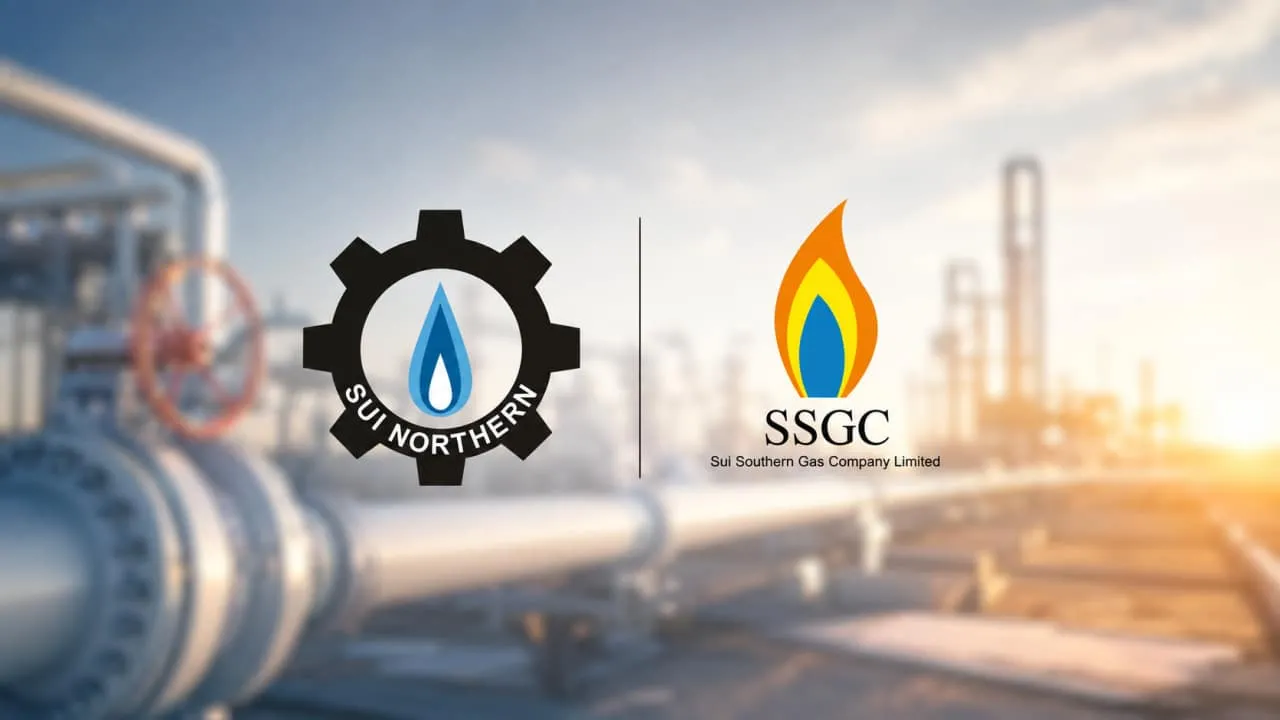
The federal government has finalized a plan to break up Sui Northern Gas Pipelines Limited (SNGPL) and Sui Southern Gas Company Limited (SSGCL) into six to eight smaller entities, aiming to introduce competition into Pakistan's gas market. This major structural overhaul seeks to reshape how natural gas moves from extraction points to domestic kitchens and industrial boilers across the country. By dividing the massive utility providers, authorities hope to dismantle long-standing monopolies and establish a more market-driven commercial environment.
The proposed framework would separate gas transportation, distribution and sales businesses, ending the current structure in which the two Sui companies operate pipeline networks while also supplying gas to consumers. The plan has been submitted to Prime Minister Shehbaz Sharif for initial approval and guidance on whether it should also be presented to the federal cabinet, Council of Common Interests or Parliament. Officials have worked on this framework for months to ensure the separation of network management from commercial supply operations.
The reform framework was developed with technical support from the World Bank, KPMG and Wood Mackenzie. It also has the backing of the International Monetary Fund (IMF), whose clearance is required under Pakistan's ongoing program and gas circular debt management plan. International financial institutions have long pressed Islamabad to reform state-owned enterprises to curb fiscal deficits and improve operational performance within the energy sector.
Background of Pakistan State-Owned Energy Monopolies
SNGPL and SSGCL have operated for decades as integrated monopolies, handling transmission, distribution, and retail sales within their respective territorial jurisdictions. SNGPL traditionally supplies gas to Punjab and Khyber Pakhtunkhwa, while SSGCL covers Sindh and Balochistan. Over the years, these integrated utility giants accumulated massive operational inefficiencies and financial losses, contributing heavily to the national energy crisis and mounting circular debt.
Circular debt in the gas sector has expanded rapidly due to a mismatch between the cost of imported and domestic gas, delayed tariff adjustments, and uncollected revenues from various consumer categories. Successive administrations attempted various administrative fixes, but structural problems persisted because a single entity controlled both the physical pipelines and the commercial sale of gas. This dual role created inherent conflicts of interest, as third-party private suppliers had no fair access to the transport infrastructure required to reach buyers.
International lenders like the World Bank and the IMF made structural reforms in the energy sector a core condition for financial assistance packages. Technical consultants from KPMG and Wood Mackenzie assisted local policymakers in studying international best practices to unbundle the gas sector. Their findings showed that separating pipeline operations from retail supply is essential for introducing genuine market competition and private sector participation.
Proposed Structure for New Gas Supply and Distribution Companies
The petroleum division has proposed creating at least four gas sales entities. Two competitive gas supply companies would serve commercial and industrial consumers, while two regulated gas supply companies would supply households. This division ensures that residential consumers continue to receive protected, regulated utility service, while factories and businesses can negotiate terms in an open marketplace.
Under the plan, SNGPL and SSGCL would gradually open their existing supply and consumer portfolios to private competitors. They would be required to make 20 percent of their portfolios available to competitive suppliers in the first year, followed by another 10 percent in each of the next two years. This phased approach allows the legacy utilities time to adjust their business models while steadily welcoming independent players.
This would gradually open up 60 percent of the market to competition. The government expects the changes to reduce conflicts of interest and allow private companies to enter the gas supply business. Industrial consumers have frequently complained about supply shortages and high captive power costs, making a competitive supply model an attractive alternative for the manufacturing sector.
Lessons From Past Unbundling Attempts in Pakistan
The current reform plan marks a departure from an earlier attempt in 2016-17 to divide the gas companies into four provincial distribution companies and a separate transmission company. That previous effort stalled due to complex legal hurdles, provincial political disagreements, and concerns over asset distribution among different regional stakeholders. Policymakers have taken those historical roadblocks into account while designing the new framework.
Unlike the provincial division model, the new strategy focuses on separating functional business lines rather than carving companies up strictly along geographic boundaries. Officials believe this functional unbundling is more palatable to regulatory bodies and financial institutions. It maintains centralized transmission networks while creating specialized entities for industrial and household supply segments.
Officials say the prime minister's authorization is needed to appoint transaction advisers, who will guide the government through the remaining constitutional, legal, regulatory and financial requirements. This process is expected to take five to six months. Transaction advisers will draft the precise corporate blueprints, asset valuations, and transfer schemes needed to divide the utility assets legally and transparently.
Implementation Timeline and Future Outlook
The government aims to move the transformation plan into its implementation stage by the fourth quarter of 2027. The broader objective is to create a competitive gas market, improve efficiency, attract investment and strengthen Pakistan's energy security. Achieving this target requires meticulous coordination among the petroleum division, corporate regulators, provincial authorities, and international partners.
Energy security remains a critical national priority as domestic gas reserves gradually decline and the country relies more heavily on imported liquefied natural gas. By inviting private investment into transmission and distribution, the state hopes to mobilize capital for infrastructure upgrades without increasing sovereign debt burdens. Modernizing the pipeline network will also reduce technical losses and gas theft that currently plague the distribution system.
Watchers of Pakistan's economic policy will monitor the initial steps, including the formal appointment of transaction advisers and cabinet-level deliberations. The success of this unbundling effort will serve as a major test of the government's resolve to implement structural economic reforms under stringent international monitoring.