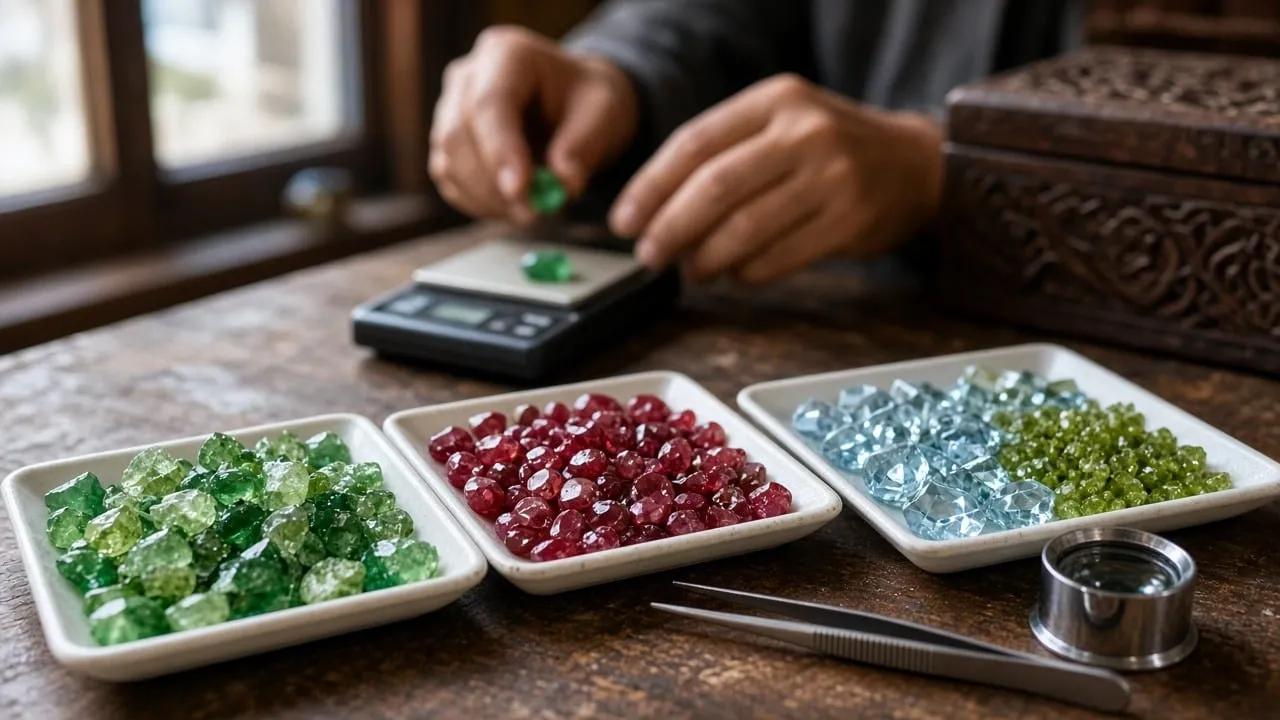
The State Bank of Pakistan (SBP) announced on Monday that the limit on export commission, brokerage, discount and retention of export proceeds for the gemstone sector has been tripled, rising from 10 percent to 30 percent.
In a circular issued to all scheduled banks, the central bank said the change is intended to help the gemstone sector increase its exports and improve foreign-exchange earnings.
"In order to support the gemstone sector in enhancing its exports, it has been decided to increase the limit for commission, brokerage, discount and retention in ESFCAs by the sector from the existing 10% to 30%," the SBP said.
What the Change Means for Exporters
The amendment modifies the table under Paragraph 35(i) of Chapter 12 (Exports) of the SBP's Foreign Exchange Manual. That chapter governs how exporters may pay commissions, brokerage fees, discounts and retain a portion of foreign-exchange earnings in Exporters' Special Foreign Currency Accounts (ESFCAs).
ESFCAs are special accounts that allow exporters to keep a share of their foreign-currency earnings in foreign currency rather than converting the entire amount into Pakistani rupees. Retaining earnings in foreign currency can protect exporters from exchange-rate volatility and provide liquidity for future import purchases.
Under the revised table, gemstones now enjoy a cap of up to 30 percent. Only books, journals and magazines have a higher limit, set at up to 33⅓ percent. Pharmaceutical products are capped at 15 percent, cement at 5 percent, cotton at 2 percent, and all other goods at 10 percent.
The SBP has instructed banks to inform all their customers about the new limit and to ensure full compliance with the updated provisions.
Why the SBP Is Raising the Limit
The decision comes as part of a broader government effort to formalize the gemstone sector and increase its contribution to foreign-exchange earnings. The National Gemstone Policy 2026-2030, approved earlier this year, sets an ambitious target of raising annual gemstone exports to around $500 million by 2030.
Official figures from the Ministry of Industries and Production indicate that Pakistan currently exports only $5 million to $7 million worth of gemstones each year, a fraction of the policy's target. The low export volume is attributed to a combination of informal mining practices, limited access to international markets, and inadequate financing options for exporters.
By allowing a higher commission and retention ceiling, the SBP aims to give exporters more flexibility to negotiate better terms with overseas buyers, cover marketing and logistics costs, and retain a larger portion of foreign currency for future transactions.
How the Change Impacts Different Stakeholders
Exporters: Gemstone traders can now allocate up to 30 percent of their export proceeds to commissions, brokerage fees, discounts or retention in ESFCAs. This may reduce the need to convert earnings immediately, lowering exposure to rupee depreciation.
Banks: Commercial banks will need to update their internal compliance systems, train relationship managers, and communicate the new ceiling to existing and prospective gemstone clients.
Government: Higher retained foreign currency could improve the country's external reserves and support the fiscal goal of diversifying export earnings beyond traditional textiles and agricultural products.
Procedural Steps Exporters Must Follow
Exporters wishing to benefit from the new limit should take the following steps:
- Notify their bank of the intention to use the 30 percent ceiling for upcoming shipments.
- Ensure that export contracts clearly specify the commission, brokerage or discount amounts that will be retained.
- Maintain proper documentation in the ESFCA, including invoices, shipping bills and foreign-exchange transaction records.
- Submit the required forms to the bank for approval under the revised Paragraph 35(i) provisions.
Failure to comply with the updated rules could result in the bank refusing to process the transaction or imposing penalties under the Foreign Exchange Regulation.
Government's Wider Strategy for the Gemstone Sector
Last month, Prime Minister Shehbaz Sharif publicly expressed displeasure over delays in gemstone projects and reaffirmed the sector as a priority for economic diversification. The government has launched a series of measures, including:
- Providing tax incentives for licensed gemstone mining operations.
- Establishing a dedicated gemstone export promotion board to facilitate market access.
- Launching training programmes for artisans to improve product quality and meet international standards.
- Investing in geological surveys to map untapped gemstone deposits.
These initiatives are designed to move the sector from an informal, largely unregulated activity to a structured, export-oriented industry.
What to Watch for Next
The SBP's circular does not specify a timeline for reviewing the new limit, but the central bank typically monitors the impact of such regulatory changes on foreign-exchange flows and market stability. Stakeholders should watch for:
- Quarterly reports from the Ministry of Industries and Production on gemstone export volumes and values.
- Any subsequent SBP guidance clarifying the documentation required for ESFCA retention.
- Potential adjustments to the National Gemstone Policy if export targets are not being met.
Exporters and banks are encouraged to stay in close contact with the SBP's Foreign Exchange Department to ensure smooth implementation.
Practical Takeaways for Gemstone Exporters
1. Review existing contracts to see if the higher 30 percent ceiling can be applied retroactively for pending shipments.
2. Discuss the new limit with your bank's relationship manager to update your ESFCA arrangements.
3. Keep detailed records of all commissions, brokerage fees and discounts to demonstrate compliance during audits.
4. Explore export-promotion services offered by the newly formed gemstone export board to reach new markets.
By taking these steps, exporters can maximise the benefit of the SBP's policy change and contribute to the national goal of $500 million in gemstone exports by 2030.