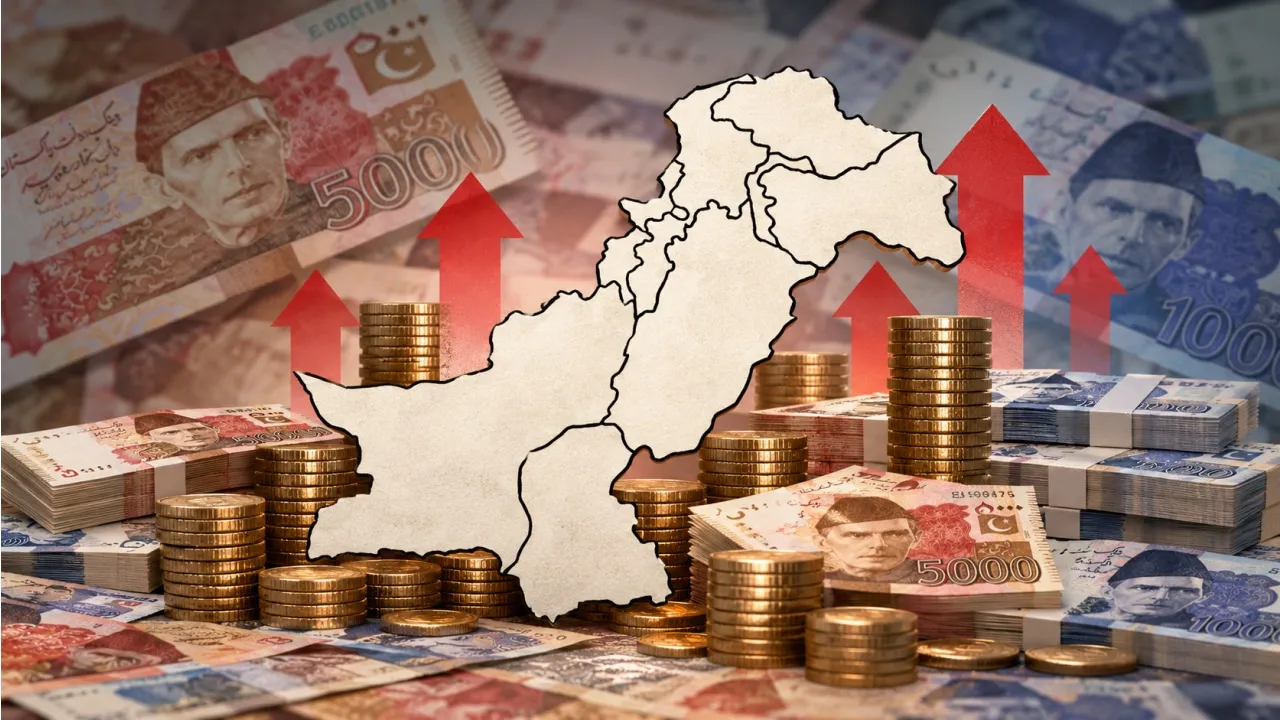
During a Senate subcommittee meeting, officials and lawmakers were told that three major oil and gas companies had generated Rs. 3.6 trillion in profits since the 18th Constitutional Amendment, without provinces receiving any portion of the earnings.
What the Senate Review Uncovered
The review focused on Pakistan Petroleum Limited (PPL), Oil and Gas Development Company Limited (OGDCL) and Pakistan Oilfields Limited (POL). These firms together posted Rs. 3.6 trillion in profit from 2011 to 2026. The subcommittee convener, Senator Barrister Zamir Hussain Ghumro, warned that the total could exceed Rs. 6 trillion when the earnings of other listed companies are added.
Notably, the calculation excluded Sui Southern Gas Company (SSGC), Sui Northern Gas Pipelines Limited and other corporations that also operate in the hydrocarbon sector. The omission highlights the scale of revenue that remains unaccounted for in the current discussion.
Why Article 172(3) Matters
Article 172(3) of the Constitution of Pakistan mandates joint and equal ownership of mineral oil and natural gas between the federal government and the provincial government in whose territory the resources are located. The clause was introduced as part of the 18th Constitutional Amendment in 2010, which aimed to devolve fiscal powers and give provinces a larger share of natural resource income.
Under the article, provinces are entitled to an equal share of revenues generated from oil and gas extracted within their boundaries. The provision is meant to address historic imbalances where the centre collected most of the royalties while provinces saw little benefit despite bearing the environmental and social costs of extraction.
How the Profit Gap Developed
Since the amendment, the federal government has retained the bulk of royalties, taxes and profit-sharing payments. The lack of a detailed mechanism has allowed the centre to interpret "joint ownership" as a formal legal statement rather than an operational revenue-sharing formula.
Industry analysts point to three factors that have perpetuated the gap:
- Absence of a statutory profit-sharing schedule that translates constitutional language into payable amounts.
- Complex corporate structures of PPL, OGDCL and POL, which channel earnings through subsidiaries that are not directly linked to provincial accounts.
- Limited oversight by audit institutions, leaving the verification of provincial entitlements largely dependent on executive goodwill.
Senate Panel's Immediate Demands
The subcommittee directed the Ministry of Petroleum to draft a concrete mechanism that would allocate profits equally between the federal treasury and the relevant provincial governments. The panel emphasized that the mechanism must comply with the literal wording of Article 172(3) and be ready for cabinet approval on an urgent basis.
Ghumro warned that failure to act could trigger a referral to Pakistan's audit authorities, including the Auditor General of Pakistan. He also signalled that chief ministers and federal ministers for finance and petroleum could be summoned before the committee if the issue remains unresolved.
Role of the Auditor General
The subcommittee asked the Auditor General to ensure compliance with Article 172(3) while auditing the profits of the three companies. The auditor is expected to examine the consolidated profit figures submitted by the Ministry of Petroleum, verify province-wise wellhead data and assess whether the current royalty framework respects constitutional guarantees.
Past audits of the oil and gas sector have highlighted discrepancies in royalty calculations, but none have directly linked those findings to the constitutional ownership clause. The current request could set a precedent for future constitutional-based audits across other natural resource sectors.
Potential Impact on Provinces
If the profit-sharing mechanism is implemented, provinces such as Punjab, Sindh, Khyber Pakhtunkhwa and Balochistan could receive billions of rupees annually. The additional revenue could be earmarked for infrastructure, health, education and climate-adaptation projects, especially in regions where oil and gas fields are located.
Conversely, a continued denial of provincial shares may fuel political tension between the centre and the provinces, potentially affecting future devolution reforms and the stability of federal-province relations.
What Comes Next
The Ministry of Petroleum is expected to submit a detailed report covering total profits from 2011 to 2026, along with province-wise production data, to the subcommittee within the next two weeks. Following the submission, the subcommittee will review the figures and issue further directions.
Should the ministry fail to provide a satisfactory mechanism, the panel has indicated it will move the matter to the federal cabinet and may ask the Auditor General to issue a formal compliance report.
Stakeholders, including provincial finance ministries and civil-society groups, are monitoring the process closely. They have called for transparent calculations, public disclosure of profit-sharing formulas and an independent monitoring body to oversee implementation.
Broader Context: Resource Revenue Sharing in Pakistan
Pakistan's resource revenue framework has evolved over decades. Before the 18th Amendment, the centre collected 100% of royalties from natural resources. The amendment introduced a 50-50 split for certain sectors, but the oil and gas clause remained ambiguous. Other sectors, such as coal and minerals, have clearer profit-sharing rules, often based on specific legislation rather than constitutional text.
Internationally, many federal systems allocate a fixed percentage of resource royalties to sub-national units. Examples include Canada's provinces receiving a share of oil sands revenue and Australia's states receiving royalties from offshore gas fields. Pakistan's constitutional provision aims to mirror such models but lacks the detailed statutory backing that other countries have put in place.
Practical Takeaways for Readers
For provincial officials, the Senate's demand signals a possible legal avenue to claim their constitutional share. For citizens, the issue underscores how natural-resource wealth can be redirected to public services if the profit-sharing mechanism is operationalised.
Businesses in the sector should anticipate new reporting requirements and possibly revised royalty payments. Legal practitioners may see an increase in cases interpreting Article 172(3) and its application to corporate profit structures.
Overall, the Senate subcommittee's move marks a decisive step toward enforcing a constitutional promise that has remained dormant for more than a decade.