Sunderland Europa League Match Marred By Jagiellonia Bialystok Fan Brawl
Sunderland faced Jagiellonia Bialystok in a Europa League fixture that turned violent when visiting supporters breached the stadium and entered the home end. The match at the Stadium of Light drew immediate attention for the wrong reasons as security personnel and police rushed to contain the sudden outbreak of fighting. Observers described chaotic scenes during the opening minutes of the fixture, leaving regular attendees shocked by the breach in security.
The visiting club from Poland had been officially banned from attending the fixture due to a previous disciplinary ruling issued by UEFA following prior crowd disturbances. Despite this explicit prohibition, visiting supporters managed to bypass security checks and infiltrate sections reserved strictly for the home crowd. The resulting confrontation during the early stages of the game disrupted the atmosphere and prompted a swift response from law enforcement officers stationed at the venue.
How Banned Jagiellonia Bialystok Fans Entered the Stadium of Light
Club officials and security personnel at Sunderland believe that roughly 20 supporters of the Polish side successfully evaded the stadium ban. These individuals managed to acquire tickets for the fixture by purchasing seats directly within the home end instead of the designated away sections. This method of circumvention allowed them to pass initial ticket scanners before grouping together inside the stadium bowl.
Once inside, the visiting supporters gathered in the North End before initiating a coordinated movement. Witnesses reported that the group suddenly charged into surrounding seating areas, catching nearby spectators off guard. The clandestine entry highlights ongoing vulnerabilities in stadium ticketing protocols when high-risk fixtures involving restricted fanbases are scheduled.
Terrifying Moments Unfold in the North End
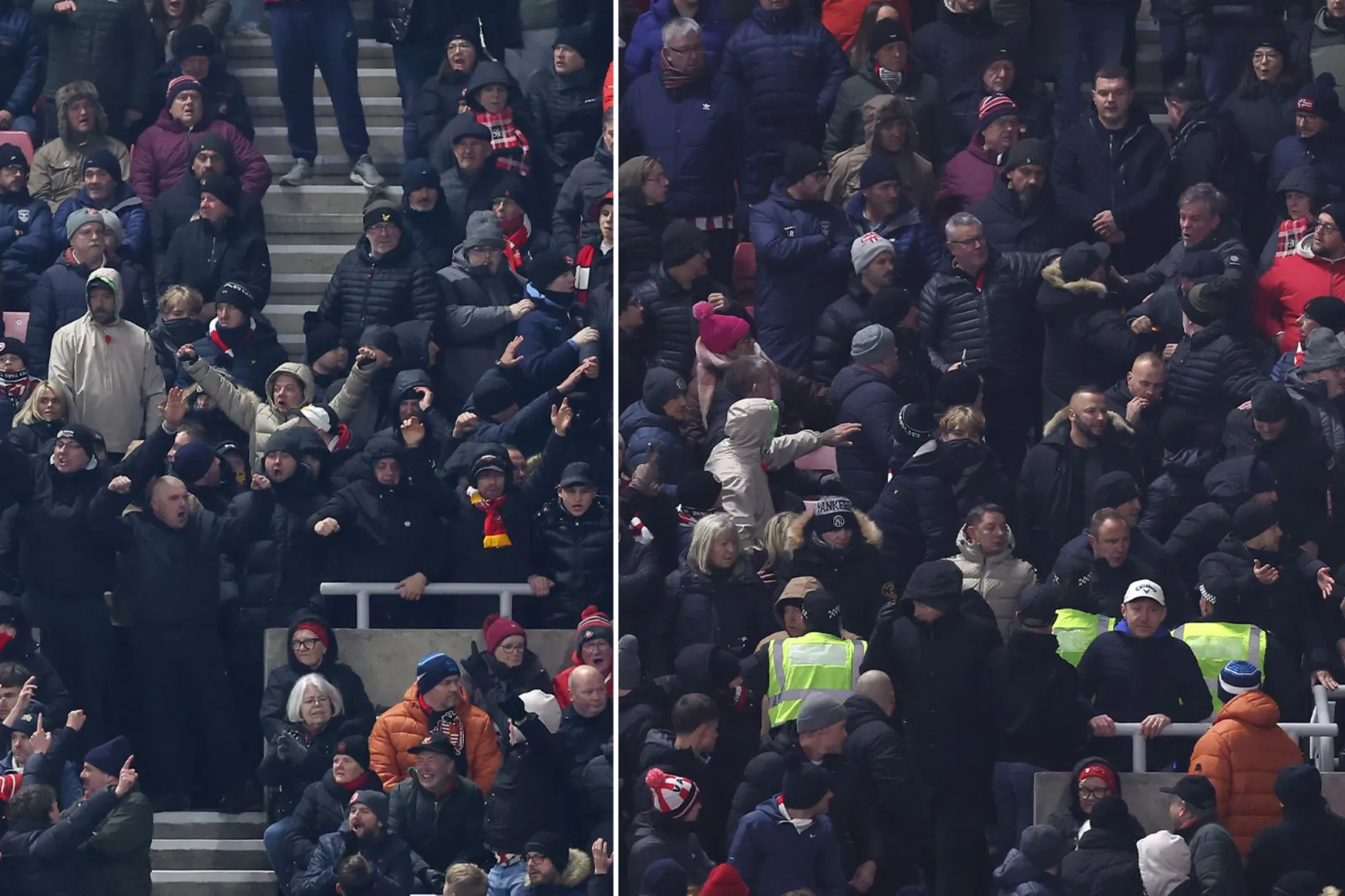
Fighting broke out in the North End during the opening minutes of the match, transforming a routine sporting event into a security crisis. Social media platforms quickly filled with accounts from shaken spectators who witnessed the sudden surge of aggression. One witness posting on the social media platform X described the incident, stating it was actually quite terrifying, and noting that about 50 of their fans burst in and started punching random people.
Additional reports from attendees suggested an even larger number participated in the initial breach. Another witness claimed that between 50 and 100 individuals managed to penetrate the home end before physical altercations erupted across the rows of seats. A separate post captured the immediate reaction inside the stadium, noting that things were kicking off in the stands as away fans were thrown out for being in the home end.
Police Intervention and Stadium Evacuation
Law enforcement officers stationed around the venue reacted quickly to quell the melee as punches were thrown in the stands. Police reinforcements raced over to the North End to assist the initial officers on the ground and establish order. The physical intervention contained the spreading violence and separated the opposing groups before the situation escalated further.
As officers and security staff began ejecting the intruders, the atmosphere shifted. Cheers echoed through sections of the ground as a large number of individuals were turfed out from the stadium by authorities. The swift removal of the troublemakers allowed the remaining spectators to turn their attention back to the pitch, though the disturbance cast a shadow over the fixture.
Broader Context of UEFA Disciplinary Rulings
The ban imposed on Jagiellonia Bialystok supporters stemmed from previous incidents of crowd trouble investigated by European football governing bodies. UEFA routinely enforces stadium bans and travel restrictions on clubs whose followers engage in violent behavior during continental competitions. These disciplinary measures aim to protect players, staff, and ordinary matchgoers from escalating hostility.
However, enforcing such bans presents logistical challenges for host clubs and local police forces. When away supporters acquire tickets through third-party platforms or general sale allocations intended for home fans, identifying them before kickoff remains difficult. Incidents of this nature prompt renewed calls for stricter identity verification procedures at stadium gates across European competitions.
Impact on Sunderland Supporters and Future Security Measures
Regular attendees situated in the North End bore the brunt of the unexpected confrontation. Families and lifelong supporters experienced distress as the brawl disrupted what should have been a standard European night for the club. The physical safety of spectators was momentarily compromised, raising questions regarding perimeter security and internal stewarding ratios.
In response to the disturbances, club representatives face scrutiny regarding how ticket sales were managed for the restricted fixture. Media outlets reached out to Sunderland officials for further comment regarding the security lapses that permitted the visiting faction to enter the premises. Observers anticipate that European football authorities will review the match reports and potentially issue further sanctions to the visiting club following the unacceptable behavior of their traveling followers.