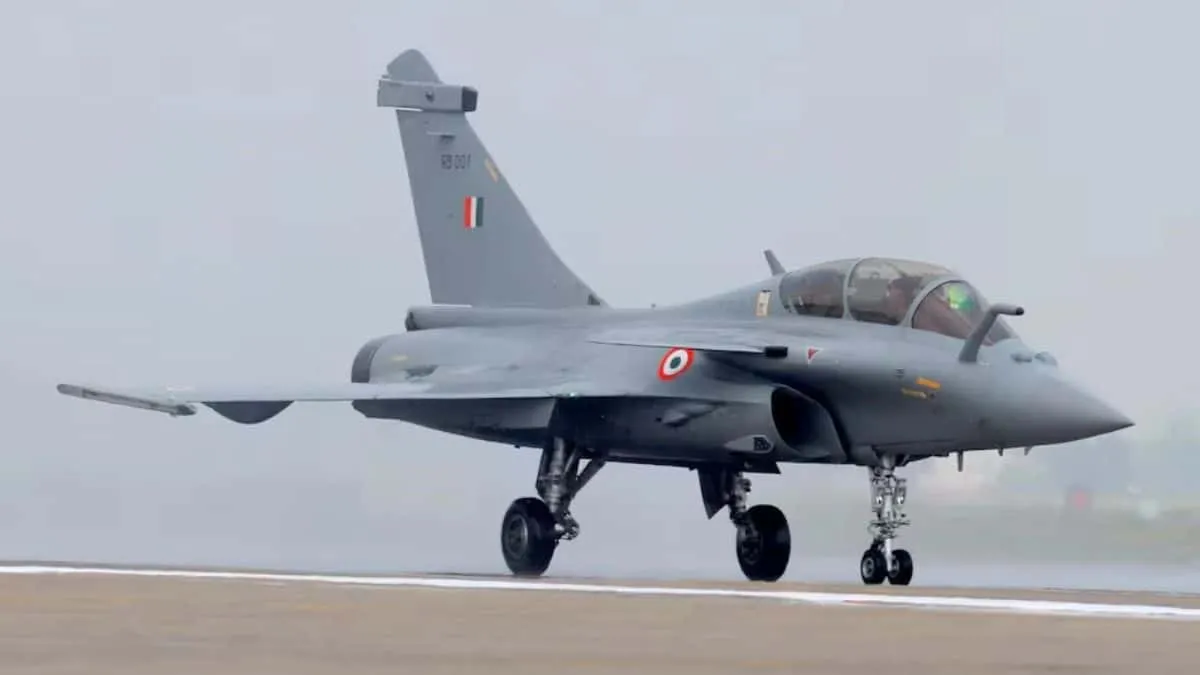
British Aviation Directory Reveals Discrepancy in India Rafale Fleet
A British aviation magazine has exposed India's claim of having all 36 Rafale fighter jets still active and operational, following the May 2025 conflict with Pakistan. The revelation comes from the World Air Forces 2027 directory, which tracks global military aircraft inventories and provides detailed assessments of national air service strengths. While New Delhi maintained that its entire fleet remained intact after the spring clashes, international directory data points to a different reality on the ground and in the air.
The findings center on the high-profile acquisition of French-made combat aircraft and the intense aerial engagements that tested South Asian regional stability. Analysts and defense observers rely on such authoritative directories to audit military capabilities, especially after high-stakes border skirmishes or direct military confrontations. The public discrepancy between official government assertions and verified air force inventory records brings renewed scrutiny to transparency standards in military reporting across the region.
Background of the India Rafale Acquisition and Fleet Size
India acquired the 36 French-made fighters under a 2016 agreement worth approximately $8.7 billion. This intergovernmental deal between New Delhi and Paris was designed to address critical shortages in the Indian Air Force fighter squadrons and upgrade its technological edge against regional rivals. The twin-engine, multi-role fighters manufactured by Dassault Aviation arrived in batches over subsequent years, forming the spearhead of modern Indian air power.
However, the World Air Forces 2027 directory has revealed that only 32 Rafale fighter jets remain active in Indian Air Force service. The loss of four aircraft from the original inventory count sparks urgent questions about attrition rates and military transparency. Defense procurement in South Asia involves massive financial outlays, making every single airframe vital to strategic deterrence calculations and long-term defense planning.
Pakistan Account of the May Aerial Confrontation
The discrepancy brings renewed attention to Pakistan's account of the aerial confrontation. Islamabad said its forces shot down five Indian fighters on the night of May 6-7, including three Rafales, one MiG-29 and one Su-30. The night battle represented one of the most intense aerial engagements between the nuclear-armed neighbors in recent decades, involving advanced radar-guided missiles and electronic warfare systems.
Pakistani military authorities maintained from the outset that their air defense network successfully intercepted multiple incoming threats during the nocturnal raid. The specific naming of aircraft types by Islamabad matched subsequent intelligence leaks from Western nations, though local political leaders in both countries offered sharply contrasting narratives of the tactical outcomes.
International Intelligence and Media Verification
International reporting subsequently supported at least one Rafale loss. US officials told Reuters that Pakistan had downed at least two Indian aircraft, including a Rafale. These independent intelligence assessments provided crucial external validation for claims made by Islamabad during the immediate aftermath of the May clashes.
A senior French intelligence official separately told CNN that Pakistan had shot down one Indian Rafale. Because France is the manufacturer of the aircraft, its intelligence assessment carries significant weight regarding the performance and survivability of the hardware under combat conditions. These Western media reports complicated the official narrative pushed by defense authorities in New Delhi.
Official Indian Response and General Anil Chauhan Statement
India initially withheld confirmation of aircraft losses, maintaining a strict policy of operational secrecy regarding the May 2025 engagement. Its Chief of Defense Staff, General Anil Chauhan, later acknowledged that Indian jets had been lost, without specifying their number or types. This guarded admission marked a shift from total denial but stopped short of providing a full accounting of the fleet reduction.
Military officials often restrict detailed casualty and hardware loss data to protect operational security and maintain troop morale. However, the publication of the World Air Forces 2027 directory figures makes it difficult to sustain ambiguity regarding the actual number of operational airframes remaining in active squadrons.
Impact on Regional Strategic Balance and Defense Procurement
The confirmation of diminished fighter fleet numbers affects strategic calculations across South Asia. Air superiority relies on exact numbers of available combat-ready platforms, spare parts availability, and pilot training hours. Losing advanced multi-role fighters places additional strain on remaining squadrons that must cover vast geographic borders against potential two-front threats.
Defense analysts watching the region note that replacing high-end European fighters involves long production timelines and substantial financial costs. The $8.7 billion contract signed in 2016 took years to fully deliver, meaning that acquiring new airframes to replace combat losses requires renewed diplomatic and industrial negotiations with French manufacturers.





