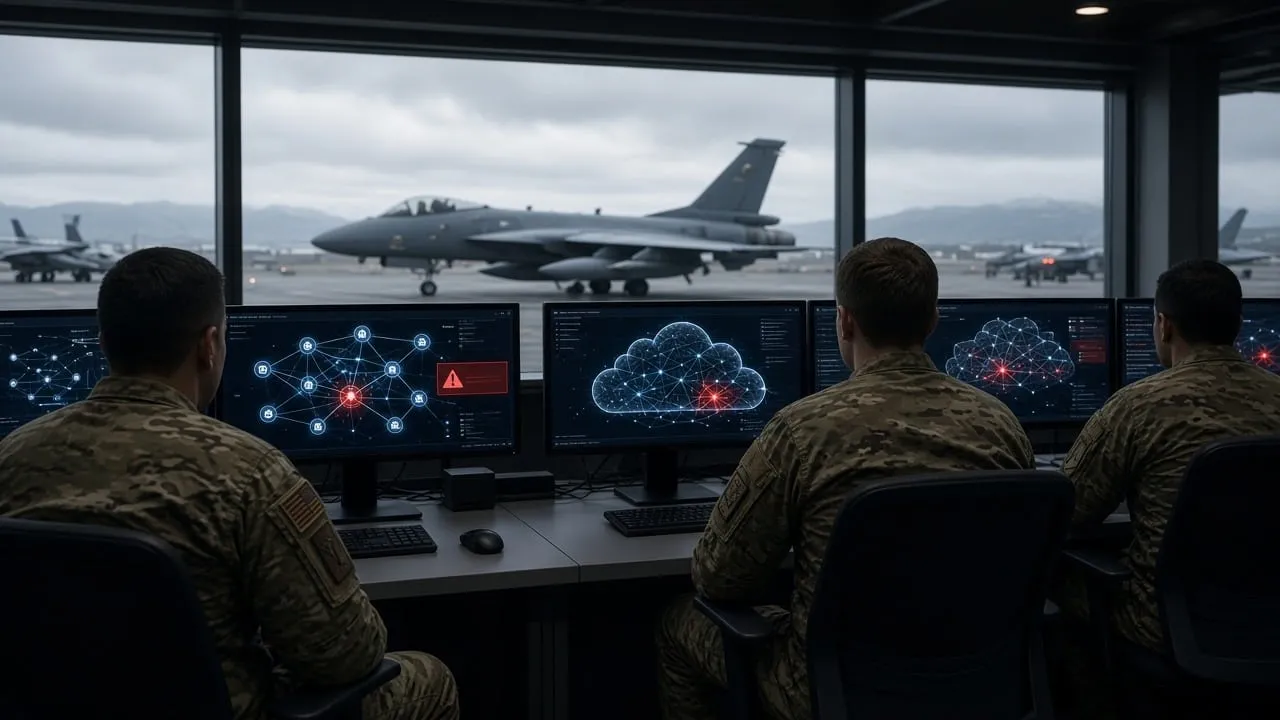
US Air Force Cloud One Platform Suffers Major Security Breach
Hackers have breached Cloud One, the US Air Force flagship cloud computing platform, putting a vast amount of sensitive tactical, personnel, and logistics data at risk, according to reports. The serious security incident highlights vulnerabilities within military digital infrastructure and brings urgent attention to the security of defense networks.
The intrusion was discovered within the past month or so during work to upgrade the system. At this stage, it remains unknown who carried out the attack, how far the malicious actors penetrated the network, or whether any sensitive information was actually stolen from the servers.
What Is Cloud One and How Does It Work
Launched in 2017, Cloud One was designed as a one-stop shop for the Air Force IT needs. The system combines resources from major commercial technology providers, including Microsoft, Amazon, Oracle, and Alphabet, to run scores of essential military applications.
These applications include vital systems for personnel data, military pay, logistics, and maintenance operations. The platform integrates critical infrastructure supporting daily defense activities across multiple global commands.
Furthermore, Cloud One encompasses a system that collates air defense radar feeds from across North America. It also runs software that tracks bombs and munitions at more than 200 Air Force locations worldwide, making its security central to national defense.
Immediate Impact and Response from US Cyber Command
Following the discovery of the intrusion, US Cyber Command has been called in to assess the damage, according to one source. The military response has led to immediate operational disruptions across the platform.
Work to move back-office applications to Cloud One has been paused to prevent further exposure. Additionally, updates to existing applications have been blocked, and some users have lost their administrator rights to limit potential spread.
One source said the hackers exploited a software vulnerability to reach the platform control plane. Access to the control plane could in theory let attackers check the operational status of military aircraft or the movement of spare parts, though it remains unclear whether they did so.
Official Statements and Broader Government Cyberattacks
The Air Force addressed the situation by stating that it does not comment on the security of specific networks and systems. The branch added that it continuously takes prudent measures to protect its information and mission capabilities.
This security breach adds to a troubling string of recent attacks on US government systems. Recent targets include two incidents at the FBI and a significant hack at the Treasury Department, pointing to a wider pattern of state or criminal targeting of federal agencies.
The incident also follows a major cyberattack on FIFA this week, demonstrating the wide reach of recent threat actor campaigns across different sectors globally.
Background on Military Cloud Migration
The US military has spent years shifting its vast data operations from legacy local servers to commercial cloud environments. This strategy aims to improve efficiency, reduce maintenance costs, and allow troops and commanders to access information rapidly from anywhere in the world.
Cloud One represents a cornerstone of this modernization effort. By pooling services from commercial tech giants, the Air Force sought to benefit from cutting-edge security features developed by the private sector.
However, centralizing massive amounts of data into shared cloud environments also creates high-value targets for sophisticated hackers. A single successful compromise can yield access to an immense repository of defense intelligence.
Understanding the Control Plane Vulnerability
The control plane of a cloud computing environment acts as the central brain that manages resources, user permissions, and network traffic. When unauthorized actors breach this layer, they gain administrative leverage over the entire architecture.
While standard user accounts only see specific applications, gaining control plane access allows intruders to map the entire network. Security experts note that defending this layer requires constant monitoring and strict zero-trust protocols.
Investigators are now combing through server logs to determine how the vulnerability was exploited and how long the attackers maintained a presence inside the system before detection.
What Comes Next for Air Force IT Security
As US Cyber Command continues its damage assessment, the Air Force faces a complex remediation process. Engineers must verify the integrity of every application running on Cloud One before restoring normal administrative functions.
Defense officials will likely face renewed congressional scrutiny regarding cloud security practices and the reliance on commercial providers for military secrets. Observers will be watching for official updates on whether classified data was compromised.
In the meantime, strict access controls will remain in place across the network to safeguard tactical operations and personnel records while investigations proceed.