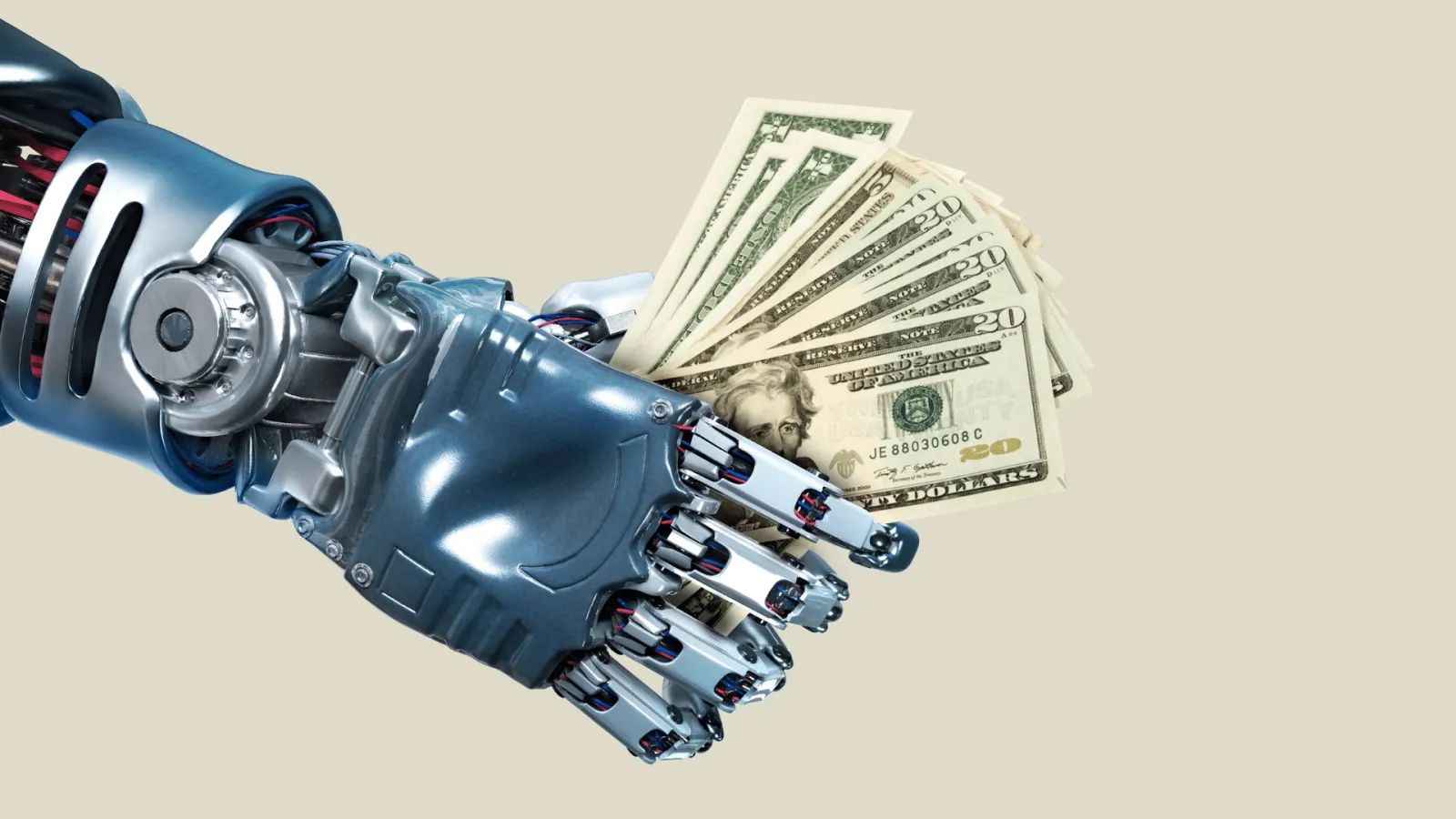
Artificial intelligence has not yet produced measurable financial gains for the majority of major US businesses outside the tech sector, despite corporations pouring billions of dollars into the technology. A fresh study by Apollo Global Management states that companies are spending heavily without noticing substantial boosts in profits, revenue, or staff output.
Torsten Slok, chief economist at Apollo, stated that artificial intelligence has failed to yield an obvious financial return for corporate America beyond technology firms.
Most Companies Are Not Seeing Higher Profits
Slok analyzed the financial results of 493 firms in the S&P 500 index, leaving out seven major tech corporations: Alphabet, Amazon, Apple, Meta, Microsoft, Nvidia, and Tesla.
Those seven firms, frequently called the Magnificent Seven, have registered rising revenue per worker and wider profit margins.
Yet, the remaining 493 businesses displayed minimal alteration in either metric. Slok pointed out that tangible proof is also lacking to show artificial intelligence boosts productivity across the broader economy.
The conclusions indicate that while large tech enterprises reap financial rewards from the artificial intelligence surge, most other enterprises have not experienced comparable outcomes.
Still, the data does not imply that artificial intelligence offers zero advantages to separate enterprises. The numbers demonstrate that its monetary effect remains hidden among the studied corporations.
AI Spending Is Becoming a Cost for Businesses
Slok mentioned that numerous firms are starting to re-evaluate their financial commitments to artificial intelligence.
Rather than viewing artificial intelligence as a method to boost earnings, certain companies view it as an extra cost.
He clarified that corporations outside the tech industry frequently lack the need for cutting-edge artificial intelligence models and refuse to shell out higher costs for them.
At the same time, venture-backed startups keep ramping up their spending on artificial intelligence products.
Slok thinks the economic effect of artificial intelligence will stay restricted if its application and financial advantages remain restricted to a handful of firms.
AI Cannot Replace Human Judgment
The economist additionally raised doubts about whether cheaper and more capable artificial intelligence systems would automatically assist enterprises in earning greater income.
He maintained that corporate success relies on more than just handling data or finishing assignments rapidly.
Per Slok, critical choices demand human discretion, reliability, responsibility, office environment, and awareness of moral issues.
These elements shape a business standing, buyer connections, and financial results.
He proposed that even if artificial intelligence turns less expensive and smarter, companies could still find it difficult to convert those advancements into increased sales and earnings.
Previous Research Raises Similar Concerns
Slok's conclusions come after past research cast doubt on whether broad artificial intelligence use brings worthwhile gains in job output.
Even though businesses persist in funding artificial intelligence software and automation, monetary advantages remain unclear across large parts of the market.
At present, the analysis by Apollo indicates that primary financial rewards from artificial intelligence stay restricted to major technology corporations.
The main issue is whether firms outside the tech sector can eventually use artificial intelligence to raise productivity, produce more income, and expand their profit margins.