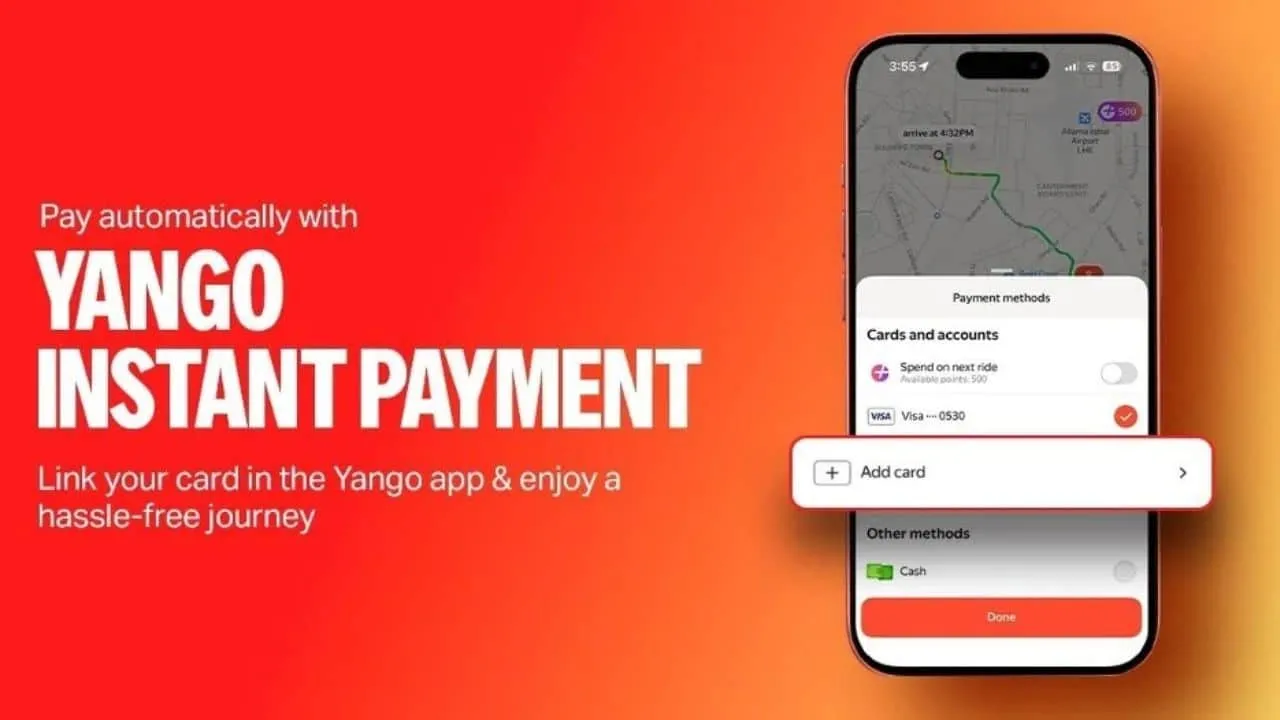
Yango Pakistan Launches Bank Card Payments for App Users
Yango Pakistan, part of the global tech company Yango Group, has introduced bank card payments to all users, allowing customers to link their bank cards (debit/credit) to the Yango app and pay digitally for their rides, deliveries and other services. With this integration, Yango Ride is now the first ride-hailing service in Pakistan that offers card payment options.
The rollout of this feature marks a notable shift in how everyday transportation and delivery services operate within the country. By moving beyond traditional cash transactions, the platform aims to streamline the user experience for thousands of daily commuters and service users who prefer digital financial tools.
How Bank Card Payments Work on the Yango App
Customers can link any of their bank cards, including Visa, Mastercard, PayPak, Union Pay etc, to their Yango account. Once the card has been verified and authorised, it can be used to make payments across Yango services available in the SuperApp, giving customers a truly cashless journey.
The verification process is designed to secure user data and ensure that financial transactions comply with standard banking security protocols. Users simply navigate to the payment section within the application, enter their card credentials, and complete the authorization steps required by their respective financial institutions.
The Shift Toward Digital Payments in Pakistan
As digital payments become increasingly integrated into everyday transactions in Pakistan, Yango is expanding the ways customers can access and pay for its services. Bringing multiple digital payment options into the app allows customers to choose the method that works best for them, while reducing the need to rely on cash for everyday mobility and ecommerce services.
Pakistan has experienced a steady rise in digital financial adoption over recent years, driven by regulatory pushes toward financial inclusion and a growing consumer preference for smartphone-based tools. Ride-hailing platforms and delivery applications sit at the center of this transition, serving as daily touchpoints for urban consumers.
Leadership Perspective on the New Feature
"A useful platform has to connect the whole experience, from choosing a service to paying for it. Card payments are an important step in that direction for Yango in Pakistan, giving customers more flexibility within the one app," said Faisal Iftekhar, Managing Director at Yango Pakistan.
This statement highlights the corporate strategy of reducing friction in consumer transactions. By keeping users inside a single application environment for both service selection and financial settlement, the company hopes to build deeper user loyalty and higher engagement rates.
Building a Connected Digital Ecosystem
The introduction of card payments marks another step in Yango's efforts to build a more connected digital ecosystem in Pakistan. By integrating payments across its services, Yango is strengthening the SuperApp experience while supporting the wider adoption of cashless transactions and making digital technology a more practical part of everyday life.
As competition intensifies in the local technology and transport sector, providing advanced payment infrastructure helps companies differentiate themselves. Consumers increasingly expect modern conveniences that match international standards, making local integrations of global card networks a necessary operational milestone.
What This Means for Everyday Commuters and Businesses
For everyday commuters, the arrival of card payments means no longer needing to scramble for exact change at the end of a trip. Drivers and delivery personnel also benefit from reduced cash handling, which can improve safety and streamline daily earnings reconciliation.
Local businesses partnered with the delivery arm of the platform similarly stand to gain from smoother financial flows. As the digital economy matures, secure and instant payment methods reduce transaction drop-offs and build greater trust between service providers and end consumers.





