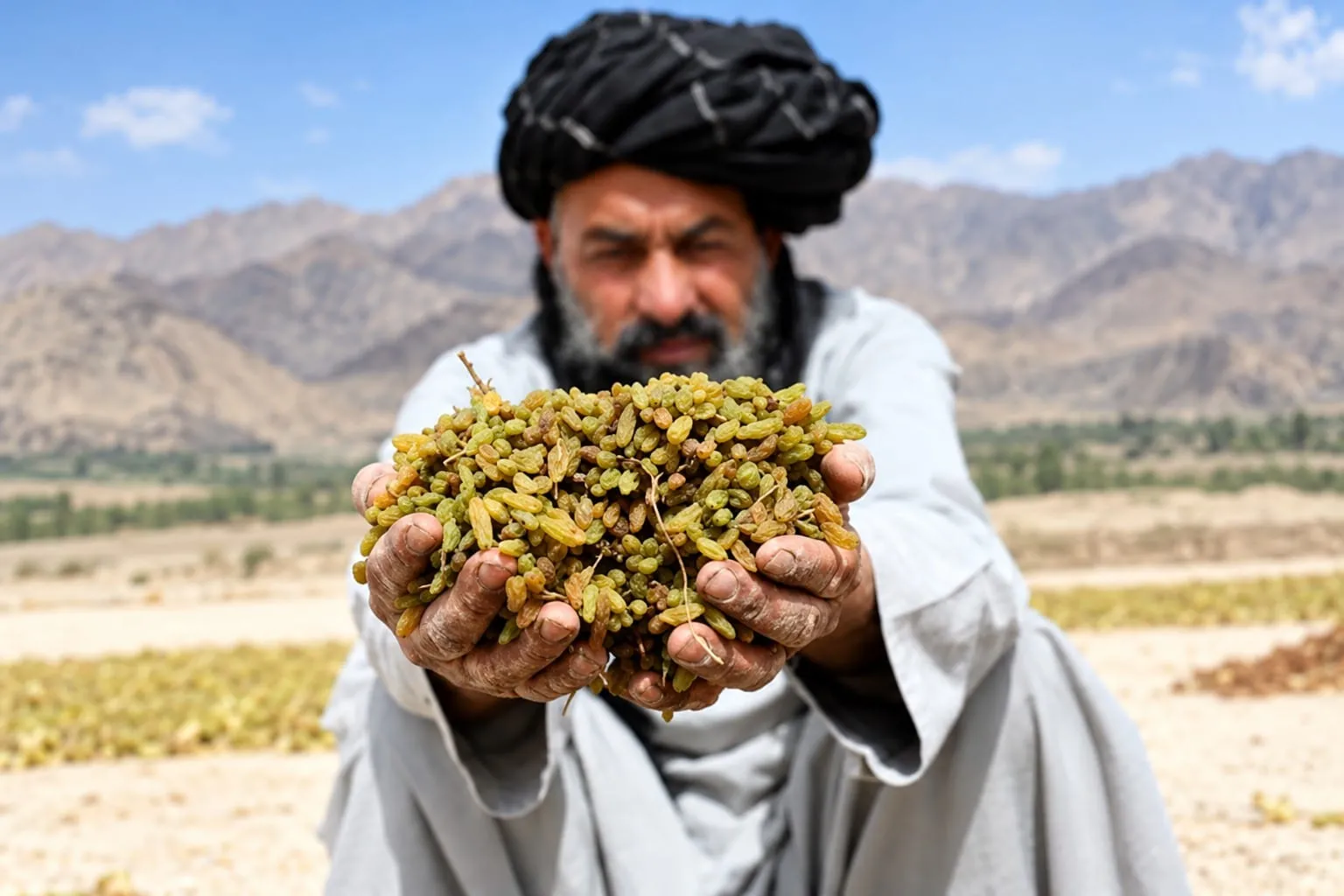
Grape farmers across the Koh Daman region of Afghanistan report that plummeting prices force them to sell their crops below production costs, while others convert grapes into raisins only to find zero buyers. Restricted foreign market access and a lack of cold storage add to the crisis.
560 kilograms sold for 4,000 afghanis
Gul Ahmad, an orchard owner in the Farza district of Kabul, told Afghan media that traders paid him only 4,000 afghanis for his entire 560-kilogram grape harvest. He noted that this amount failed to cover the expenses of maintaining his orchard.
Earlier in the year, Ahmad hired daily-wage labourers, purchased fertiliser, and spent roughly 400,000 afghanis to dig a deep well to combat water shortages. Letting the ripe grapes sit unsold would have resulted in them rotting, he explained.
Storage and market access constrain growers
Ahmad pointed out that cold-storage options are rare and costly, noting that Koh Daman lacks even one operational facility. Other local farmers have similarly complained about limited international market access and missing storage.
Financial analysts told Afghan media that poor cold storage and closed foreign markets heavily limit sales opportunities. They added that these factors drastically reduce income for farmers in Koh Daman and other regions of Afghanistan.
Ahmad mentioned that when trade routes with Pakistan functioned, he earned between 20,000 and 30,000 afghanis for that exact 560-kilogram yield. He stated that low market prices and restricted trade routes create deep financial distress for him and other farmers.
Raisins offer no relief
Another local resident in Koh Daman told Afghan media that financial strain stems partly from Taliban taxes imposed on grapes moving through the Khair Khana Pass. The resident outlined the fees as follows:
- 30 rupees for each sack of grapes passing through the route.
- A separate charge of 50 rupees collected from the grower.
The resident explained that farmers turned to drying grapes into raisins because selling fresh fruit became too difficult. However, this strategy brought no financial relief because no purchasers exist for the raisins.