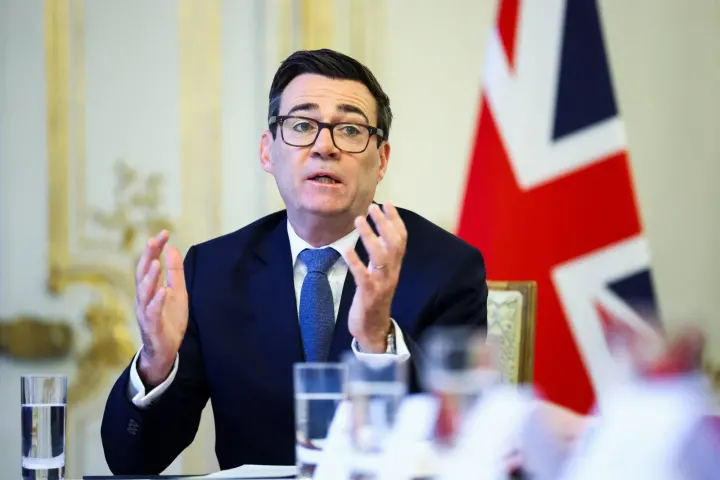
Prime Minister Andy Burnham could see his first few months in No10 disrupted by three brewing rebellions, one over a welfare report, another over North Sea drilling, and a third concerning EU relations.
The Labour-led government has so far kept a low profile, but the upcoming release of the Alan Milburn welfare report, the controversy surrounding the Rosebank oil field, and Burnham's planned trip to Brussels create flashpoints that could force the premier to manage dissent within his own party.
What the Alan Milburn Welfare Report Proposes and Why It Matters
The long-awaited welfare report authored by former minister Alan Milburn is set to be published tomorrow. The document recommends cutting benefits for jobless young people and redirecting the saved funds to expanded employment-support programmes. The policy rationale is to incentivise work and reduce long-term dependency on the welfare system, a stance that aligns with the centre-right tradition of conditional welfare.
Labour's left-wing faction, however, has already pledged to reject any reduction in benefits. Their opposition stems from concerns that cuts will disproportionately affect vulnerable youth, exacerbate poverty, and undermine the party's historic commitment to a robust social safety net.
Downing Street has spent months crafting a communications strategy around the report's release. Officials hope that by framing the changes as "investment in employment support" rather than "benefit cuts," they can blunt the anticipated backlash. The government points to the experience of Sir Keir Starmer's failed welfare overhaul as a cautionary tale, noting that poorly managed messaging contributed to that policy's collapse.
How the Benefit Changes Would Be Implemented
If the recommendations are adopted, the Department for Work and Pensions (DWP) would amend existing regulations governing Jobseeker's Allowance and Youth Allowance. The savings, estimated in the low-hundreds of millions of pounds, would be earmarked for new training grants, apprenticeship subsidies, and targeted job-placement services. The DWP has indicated that the rollout would be phased over 12 months to allow local authorities to adjust their budgets.
Rosebank Oil Field Debate: Environmental Concerns Versus Energy Security
The second potential rebellion centres on the Rosebank oil field, a North Sea project that has already sparked dissent among Labour MPs with strong environmental credentials. While the government recently approved the Jackdaw gas field - which began piping energy into homes today - more than 75 rebel MPs have warned that any further offshore drilling would cross a "red line."
These MPs argue that continued fossil-fuel extraction contradicts the UK's net-zero targets and the Labour Party's climate pledge. They cite scientific reports linking North Sea drilling to increased carbon emissions and potential damage to marine ecosystems.
Conversely, a sizeable bloc of Labour MPs, including Henry Tufnell, contend that domestic oil and gas production is vital for British industry and regional economies. Tufnell told the reporter, "We cannot and should not turn our backs on those industrial communities that have powered this country for generations." His statement reflects the long-standing tension between energy security and climate ambition within the party.
Policy Options on the Table
Government insiders say that the Prime Minister's office is weighing three options: (1) approve the Rosebank field with stricter environmental safeguards; (2) delay the project pending a full impact assessment; or (3) reject the development outright, signalling a shift toward renewable investment. Each path carries political risk - approval may alienate green-leaning MPs, while rejection could upset constituencies that rely on oil-related jobs.
EU Relations: A Potential Re-Brexit and Its Parliamentary Fallout
The third flashpoint will emerge on Friday when Burnham travels to Brussels for a high-profile meeting with EU leaders. The Prime Minister intends to discuss tighter trade ties and, according to sources, may signal a "massive watering down" of Brexit. While the exact content of his speech tonight remains undisclosed, Burnham is said to be keen on restoring freedom of movement and even contemplating full re-entry into the EU at a later stage.
This stance resonates with Labour's left-wing, many of whom view closer EU integration as a pathway to stronger workers' rights and environmental standards. However, MPs representing Leave-voting constituencies have expressed strong opposition, fearing loss of sovereignty and the erosion of the Brexit mandate.
The internal divide mirrors the broader national debate that has persisted since the 2016 referendum. Re-joining the EU would require parliamentary approval, likely triggering a protracted legislative battle and potential confidence votes.
Procedural Steps Required for Re-Entry
Re-joining the EU would involve: (1) a formal application to the European Council; (2) alignment of UK law with the EU acquis communautaire; (3) ratification by both the UK Parliament and the European Parliament; and (4) a possible public referendum, though no legal requirement mandates one. Each stage could take months, if not years, and would be scrutinised by both pro- and anti-EU MPs.
Potential Impact on Governance and Party Unity
If any of these three issues spark a rebellion, the government could face a loss of parliamentary majority on key votes. In a Westminster system, a defeated confidence motion or a major policy defeat can trigger a cabinet reshuffle, a leadership challenge, or even a snap election.
For ordinary citizens, the stakes are tangible. Changes to youth benefits affect millions of unemployed young adults and their families. Decisions on North Sea drilling influence energy prices, job security in coastal towns, and the UK's climate commitments. Shifts in EU relations could alter trade tariffs, migration flows, and regulatory standards that impact businesses of all sizes.
What to Watch for in the Coming Weeks
Analysts advise monitoring four key indicators: (1) the tone of Burnham's speech tonight and any concrete policy commitments; (2) the parliamentary vote on the Milburn welfare recommendations when they are tabled; (3) the response of rebel MPs to the Rosebank decision, including any formal motions of no confidence; and (4) the outcome of the Brussels meeting, particularly any joint statements that hint at deeper integration.
While the government has not set a definitive timetable for any of these initiatives, the next 48 hours will likely set the agenda for the rest of the parliamentary session. Observers will be looking for signs of compromise, such as softened benefit cuts or conditional approval of the oil field, as indicators of Burnham's willingness to manage dissent.
In the meantime, the Prime Minister's team continues to engage with backbenchers, offering concessions where possible to keep the party together. The balance between policy ambition and internal cohesion will define Burnham's early legacy in No10.