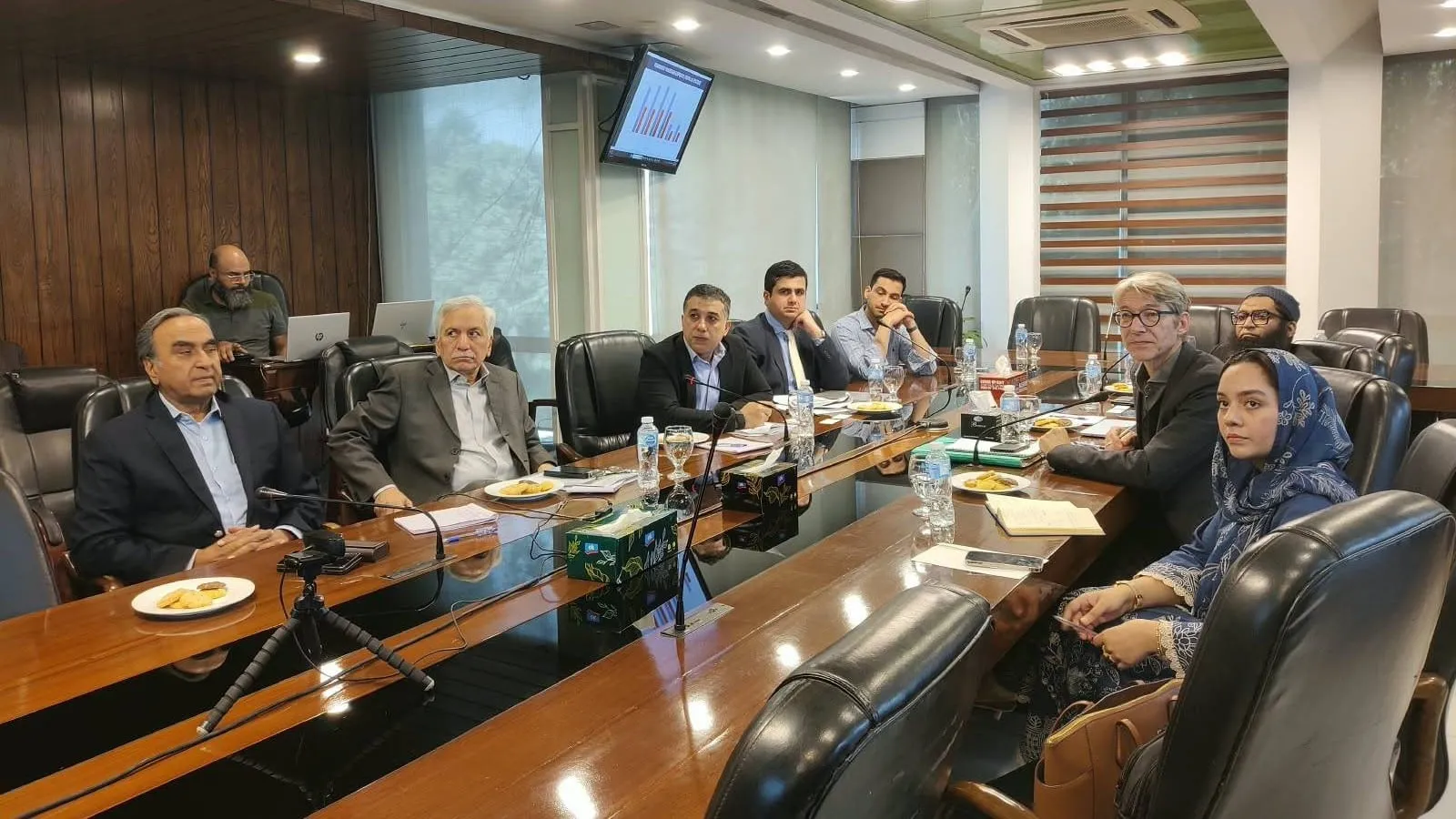
The All Pakistan Textile Mills Association and the German Importers Association reached a formal understanding to adopt measures that will boost bilateral trade between Pakistan and Germany. This agreement came during a delegation visit to the All Pakistan Textile Mills Association headquarters by Dr. Michael Arretz, Managing Director VFI e. V. German Importers, along with Mr. Sarim Mahmood CEO, Fruit of Sustainability, and Ms. Saman Aslam, Deputy Managing Special Projects, Fruit of Sustainability. Senior leadership from the All Pakistan Textile Mills Association warmly welcomed the visiting foreign delegation to discuss economic cooperation.
Chairman All Pakistan Textile Mills Association Mr. Asad Shafi, Mr. Haroon Elahi Shaikh, Mr. Danish Aslam, Engr. Tahir Basharat Cheema Energy Advisor, Mohammad Raza Baqir Secretary General and other senior members of APTMA welcomed the delegation. The meeting focused heavily on expanding commercial partnerships and finding new synergies within the textile manufacturing sector. Both sides discussed ways to bridge market gaps and facilitate smoother trade channels between Pakistani producers and German buyers.
Background of Pakistan-Germany Trade and Textile Relations
Bilateral trade between Pakistan and European nations has historically centered on textile and apparel products, which form the backbone of Pakistan export earnings. Over the decades, industrial growth in Pakistan has relied heavily on European machinery imports and direct consumer markets across the European Union. Germany stands out as one of the largest and most influential economies within the European Union, making it a critical destination for Pakistani manufactured goods. Trade diplomacy between trade bodies and foreign associations frequently shapes the volume and standards of goods moving across international borders.
What the Visit Means for the Textile Sector
The visiting German delegation aimed at exploring opportunities for cooperation and synergies in the textile sector. Speaking on the occasion Dr. Micheal said that Germany was looking for consolidating economic and trade relations with medium sized countries like Pakistan. He appreciated textile industry of Pakistan and compliances by APTMA members. This external validation highlights the growing appeal of South Asian manufacturing hubs as alternative sourcing destinations for European retail brands.
Understanding the Role of VFI and German Importers
Dr. Michael said that VFI is financed by the German government with the objective to support overseas exporters and German importers. He said that as Association, they would like to work with both the government of Pakistan and relevant trade associations. Dr. Michael clarified that presently there was no cost for hiring the services of their Association. However, fee is charged for specialised and dedicated reports. He said that their Association represents more than 300 companies and they would prefer to work with Pakistan especially in view of changing textile environments in China.
The Importance of the GSP Plus Facility
Mr. Asad Shafi emphasized the importance of enhancing Pakistan and Germany trade and investment. Asad said that GSP+ facility allows Pakistani exports to compete with rivals like Bangladesh and Sri Lanka, with 78% of products eligible for duty-free export to the EU. He expressed the hope that EU's extension of GSP plus for another 10 years would bring economic benefits to Pakistan and improve human rights, labour rights, and environmental standards. The Generalised Scheme of Preferences Plus provides vulnerable developing countries with incentives to implement core international conventions.
Export Growth and Compliance Standards
Since 2013, he said, Pakistan's exports to the EU have increased by 73% and to Germany by 40%, thanks to the GSP+ facility. APTMA members are compliant with 27 GSP plus conventions and are working towards compliance with new conventions. They adhere to international and local sustainability standards like SA 8000 and Oeko Tex, contributing to a clean environment and Sustainable Development Goals. These strict adherence measures ensure that local factories meet rigorous global expectations regarding labor welfare and ecological impact.
Commitment to Sustainability and Market Competitiveness
Chairman APTMA said that APTMA member mills were fully compliant with GSP conventions. He said that APTMA remains committed to complying with all conventions for improving competitiveness, sustainability and global market access. He said that APTMA's in house research team continuously monitors developments relating to emerging trade compliance requirements and members are kept informed accordingly. He added that APTMA highlights importance of effective compliance through research based articles published in media and remains actively engaged with all stake holders for drafting of a comprehensive legal framework for the National Compliance Entity. Asad said that the industry is shifting away from fossil fuels, focusing on preferred fibres like organic cotton and recycled polyester, and setting up effluent and water treatment plants for a socially responsible industry.





