Understanding the Recent Wave of US Technology Outages
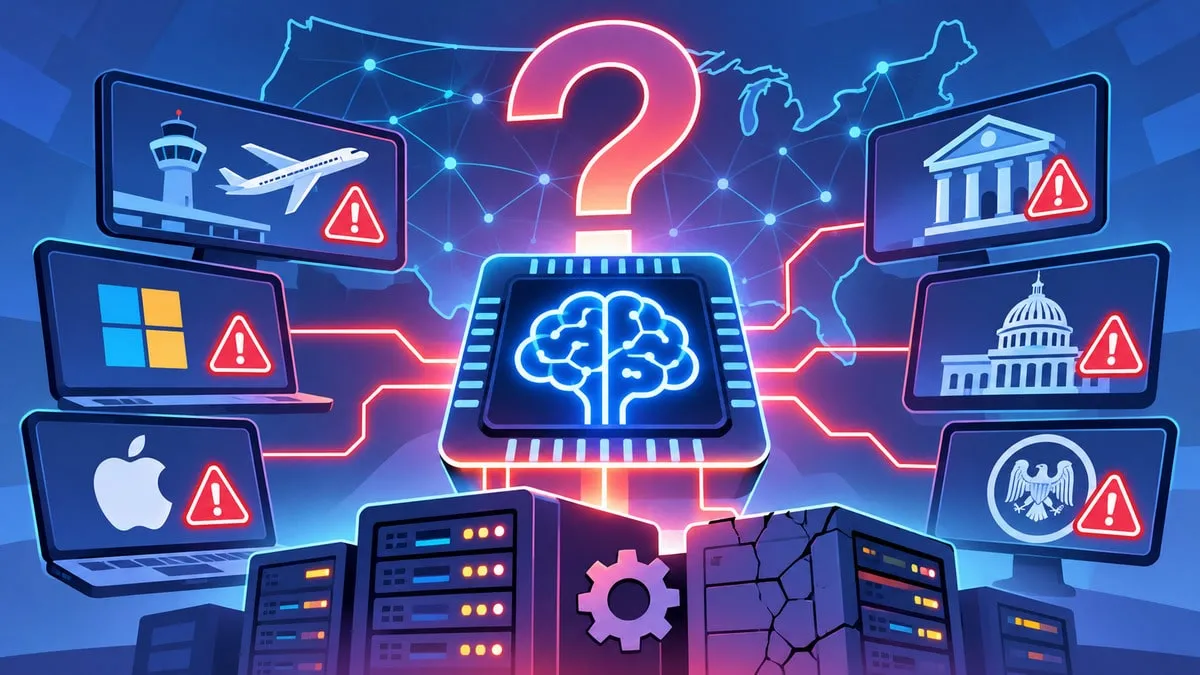
A series of major technology outages across the United States has disrupted airlines, banks, government networks, and popular online services, raising questions about whether artificial intelligence could be playing an indirect role. Over the past two weeks, outages have affected Apple services, Microsoft's Outlook, Teams, and Copilot, banking platforms, and the National Security Agency's internal communications network. The Federal Aviation Administration also grounded flights nationwide for nearly five hours on November 13, disrupting thousands of flights. Although the incidents occurred within days of one another, US officials and affected companies have said there is no evidence of a coordinated cyberattack. However, cybersecurity experts believe rapid technological changes and AI-assisted security updates could be contributing to instability.
The clustering of these critical system failures has alarmed federal authorities and industry leaders alike. As modern society grows increasingly dependent on interconnected digital architectures, a failure in one node can cascade rapidly across multiple sectors. Citizens relying on mobile banking applications, air travel, and secure government portals experienced sudden interruptions that paralyzed daily operations. While investigators continue to comb through system logs and error reports, the public search for answers has turned toward the rapid pace of software development and the integration of automated tools.
How AI Security Tools Affect Software Stability
According to TechCrunch, cybersecurity expert Dave DeWalt, a former McAfee CEO and vice chairman of the CISA Advisory Council, believes AI could be indirectly contributing to some of the disruptions. DeWalt explained that AI-powered security tools can now identify software vulnerabilities much faster than traditional methods. As companies rush to fix these weaknesses before hackers exploit them, frequent software patches and system changes could create unexpected technical problems. He suggested that recent disruptions may reflect the difficulties of improving security systems rather than evidence of a coordinated attack. However, investigators have not established that AI-related security updates caused the recent outages.
The speed at which machine learning systems scan code has fundamentally altered how corporate security teams operate. Traditionally, human engineers spent weeks auditing source code for potential flaws before issuing updates. Automated systems now flag hundreds of potential weaknesses daily, prompting an endless cycle of rapid patching. This relentless update schedule leaves minimal time for comprehensive regression testing, which normally ensures that a new patch does not break existing functions. Consequently, well-intentioned security measures can inadvertently introduce software bugs that destabilize large enterprise platforms.
The Hidden Vulnerabilities of Legacy Technology
Anusha Iyer, a software engineer and founder of cybersecurity startup Corsha, offered another explanation. She said many critical systems were built decades ago and were never designed to operate alongside today's highly connected technologies. The FAA outage may illustrate this problem. Preliminary findings suggest that a telecommunications modernization project involving new network routers disrupted older infrastructure. According to reports, the transition may have overwhelmed existing equipment, contributing to the nationwide aviation shutdown. Iyer argued that the main problem is not necessarily AI adoption but the rapid integration of modern technology with legacy systems without sufficient testing and safeguards.
Aging mainframe computers and outdated communication protocols form the silent backbone of numerous vital industries. These foundational layers often lack the bandwidth and security features required by modern cloud-connected applications. When engineers attempt to overlay contemporary software solutions onto decades-old hardware, structural friction is almost guaranteed. Organizations frequently defer expensive hardware overhauls in favor of software workarounds, compounding technical debt until a major system failure occurs. Bridging the gap between 20th-century machinery and 21st-century software remains one of the most formidable hurdles facing modern enterprise architects.
Why Officials Ruled Out Coordinated Cyberattacks
The timing of the incidents initially raised concerns about a possible coordinated cyberattack. These fears followed recent attacks on supermarket refrigeration systems and blood banks in France, as well as a series of cybersecurity incidents affecting software projects including PHP, Node.js, and LiteLLM in October. However, US intelligence officials said the November outages did not appear connected to state-sponsored terrorism. President Donald Trump also described the disruptions as separate incidents. Several affected companies attributed their problems to technical faults rather than malicious activity. Virginia Senator Mark Warner, vice chairman of the Senate Intelligence Committee, warned that the disruptions highlighted the growing difficulty of managing rapidly advancing technology. Investigations into individual outages are continuing.
Geopolitical tensions frequently prompt immediate speculation regarding hostile foreign interference whenever multiple digital systems fail simultaneously. Intelligence analysts rely on forensic data and threat actor attribution protocols to separate malicious cyber campaigns from accidental system crashes. In these recent instances, digital telemetry confirmed that internal software conflicts, rather than foreign intrusion payloads, triggered the widespread freezing of services. Nonetheless, public officials emphasize that the vulnerability of domestic infrastructure to accidental software faults poses a serious national security challenge in its own right.
Expert Recommendations for Better Testing and Security
Cybersecurity specialists say organizations need stronger safeguards when updating critical infrastructure. DeWalt recommended more extensive testing and better prioritization of security patches to reduce the risk of disruption. Iyer called for tighter separation between older industrial systems and modern connected networks, along with stricter access controls. She said organizations should introduce new technologies gradually rather than making large changes without fully understanding the operational risks. These precautionary steps aim to prevent future chain reactions across critical commercial and government networks.
Implementing rigorous testing protocols requires corporate leadership to prioritize stability over rapid feature deployment. Network administrators must establish isolated staging environments that accurately mirror legacy production systems before pushing updates live. Furthermore, adopting zero-trust architectural models ensures that if one component experiences a catastrophic failure, the damage remains strictly localized rather than taking down entire enterprise ecosystems. Experts stress that corporate boards must allocate adequate funding specifically for infrastructure resilience rather than focusing solely on outward-facing innovation.
Market Opportunities for Automated Cybersecurity Solutions
Despite the disruptions, DeWalt believes AI-powered security tools could help organizations identify vulnerabilities before attackers exploit them. He expects growing demand for technologies that automatically identify security weaknesses, test patches, repair vulnerabilities, and improve infrastructure reliability. The recent outages highlight the challenges businesses and governments face as they modernize systems that support essential services. While AI has not been established as the cause of the disruptions, experts warn that combining increasingly advanced software with aging infrastructure without proper safeguards could lead to further problems.
The economic fallout from sudden system downtime has forced corporate executives to reevaluate their technology spending priorities. Software vendors specializing in automated code verification and infrastructure monitoring are experiencing a surge in commercial interest. By deploying intelligent diagnostic tools that simulate user traffic and stress-test patches prior to release, enterprises hope to reclaim stability in an increasingly volatile digital environment. The overarching lesson from these recent events is that technological progress must proceed hand in hand with disciplined risk management to protect the foundations of modern society.