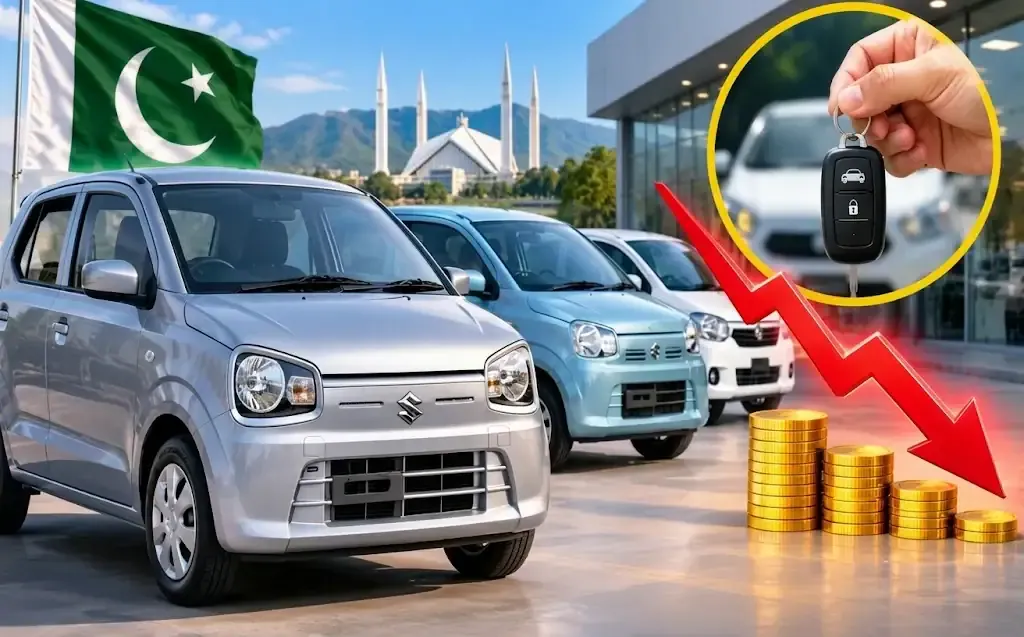
Small cars with engines of up to 600cc could become more affordable in Pakistan as the government moves towards allowing commercial vehicle imports, potentially increasing the availability of imported vehicles and expanding consumer choices.
Who Announced the Proposal and What It Entails
All Pakistan Car Dealers Association (APCDA) Chairman Mian Shoaib announced the proposal during a press conference in Islamabad. He said the association had worked for a long time to secure approval for commercial imports, but bureaucratic hurdles had delayed the process. He also acknowledged Federal Minister Haroon Akhtar and Senator Faisal Vawda for supporting the initiative.
How the Commercial Import Framework Would Work
Under the proposed framework, vehicles will be imported through commercial banking channels, with all banks allowed to facilitate transactions. Importers will still have to meet applicable safety and protection standards, and they must arrange pre-shipment inspections before vehicles leave their country of origin. These inspections are intended to verify that each vehicle complies with Pakistan's technical specifications, emissions limits and crash-test requirements.
Why the Change Is Significant for the Small-Car Market
The move could increase competition and supply in Pakistan's small-car market. Currently, most sub-600cc vehicles are sourced through government-controlled channels that limit the number of models and manufacturers. By opening a commercial route, dealers could bring in a wider range of makes, including Japanese, Korean and Chinese brands that have historically faced high entry barriers.
Increased competition typically puts downward pressure on retail prices, but the final cost to consumers will still depend on import duties, taxes, shipping costs and other expenses. The APCDA chairman clarified that commercial vehicle imports are separate from the country's existing auto policy, which focuses on locally assembled cars and incentives for domestic manufacturers.
What the Regulatory Process Looks Like
To move from proposal to implementation, the Ministry of Commerce must issue detailed guidelines that outline documentation, licensing and compliance procedures. The State Bank of Pakistan will need to approve the use of commercial banking channels for these transactions, ensuring that foreign exchange allocations are available and that anti-money-laundering checks are in place.
Once guidelines are published, importers will apply for a commercial import licence. The licence will require proof of a pre-shipment inspection certificate, a bank guarantee, and evidence that the vehicle meets Pakistan's safety standards. Customs officials will then verify the paperwork before allowing the vehicle to enter the country.
Potential Economic Impact
Analysts suggest that a broader supply of affordable small cars could stimulate demand among first-time buyers, especially in urban areas where traffic congestion and parking constraints favour compact vehicles. Lower-priced imports may also push local assemblers to improve quality and reduce costs to stay competitive.
However, there are concerns that a surge in imports could affect domestic manufacturers who rely on protective tariffs. The government may need to balance tariff levels to protect local industry while still delivering consumer benefits.
What Consumers Should Expect Next
Consumers should watch for the official release of the commercial import guidelines, which is expected within the next few weeks. After the guidelines are published, dealers will begin advertising the new models that become available through the commercial channel.
Buyers interested in imported 600cc cars should verify that the vehicle has passed the required pre-shipment inspection and that the dealer has secured the necessary banking clearance. These steps will help ensure that the car complies with safety standards and that the transaction is legally sound.
Practical Takeaways for Car Buyers
- Check that the dealer holds a valid commercial import licence.
- Confirm the vehicle has a pre-shipment inspection certificate.
- Ask for a breakdown of duties, taxes and shipping costs to understand the final price.
- Ensure the car meets Pakistan's safety and emission standards before purchase.
By following these steps, buyers can take advantage of the potentially lower prices while avoiding common pitfalls associated with imported vehicles.