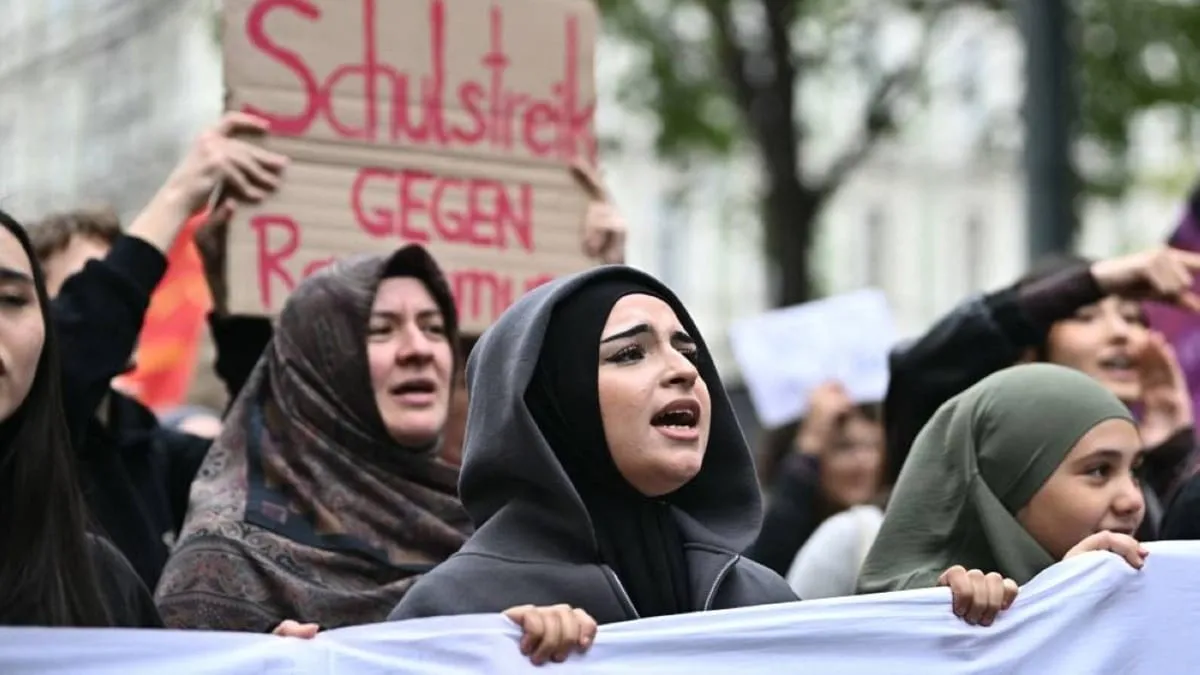
Numerous schoolgirls are defying a newly enacted prohibition against headscarves for children under 14 in Austria, triggering demonstrations nationwide following the rule's implementation on September 1 by the conservative-led government.
Authorities defended the policy as a measure to advance gender equality and shield Muslim girls from oppression and segregation, while detractors argue the regulation unfairly focuses on Muslims, breaches religious freedom, and compels children to take off headscarves against their desires.
Education Ministry figures indicate that officials conducted 127 meetings with parents and submitted 52 reports concerning suspected infractions since the implementation, while nationwide rallies drew hundreds of attendees per event.
Zehra, a 37-year-old participant at a Vienna rally, reported that her daughters aged nine and 13 felt distressed by the rules and condemned the legislation for stripping children of personal choice.
Seham, a 12-year-old student, expressed fear about taking off her headscarf after two years because it formed part of her identity, though school officials permitted an alternative head covering following talks, despite her preference for the full headscarf.
The Islamic Religious Community in Austria backs a legal challenge against the regulation and reported gathering about 70 complaints from families encountering trouble, asserting that the policy burdens the children it claims to safeguard.
A legal challenge was submitted to Austria's Constitutional Court, and a ruling is anticipated during the first half of 2027.
Schools must conduct talks with students and parents regarding infractions before escalating matters to education officials, and persistent non-compliance by parents can result in fines.
Education Minister Christoph Wiederkehr defended the measure by stating that the small volume of meetings demonstrates cooperation from most students and families, noting that family talks resolved most infractions.
Vienna education officials reported that their talks indicated numerous impacted girls desired to wear headscarves by choice.
A prior ban enacted for primary students in 2019 was struck down by the Constitutional Court on the grounds that regulations singling out Muslims breached religious neutrality.