How Axiom Math Verified the Stacks Project
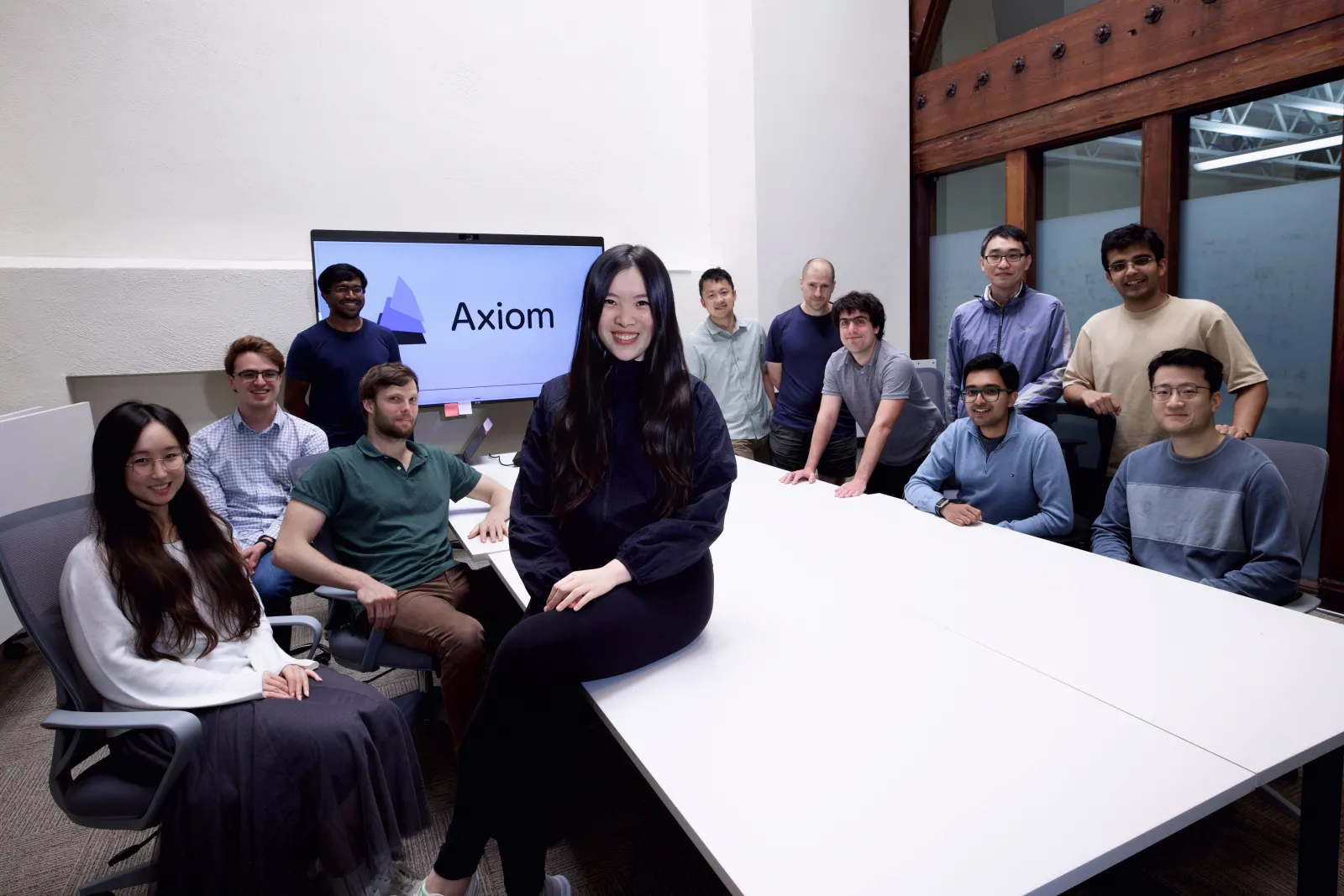
As artificial intelligence systems generate thousands of manuscripts claiming solutions to complex problems, concerns grow about the quality of machine-generated mathematics. Companies and researchers face the challenge of distinguishing accurate proofs from unverified errors, often called AI slop. Axiom Math, a $1.6B startup, is addressing this issue by building verified foundations that artificial intelligence agents can rely on for software development and scientific research.
On Wednesday, the company announced it had formally verified the Stacks Project. This massive open-source reference is widely considered one of the largest bodies of mathematics ever written by humans. Columbia mathematician Peter Woit compared the collection to the famous Bourbaki books that rebuilt mathematics from its foundations during the 20th century. Johan de Jong, a Columbia professor, started the Stacks Project in 2005, and contributors have built results ranging from college-level algebra to advanced algebraic geometry and number theory.
The Process of Formalizing Mathematics with Lean
To secure the foundation of mathematics, Axiom Math used a fleet of artificial intelligence agents to translate roughly 7,654 pages of the Stacks library into about 16 million lines of computer-checked code. Formalizing mathematics ensures the underlying logical structure is completely sound. Mathematicians rewrite proofs as code in a specialized programming language named Lean, and a proof assistant program checks the code line by line to confirm its validity.
Engineers apply similar principles of formal verification to confirm that microchip designs work properly, while researchers in France have used the technique to catch bugs in software calculating family benefits. For a collection like the Stacks Project, checking individual theorems is only part of the challenge. The definitions and theorems in Stacks are deeply interconnected, with results tracing back through a family tree of prior proofs.
Overcoming Challenges in Automated Proof Verification
Because of this complex interdependence, Axiom Math was initially unsure if the project would succeed. The team needed to maintain every logical connection across millions of lines of Lean code. As Axiom CEO Carina Hong noted, large and delicate structures rarely mix well when building consistent definitions that avoid logical paradoxes. Hong dropped out of a Stanford math Ph.D. program and founded the company in March 2025, later raising a $200 million Series A led by Menlo Ventures in March.
To accomplish the translation, the team provided their agents with a loose structure and allowed them to operate in parallel. Ashvin Swaminathan, a member of Axiom's technical staff, explained that the agents found tasks for themselves and identified parallel work streams. Axiom also trained its own models specifically for mathematics, teaching the agents a human sense of taste with the help of an in-house Lean expert before the models developed that capability independently.
Filling the Algebraic Geometry Gap
This verification effort fills a major gap in formalized mathematics. According to Swaminathan, formalized mathematics previously contained a massive black hole covering algebraic geometry. Researchers wanting to check new work in this field using Lean had very few established foundations to build upon. With the completion of this project, scholars now have a verified library of algebraic geometry results.
Axiom argues that each verified result serves as a building block for future proofs, allowing researchers to rely on checked mathematics instead of starting from scratch. UCLA mathematician and Fields Medal winner Terence Tao has summarized this principle by noting that more formalized proofs enable the creation of even more formalized proofs. Developers facing bugs and security holes in software could also benefit, as future coding increasingly relies on artificial intelligence agents.
Building Reliable Foundations for Future Artificial Intelligence
Axiom is betting that future software will require verified foundations similar to the newly checked Stacks Project. Swaminathan stated that mathematics provides a transferable domain for building these structures, allowing agents to read the code, understand it, and build new infrastructure on top of it. The Lean formalization acts as a reliable substrate for agents to expand upon safely.
Hong expects that parallel work execution will define future artificial intelligence tasks, requiring reusable bodies of knowledge to prevent the generation of unverified output. If bad engineering choices occur early in the process, agents struggle to expand their capabilities outward. Demonstrating confidence in this methodology, Hong issued an open challenge to all coding companies to pursue formalization at a comparable scale.