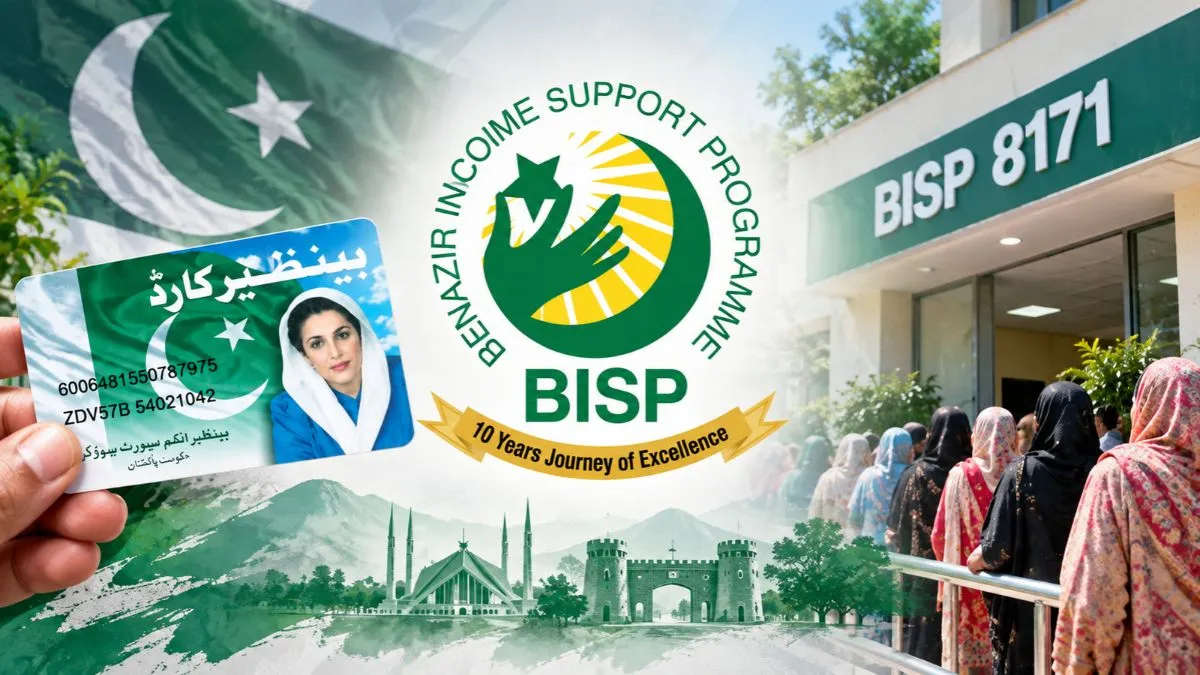
Benazir Income Support Program Expands Coverage to Never-Married Women
The Benazir Income Support Program has broadened its social safety net by approving the inclusion of never-married women aged 45 years or above. Chairperson of the Benazir Income Support Program, Senator Rubina Khalid, announced this policy shift during a press conference in Lahore. This decision marks a significant change in how the welfare initiative identifies vulnerable populations, ensuring that single older women who often lack traditional family support systems receive direct government assistance.
Eligible women in this newly created category will receive financial assistance from the program, provided they meet the prescribed criteria set by the administration. The announcement addresses a long-standing gap in social welfare coverage, as older single women frequently face severe economic hardships without a male breadwinner or immediate family dependents. By extending aid to this demographic, the organization aims to alleviate poverty among marginalized segments of the population.
Understanding the National Reach of the Welfare Program
The welfare initiative operates on a massive scale across the country, supporting millions of households. Senator Rubina Khalid provided detailed statistics during her address, noting that out of more than 10 million beneficiary families across the country, around 5 million belong to Punjab. This substantial concentration in the country's most populous province highlights the extensive administrative framework required to distribute aid effectively.
These figures clearly reflect that the Benazir Income Support Program is a national social welfare program providing support to eligible families across the country, irrespective of their political affiliation. The administration maintains strict operational guidelines to ensure that assistance reaches those in genuine need without partisan bias. Such transparency remains vital for maintaining public trust in state-run poverty alleviation programs.
Implementation of the New Digital Payment System
Modernizing the disbursement of funds has been a primary objective for the current administration. Speaking about the new digital payment system, the Chairperson said that, under the guidance of President Asif Ali Zardari and Prime Minister Shehbaz Sharif, digital mobile wallets and an interoperable payment system have been introduced to ensure convenient and transparent payments to beneficiary women.
The technological upgrade replaces older, often cumbersome methods of cash distribution that frequently led to long queues and administrative bottlenecks. Through 1LINK, six partner banks, JazzCash, Easypaisa, Habib Bank Limited, HBL Microfinance Bank, Bank of Punjab and Bank Alfalah, have been connected to this system. This multi-institution partnership creates a robust financial network that spans urban and rural areas alike.
How Beneficiaries Access Funds Through Partner Banks
The integration of multiple commercial and microfinance banks provides recipients with unprecedented flexibility in managing their finances. Women will no longer be restricted to a specific payment center and will be able to withdraw their payments from any authorized agent or retailer of the partner banks across the country. This decentralization prevents overcrowding at single distribution points and reduces travel costs for recipients living in remote regions.
Account holders can visit local retail outlets tied to the partner networks, making the collection process similar to standard mobile banking transactions. The involvement of both traditional commercial institutions and branchless banking operators ensures that infrastructure exists even in underserved districts. Beneficiaries retain control over when and where they access their funds.
SMS Alerts and Fraud Protection Measures
Security remains a paramount concern when distributing state funds to millions of citizens. She said free SIMs have been provided to beneficiary women and digital wallet accounts have been activated in their names. They will receive SMS notifications when funds are credited to their accounts and when they withdraw their payments. These text messages provide an immediate paper trail for every transaction, empowering recipients to track their balances accurately.
Women should keep their mobile phones, SIMs and bank messages secure. In case of any unauthorized deduction or fraud, they should lodge a complaint with the concerned bank or the nearest BISP office. Educating recipients on digital security helps prevent exploitation by intermediaries who previously took advantage of low financial literacy rates among vulnerable populations.
Accountability and Oversight in Fund Distribution
Preventing corruption and illegal deductions requires strict regulatory oversight and institutional cooperation. The Chairperson thanked the State Bank of Pakistan, particularly its Governor, for providing guidance and support in the development of this system. Central bank involvement ensures that financial transactions adhere to national banking regulations and consumer protection standards.
She emphasized that the payments received by beneficiary women are their rightful entitlement and that strict action would be taken against those involved in unauthorized deductions or corruption. Local agents or retailers attempting to siphon money from accounts face severe legal consequences. She added that banks would now be held accountable for any unlawful deductions, shifting the burden of compliance onto the financial institutions themselves.
Direct Engagement With Community Members
Beyond institutional reforms, the leadership continues to maintain direct contact with the public to address grievances on the ground. Later, the Chairperson BISP interacted with beneficiary women, listened to their issues and concerns, and issued directions to the concerned officers to ensure their immediate resolution. Direct feedback loops help administrative staff identify operational failures quickly and correct them before they affect larger numbers of people.
She also met women representatives of civil society and doctors and briefed them about BISP programs, particularly the Benazir Nashonuma Program. This specialized nutritional initiative works alongside financial grants to combat stunting and malnutrition among children and mothers. Engaging healthcare professionals and civil society leaders broadens community support and enhances the delivery of health-focused welfare services.





