British Geological Survey Begins Training Pakistani Experts
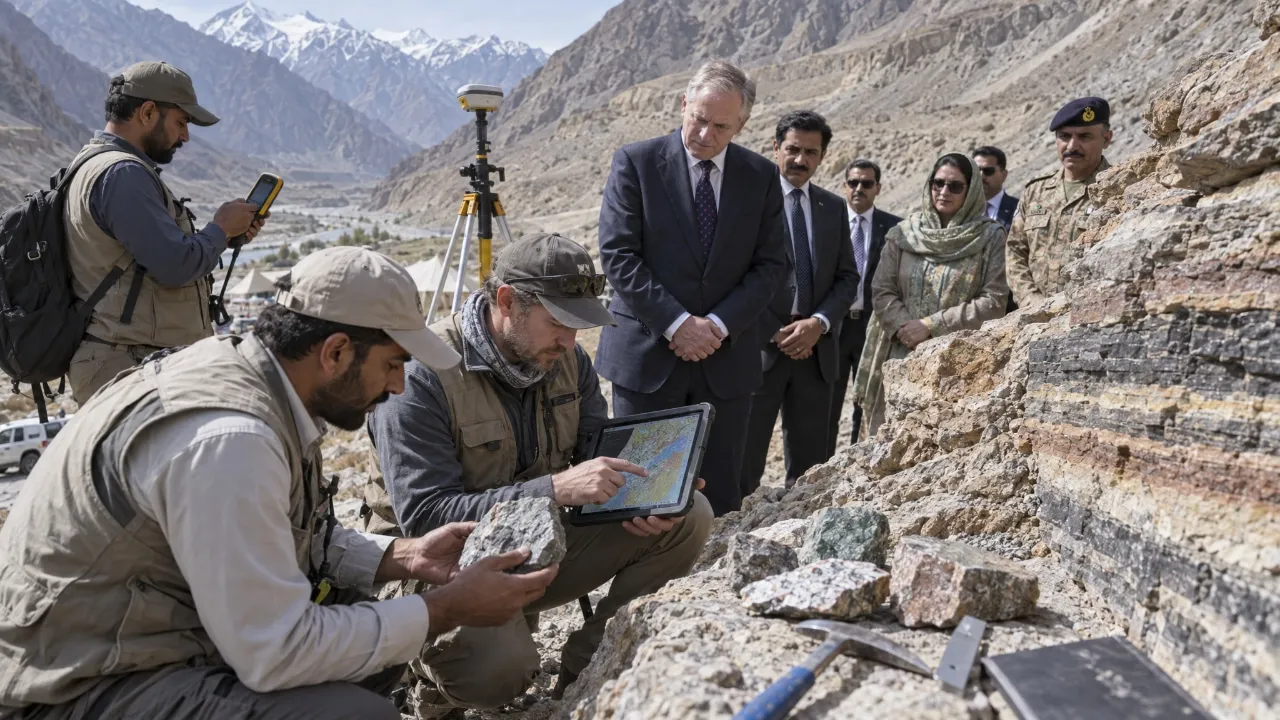
The British Geological Survey is training Pakistani experts in digital geological surveying, as part of a broader effort to strengthen Pakistan's geological data and skills for responsible mineral development. This specialized training initiative brings international standards to local institutions, focusing on modern digital techniques that replace older paper-based mapping methods. By upgrading technical capabilities, the program seeks to build a foundation for accurate resource assessment and long-term economic planning in the mining sector.
Modern geological surveying requires precise data collection, advanced spatial analysis, and robust management systems. The training initiative addresses these needs directly by introducing international best practices to local professionals. Officials from both nations view this educational exchange as a crucial step toward modernizing the institutional framework governing natural resources in the region.
Funding and Support Through the REMIT Programme
The training, funded through the UK's Revenue Mobilisation, Investment and Trade programme (REMIT), gave Geological Survey of Pakistan (GSP) staff practical skills in digital geological surveying, geochemical sampling, airborne geophysics, mapping software (Geographic Information Systems) and spectral remote sensing, using internationally recognised methods. The REMIT programme focuses on supporting economic reforms and building institutional capacity in partner countries, creating an environment favorable for sustainable trade and investment.
Participants engaged in hands-on sessions designed to replicate real-world field conditions and data processing challenges. By mastering Geographic Information Systems and spectral remote sensing, staff members can now analyze large volumes of geographical information with greater accuracy. These newly acquired skills enable the Geological Survey of Pakistan to produce high-resolution maps and comprehensive datasets that meet global standards for mineral exploration.
Draft Cooperation Agreement Between BGS and GSP
The training is part of a draft agreement drafted by the BGS and GSP to work together on geological mapping, research and data. The aim is to give Pakistan stronger evidence and skills for more responsible and transparent mineral development. This formal framework outlines areas of mutual interest, establishing protocols for joint scientific research and technical exchanges over the coming years.
British High Commissioner Jane Marriott highlighted the plan at the Pakistan Minerals Investment Forum in Islamabad. Speaking to industry leaders and government officials, she emphasized the long-term benefits of institutional partnerships in unlocking hidden economic value while maintaining strict environmental standards. The proposed agreement represents a deepening of bilateral ties in the scientific and industrial domains.
Unlocking Pakistan Mineral Potential for Economic Growth
Pakistan has significant mineral deposits, but mining contributes less than 2% of GDP. The draft agreement would provide a framework for long-term cooperation, including sharing knowledge, building skills, mapping, research, and better geological data. It also covers critical minerals and environmental sustainability. Despite vast reserves of coal, copper, gold, and various industrial minerals, the sector has historically faced challenges related to outdated data and limited technical infrastructure.
Improving the availability and quality of geological data is essential for attracting foreign direct investment and reputable mining companies. Transparent information allows regulatory bodies to manage concessions effectively and ensures that local communities understand the environmental and economic impacts of extraction projects. The focus on critical minerals aligns with global supply chain demands for materials used in green technologies and advanced manufacturing.
Perspectives on Sustainable Mineral Development
British High Commissioner Jane Marriott said: "Pakistan has extraordinary mineral potential. Turning that potential into sustainable jobs for the local community, exports, and investment requires credible geological data, strong institutions, and responsible, environmentally sustainable, and transparent supply chains." Her remarks underline the connection between rigorous scientific data and ethical industrial practices.
Industry observers note that modernizing the Geological Survey of Pakistan is a prerequisite for reforming the entire mining sector. As the global demand for minerals continues to shift toward sustainable sources, countries with well-mapped reserves and transparent regulatory frameworks will attract the most reliable investors. The ongoing collaboration between British and Pakistani institutions sets a constructive precedent for future bilateral resource management initiatives.





