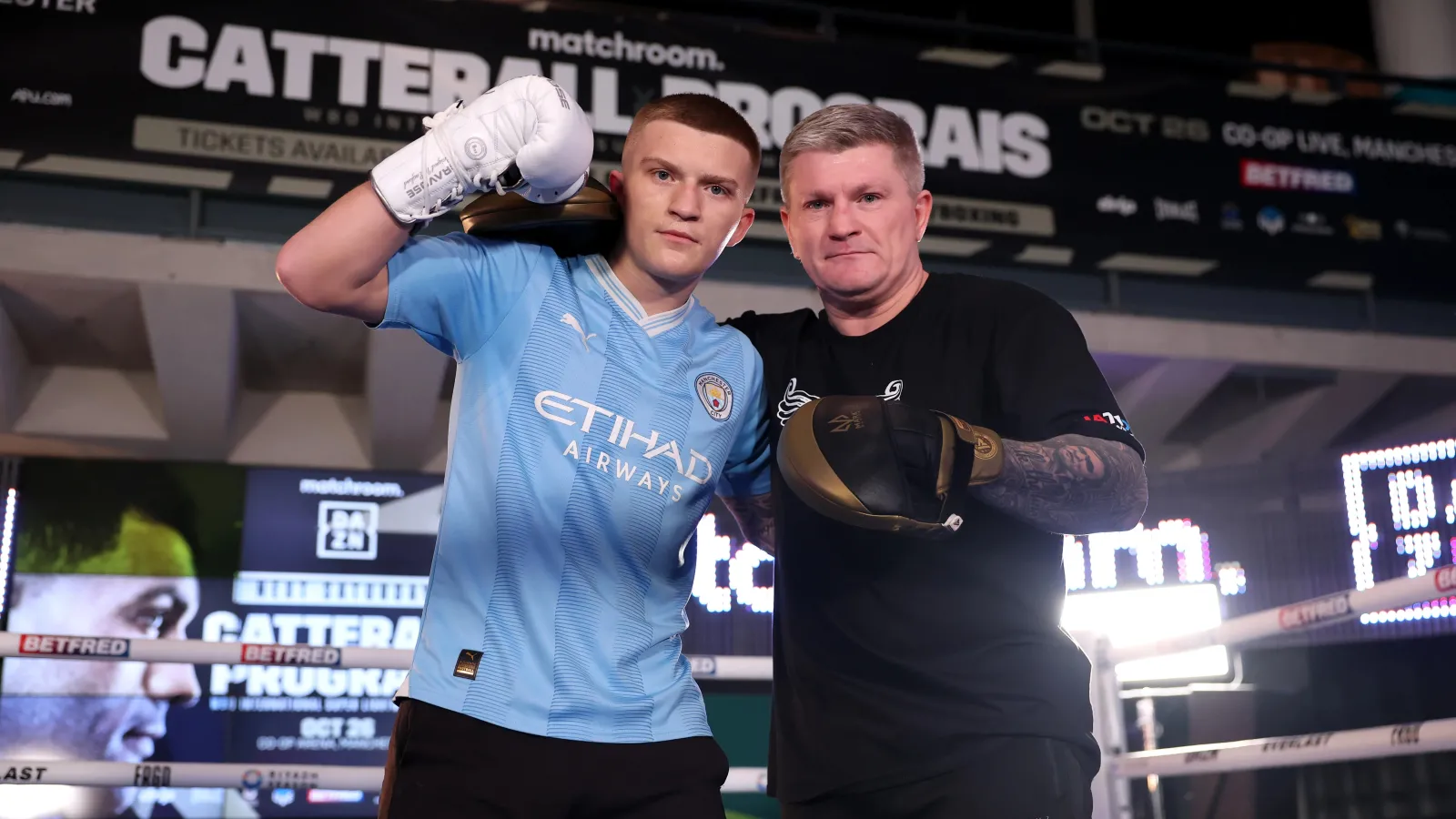
Campbell Hatton, the twenty-five-year-old son of British boxing icon Ricky Hatton, has opened up about the heavy burden of guilt he carries following the sudden death of his father. Former world champion boxer Ricky was found dead at his home in Hyde, Greater Manchester, on September 14 2025 at the age of forty-six, though an inquest later ruled it was unclear if he intended to take his own life. In a candid interview, Campbell revealed he was not around to help his struggling father during his final days and missed precious moments due to his own severe battles with cocaine and alcohol addiction.
The younger Hatton admitted that his life was completely out of control at the time of the tragedy, to the extent that he was close to ending his own life. Having now achieved twelve months of sobriety, Campbell is speaking out to shed light on the realities of addiction and male mental health struggles. His honest admissions provide a raw look at how substance abuse tears families apart and how the loss of a parent became an unexpected catalyst for his own survival and recovery.
Campbell Hatton Opens Up About Guilt and Addiction Struggles
Speaking to the media, Campbell shared the agonizing reality of where he was when the news of his father passing broke. He explained that he was on the missing list when his mother learned of Ricky passing away, and family members initially did not know where to find him. In the immediate aftermath of the discovery, those close to the family feared for a moment that it was Campbell himself who had died.
Campbell stated that he still carries a significant amount of guilt because he was absent when the tragedy occurred. While acknowledging that his presence might not have completely changed the outcome, he laments the weeks and days of his life that he lost to substance abuse, time he could have spent with his father. He emphasized that these are missed opportunities and lost moments that an individual can never take back once addiction takes hold.
Before achieving his current milestone of twelve months clean, Campbell experienced a period of intense personal turmoil. His addiction led to massive debt, a complete breakdown in communication with his relatives, and prolonged periods where he did not see his eight-year-old daughter, Lyla, for months at a time. He has previously admitted that he had no thought for the future during the peak of his addiction and that it remains a miracle he survived.
The Nightmarish Spiral of Substance Abuse and Benidorm Psychosis
The depths of Campbell,s addiction reached a terrifying peak during a trip to Benidorm last year, where he traveled to watch his beloved Manchester City play in a European fixture. During the trip, he suffered a drug-induced psychosis that severely impaired his perception of reality. Believing that he was being actively chased, he risked his life by climbing a steep cliff in a desperate attempt to escape his imagined pursuers.
The terrifying ordeal abroad did not immediately halt his downward spiral, but a subsequent incident upon his return to the United Kingdom provided the ultimate wake-up call. A friend discovered him sleeping inside his car, stranded and vulnerable, which finally forced him to confront the severity of his condition. The combination of financial ruin, isolation from his family, and terrifying hallucinations pushed him to the brink of self-destruction, mirroring previous suicide attempts.
Campbell eventually retired from professional boxing after suffering back-to-back defeats to James Flint, which left him feeling that he had completely lost his love for the sport. Following his retirement from traditional professional bouts, his drinking and drug consumption escalated further. However, in June of this year, he announced he was reversing his retirement and signed up with KSI,s Misfits Boxing, which stages events featuring influencers and athletes from various combat sports, alongside his work as a solar panel installer.
Turning Point and Partnering to Raise Awareness for Male Suicide
In a surprising and poignant twist, Campbell confessed that his father,s death actually saved his life by acting as the definitive turning point to rebuild his existence. Rather than letting the tragedy pull him further into the abyss, the shock of the loss forced him to confront his demons and achieve sobriety. He has since channeled his experiences into advocacy, partnering with comedian Daniel O,Reilly, also known as Dapper Laughs, to raise awareness about male suicide.
This collaboration includes supporting the new film Sessions, which explores the dark side of United Kingdom sesh culture and the mental health crises tied to it. Campbell,s personal life has also seen new developments as he went public with his relationship with twenty-two-year-old Brooke Heaton in January. Brooke is the daughter of Simon Heaton, who is a long-time friend of the late Ricky Hatton.
Remembering Ricky Hatton: A Legendary Boxing Career
Ricky Hatton remains one of Britain,s most beloved sporting figures, widely regarded as one of the country,s greatest ever fighters. Known universally by his famous moniker, The Hitman, he captured world titles at light-welterweight and welterweight during a glittering career, establishing himself as a two-weight world champion. He won forty-five of his forty-eight professional fights, thrilling fans with his relentless, all-action style inside the ring and his grounded, approachable personality outside of it.
Throughout his career, Hatton shared the squared circle with elite fighters of his generation, including Floyd Mayweather and Manny Pacquiao, while his loyal army of supporters traveled across the globe to watch him compete. Key victories cemented his legacy in British boxing history. In June 2005, he faced Russian-born Australian Kostya Tszyu, who was ranked directly behind Floyd Mayweather in the pound-for-pound rankings when he traveled to Manchester. Hatton pulled off a career-best win, stopping Tszyu in the eleventh round of a brutal war to become the light-welterweight world champion.
Earlier in his career, in June 2002, Hatton faced Eamonn Magee and suffered a knockdown that made defeat look imminent. He rose to his feet, rallied over twelve rounds, and secured a victory that showcased his trademark grit. In October 2000, he overcame a nasty cut to edge out a points win against Jon Thaxton, capturing the British light-welterweight title. Another iconic night occurred in May 2006 against veteran American Luis Collazo, where Hatton dropped his opponent in the opening seconds and survived a gruelling twelve-round test to earn a super-fight against Floyd Mayweather. In November 2008, following a split with long-time trainer Billy Graham and training under Floyd Mayweather Senior, Hatton delivered a dominant display to defeat Paulie Malignaggi.
The Mental Health Crisis and Support Available in the UK
The tragedy surrounding the Hatton family highlights a wider, devastating crisis across the nation. In the United Kingdom, a life is lost to suicide every ninety minutes. The issue touches every corner of society, affecting individuals regardless of employment status or background, from builders and doctors to reality television stars and professional athletes. Suicide remains the single biggest killer of people under the age of thirty-five, surpassing both cancer and car crashes in mortality rates among young adults.
Statistical data shows that men are three times more likely to take their own lives than women, yet the subject often remains a heavily guarded taboo. Experts warn that unless society actively speaks about mental health and breaks the silence, the deadly trend will continue unchecked. For individuals struggling with similar mental health battles or suicidal thoughts, several organizations provide confidential support and immediate assistance across the country.