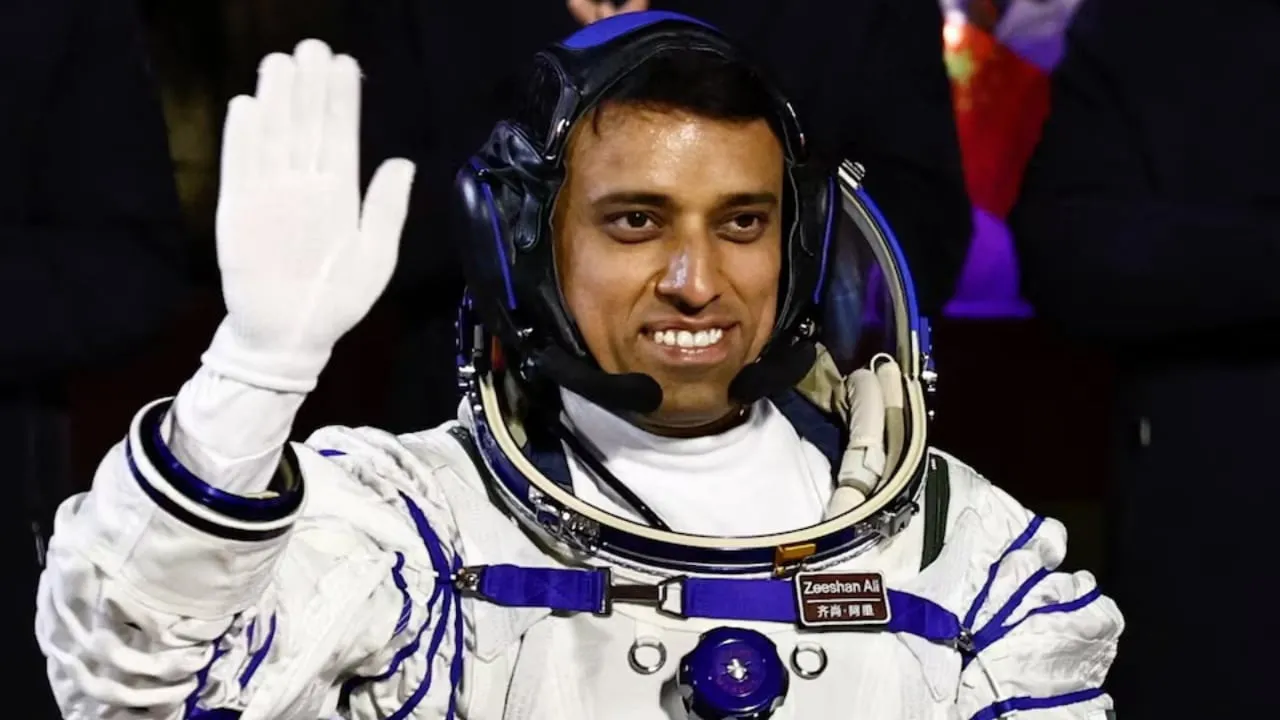
Wing Commander Muhammad Zeeshan Ali, Pakistan's first orbital astronaut, is scheduled to return to Earth at around 2:00 AM on Monday, November 30, 2026, after completing his historic mission aboard China's Tiangong Space Station.
According to SUPARCO's official mission dashboard, Ali will land in the early hours of Monday. He is expected to begin his return journey at 9:00 PM on Sunday. Both timings are in Pakistan Time (PKT). Ali will return aboard China's Shenzhou-23 spacecraft alongside Chinese astronauts Zhang Zhiyuan and Li Jiaying.
Why the Return Matters for Pakistan and the Region
The safe landing of Ali closes the first human spaceflight chapter for Pakistan, a programme that began with the country's 1990s satellite ambitions and evolved into a collaborative effort with the China Manned Space Agency (CMSA). The mission demonstrates Pakistan's ability to train astronauts, integrate with an international space station, and conduct micro-gravity research that can benefit agriculture, biotechnology and materials science back home.
For the broader South Asian region, the flight signals a growing diversification of space partners beyond the traditional Russian and American routes. It also offers a template for other emerging space nations that seek to leverage Chinese orbital platforms while retaining national scientific ownership.
Background: Pakistan's Space Journey to Human Flight
Pakistan's space agency, the Space and Upper Atmosphere Research Commission (SUPARCO), was founded in 1961 with a focus on atmospheric studies and satellite development. The first indigenous satellite, Badr-1, was launched in 1990, followed by a series of communication and remote-sensing satellites that built the nation's capability in orbital technology.
In 2019, SUPARCO signed a memorandum of understanding with the China National Space Administration (CNSA) to cooperate on human spaceflight training. The agreement paved the way for a joint selection process, rigorous physical and scientific preparation, and the eventual assignment of Wing Commander Zeeshan Ali to the Shenzhou-23 mission.
The selection process screened over 300 candidates from the Pakistan Air Force, Pakistan Navy and civilian scientific community. Ali, a decorated pilot with more than 2,500 flight hours, emerged as the top candidate due to his technical expertise, physical resilience and academic background in aerospace engineering.
What the Tiangong Mission Involved
Ali launched aboard Shenzhou-23 on November 20, 2026, and docked with the Tiangong Space Station two days later. The station, operated by CMSA, consists of a core module and two laboratory modules that host a rotating crew of international partners.
During his five-day stay, Ali participated in four scientific research projects:
- Biotechnology: Cultivation of genetically modified yeast strains to assess protein yield in micro-gravity.
- Agriculture: Growth experiments with wheat seedlings to study root development without Earth's gravitational pull.
- Advanced Materials: Synthesis of carbon-nanotube composites for lightweight structural applications.
- Photosynthetic Microorganisms: An experiment involving photosynthetic microorganisms that will be returned for detailed analysis.
All experiments were designed to generate data that can be applied to food security, medical production and aerospace engineering in Pakistan.
Landing Preparations and Recovery Operations
The China Manned Space Agency (CMSA) confirmed that the returning astronauts have completed their scheduled tasks, while the Shenzhou-23 and Shenzhou-24 crews concluded their formal handover on Saturday. Chinese authorities are finalizing recovery arrangements at the Dongfeng landing site in Inner Mongolia, where the spacecraft is expected to land.
Recovery teams include parachute specialists, medical personnel and a ground crew equipped with mobile command units. The site was chosen for its flat terrain, low population density and existing infrastructure that supports rapid medical assessment and transport.
Upon touchdown, Ali, Zhang Zhiyuan and Li Jiaying will be escorted to a nearby medical facility for a standard post-flight health check, which includes cardiovascular monitoring, bone density scans and vestibular function tests.
Implications for Future Pakistani Space Missions
Ali's successful flight and upcoming return are expected to influence several upcoming SUPARCO projects. The agency has outlined a roadmap that includes:
- Development of a national astronaut training centre in Karachi, modeled after China's Astronaut Training Center.
- Participation in the CMSA's future Tiangong-based experiments, focusing on climate-resilient crops.
- Launch of a small-satellite constellation for Earth observation, leveraging data collected during Ali's mission.
Funding for these initiatives is anticipated to come from a combination of federal budget allocations, private sector partnerships and continued cooperation with China.
What Happens Next: Timeline After Landing
After the 2:00 AM landing on November 30, 2026, the following steps are planned:
- 09:00 AM PKT - Initial de-briefing with CMSA officials at the Dongfeng site.
- 12:00 PM PKT - Transfer of Ali and his Chinese crewmates to the nearest hospital for medical evaluation.
- 02:00 PM PKT - Arrival in Islamabad, where Ali will be greeted by senior government officials, SUPARCO leadership and media representatives.
- 04:00 PM PKT - Press conference hosted by the Ministry of Science and Technology to present preliminary findings from the four experiments.
- Next week - Detailed scientific reports will be submitted to peer-reviewed journals, and biological samples will be distributed to Pakistani research institutes.
There is no indication of any delay or technical issue; all agencies have reported that the mission proceeded as planned.
Practical Takeaways for the Public
For Pakistani citizens, the mission underscores the tangible benefits of space research. The agricultural experiments could lead to higher-yield wheat varieties, while biotechnology work may accelerate the production of vaccines and enzymes. The advanced materials study may eventually result in lighter, stronger components for local industry.
Students interested in STEM fields can look forward to new scholarship programmes announced by SUPARCO, aimed at nurturing the next generation of engineers, scientists and potential astronauts.
Finally, the mission's success may encourage private investors to explore space-related ventures, ranging from satellite services to launch-vehicle development.