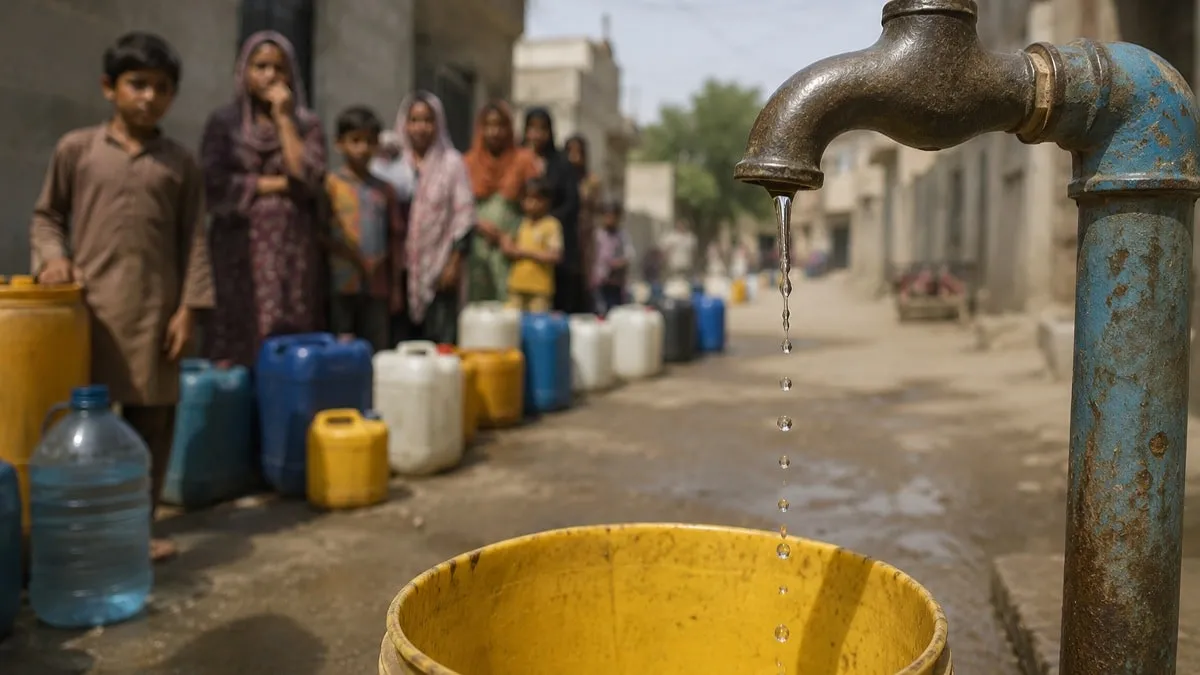
Sindh Chief Minister Orders Action on Karachi Water Shortage
Sindh Chief Minister Syed Murad Ali Shah has told provincial authorities to stop treating Karachi's water crisis as an act of nature and start treating it as a leakage problem with a fixable price tag. Chairing a meeting to review water availability, the Chief Minister directed officials to prevent water wastage and improve irrigation efficiency, shifting the strategy from temporary crisis management to fixing actual leaks in the supply system. The city of Karachi has faced chronic water supply challenges for decades, affecting millions of residents across various districts who routinely experience dry taps or low pressure.
The centerpiece of the push is the K.B. Feeder lining and K-IV project, which the Chief Minister ordered authorities to fast-track to squeeze more water out of the system Karachi already has. Murad Ali Shah told officials to assess the expected water savings from the feeder lining project and fold those numbers directly into future water planning. In other words, the administration aims to measure what the leaks are costing the city, then budget around the resulting savings rather than relying solely on sourcing new water supplies.
Coordination Between Irrigation Department and KWSC
The Chief Minister also tightened the screws on the two agencies that historically blame each other when taps run dry. He directed close coordination between the Irrigation Department and the Karachi Water and Sewerage Corporation, ordering both to monitor reserves at Keenjhar Lake and lock in arrangements before the upcoming canal and Kotri Barrage closure. For a city that routinely loses water to aging canals and unlined feeders, the directive reframes the problem entirely. It is not only about building new supply infrastructure, but about keeping what already flows from evaporating, literally and administratively, along the way.
The provincial government is betting that a leak-plugging exercise, rather than another costly groundbreaking ceremony, represents the fastest way to put water back into Karachi's taps. Officials from both agencies must now submit concrete operational plans to track losses and report progress on water conservation measures. This administrative pressure aims to eliminate the traditional bureaucratic delays that have historically hampered water management in the province.
Understanding the Karachi Water Crisis and Infrastructure
Karachi relies heavily on surface water sources located miles away from the urban center, primarily the Keenjhar Lake fed by the Indus River through canals such as the Kalri Baghar Feeder. Transporting water over these long distances exposes the supply to immense losses caused by unlined earthen canals, illegal abstractions, and infrastructure decay. The K-IV water supply project, designed to pump millions of gallons daily from Lake Keenjhar to Karachi, has faced numerous redesigns, delays, and funding hurdles over the years. By prioritizing the lining of the K.B. Feeder, the provincial administration hopes to secure immediate water volume gains without waiting for the completion of long-term mega projects.
Water distribution within the city is managed by the Karachi Water and Sewerage Corporation, while the provincial Irrigation Department controls the upstream barrages and canals. Historically, disagreements between these entities regarding water shares and distribution losses often left residents stranded without adequate supply during peak summer months. The new directives demand synchronized monitoring of water levels at Keenjhar Lake, establishing a unified response mechanism ahead of scheduled annual canal maintenance closures.
Economic and Social Impact on Urban Residents
Water scarcity in southern Sindh impacts households, commercial enterprises, and industrial sectors across the region on a daily basis. When municipal supplies fail, citizens often rely on privately operated water tankers, which impose a heavy financial burden on working-class families. Small businesses and manufacturing units also suffer production losses or face inflated operational costs due to the unreliability of piped water. Improving irrigation efficiency and stopping canal leakage directly translates to more reliable pressure in municipal distribution networks, easing the financial strain on ordinary residents.
Public health experts note that inconsistent water supply often leads to sanitation challenges, as households struggle to maintain basic hygiene standards without running taps. Addressing the physical losses in the delivery network is therefore viewed as a public health priority as well as an infrastructure challenge. Business associations in the city have frequently called for systemic reforms in water governance to ensure fair distribution and predictable industrial supply.
Next Steps for Provincial Water Authorities
Provincial authorities now face strict deadlines to assess water savings, enhance monitoring at Keenjhar Lake, and coordinate preparations for the upcoming canal and Kotri Barrage closures. The Irrigation Department and the Karachi Water and Sewerage Corporation must align their daily operations to prevent administrative loopholes that allow water to be wasted. Observers and residents will monitor whether these high-level administrative orders translate into measurable improvements at the household level when seasonal shortages peak. The government has signaled that future accountability reviews will focus specifically on documented volume savings achieved through the expedited feeder lining and repair works.





