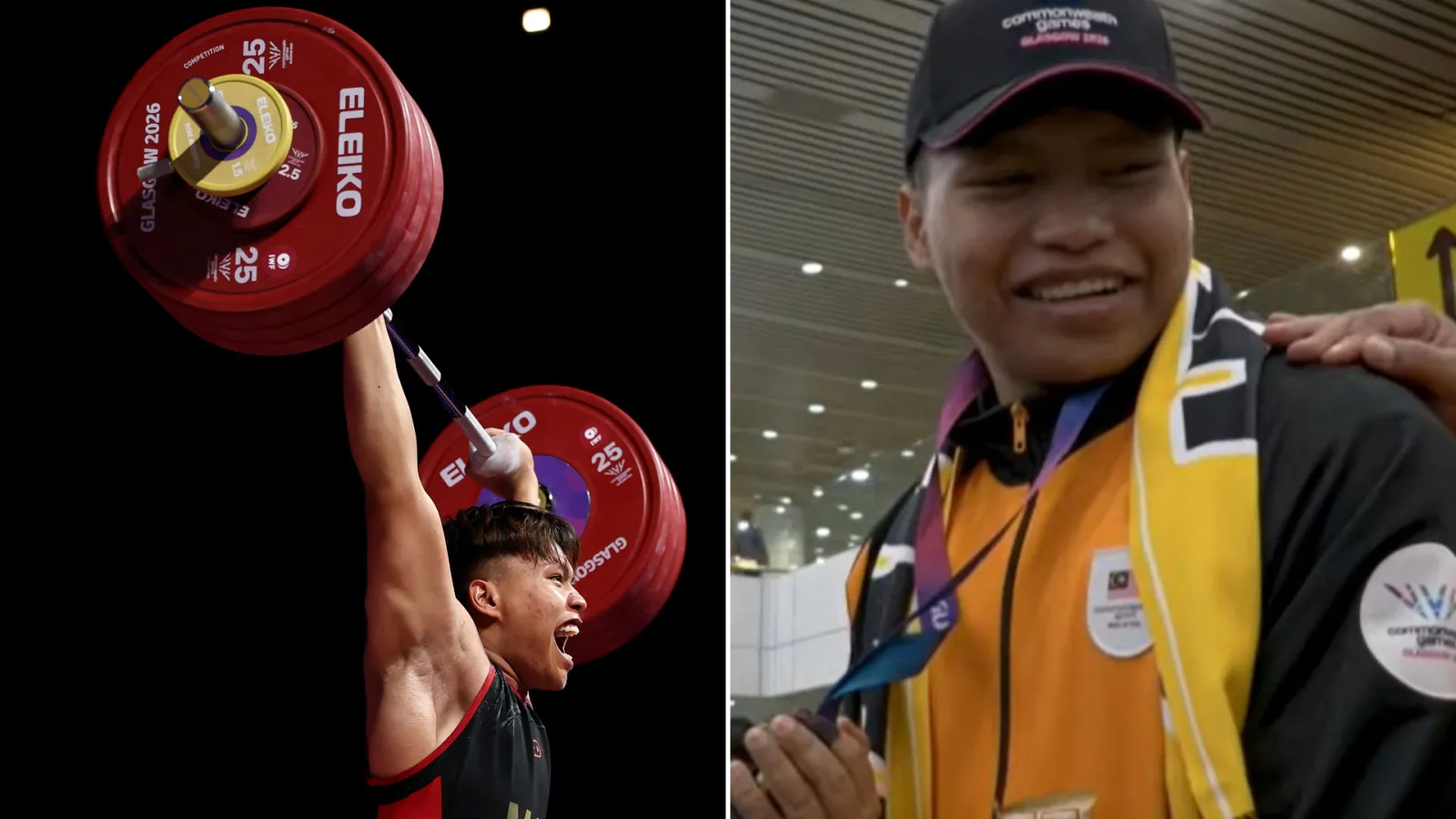
Malaysia's 22-year-old Commonwealth Games weightlifting champion Muhammad Hafizuddin Roslin had his right arm amputated after a seven-hour emergency operation at Kuala Lumpur Hospital following a motorbike crash on 16 November.
The surgery, performed on 17 November, was required because the injuries to his arm threatened his life, officials said.
What Happened on the Night of the Crash?
Hafizuddin, known to friends and fans as "Udin," was riding a motorcycle along the Sungai Besi-Ulu Kelang Elevated Expressway at about 11 pm on 16 November. He was travelling from Ampang, east of Kuala Lumpur, toward the Bukit Jalil district when the accident occurred. Police reports indicate that he lost control of the bike and was thrown onto the carriageway, sustaining multiple fractures to his right arm, severe vascular damage and a minor head injury.
Paramedics arrived within minutes and immobilised the limb before transporting him to Kuala Lumpur Hospital, the nation's largest public teaching hospital and a Level-1 trauma centre. On arrival, doctors placed him in an induced coma to stabilise his condition and to allow a thorough assessment of the injuries.
Why Was Amputation Necessary?
The Perlis State Sports Council, which represents the northern state where Hafizuddin was born, reported that the blood vessels supplying the right arm were no longer functioning properly. Imaging studies showed that the brachial artery and its major branches were torn beyond repair, and that prolonged loss of blood flow risked systemic infection and organ failure.
Surgeons attempted to re-establish circulation and repair the broken bones, but the operation extended beyond seven hours without success. The senior orthopaedic team concluded that the only way to prevent a life-threatening cascade of complications was to amputate the limb above the elbow.
Who Confirmed the News?
Ayub Rahmat, president of the Malaysian Weightlifting Federation, confirmed the outcome in a statement released on 18 November. He said, "Udin completed his surgery, which took more than seven hours, at Kuala Lumpur Hospital. Doctors tried to save his arm. However, his right arm had to be amputated above the elbow because the injuries were life-threatening."
Ayub also appealed for public prayers and moral support for Hafizuddin and his family, emphasizing that the athlete's immediate priority was medical recovery.
Background: Hafizuddin's Rise to Commonwealth Glory
Hafizuddin burst onto the international stage at the 2026 Commonwealth Games in Glasgow, Scotland. Competing in the men's 88 kg class, he lifted a combined total of 345 kg - a 162 kg snatch that set both a new Malaysian national record and a Commonwealth Games record for the category. The gold medal placed him among Malaysia's most successful weightlifters and earned him widespread acclaim.
Before the Games, Hafizuddin had already claimed multiple national titles and represented Malaysia at the Asian Championships, where he posted podium finishes. His technical proficiency, particularly in the snatch, was praised by coaches as a model for younger lifters.
Impact on Malaysian Weightlifting and Sports Community
The loss of Hafizuddin's right arm effectively ends his competitive lifting career, a setback not only for the athlete but also for the national programme that had counted on his continued success. The Malaysian Weightlifting Federation (MWF) has indicated that Hafizuddin could transition to a coaching or mentorship role once his health permits, leveraging his experience to develop the next generation of lifters.
The National Sports Council (NSC) announced that it will provide comprehensive support for his medical treatment, rehabilitation and any future involvement in sport. The NSC's commitment includes covering hospital costs, physiotherapy, and psychological counselling for both Hafizuddin and his family.
What Are the Next Steps for Hafizuddin's Recovery?
Medical staff expect Hafizuddin to remain in the intensive care unit for several more days to monitor for infection, manage pain and assess his overall stability. Once stable, he will be transferred to a specialised rehabilitation ward where prosthetic fitting and physiotherapy will begin.
Prosthetic technology in Malaysia has advanced, with local manufacturers capable of producing custom myoelectric arms. However, fitting a functional prosthesis for a former elite weightlifter will require a multidisciplinary team, including orthopaedic surgeons, physiatrists and occupational therapists.
The MWF has asked the public to respect the family's request for privacy and to allow official representatives to handle statements. The federation also encourages the sporting community to send messages of support, which can be relayed through the NSC's communication office.
Legal and Safety Context of Motorbike Accidents in Malaysia
Motorcycle travel remains a major mode of transport in Malaysia, accounting for roughly 40 % of all road-traffic fatalities each year, according to the Royal Malaysia Police. The Sungai Besi-Ulu Kelang Elevated Expressway is a high-speed corridor with a speed limit of 90 km/h for motorcycles. Safety advocates have long called for stricter enforcement of helmet laws and improved lighting on the expressway, especially during late-night hours.
While the police have not released a formal investigation report on Hafizuddin's crash, they have confirmed that the incident is under review. The outcome may influence future road-safety campaigns, particularly those targeting young athletes who often use motorcycles for commuting.
How the Public Can Help
The MWF and NSC have set up a dedicated helpline for donations to support Hafizuddin's medical expenses and rehabilitation. Contributions will be managed by the NSC's welfare fund, which has previously assisted athletes facing severe injuries.
In addition to financial aid, the federation urges the public to offer words of encouragement through official channels. Such moral support is considered vital for the mental health of athletes recovering from traumatic injuries.
Looking Ahead: The Future of Malaysian Weightlifting
Despite this tragedy, the Malaysian weightlifting community remains focused on its long-term goals. The MWF has outlined a five-year development plan that includes talent identification in schools, increased funding for international competition exposure, and the construction of a state-of-the-art training centre in Kuala Lumpur.
Hafizuddin's story is likely to become a rallying point for safety advocacy, athlete welfare and the importance of robust medical response systems. His resilience and potential future involvement in coaching could inspire a new wave of lifters who view his experience as both a cautionary tale and a source of motivation.
As the nation watches his recovery, the emphasis remains on providing the best possible medical care, honoring his achievements, and ensuring that his legacy contributes positively to Malaysian sport.