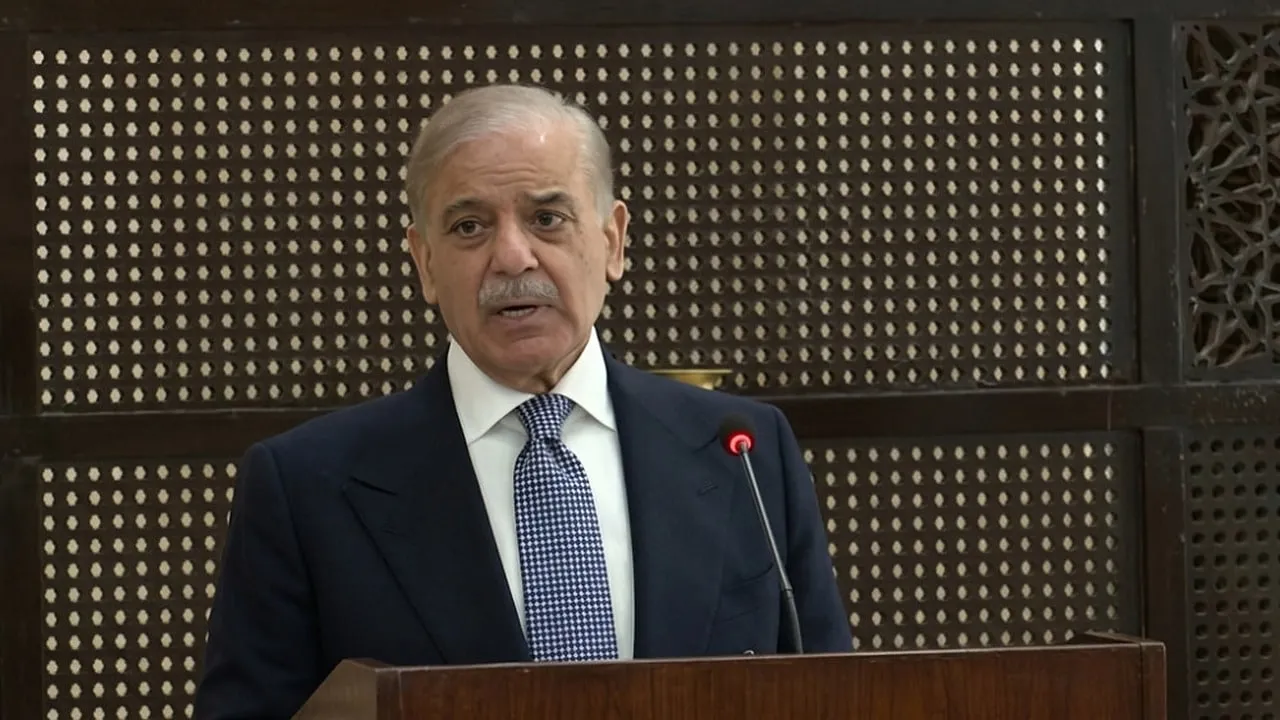
Prime Minister Shehbaz Sharif Praises Military and Political Partnership
Prime Minister Shehbaz Sharif has credited Pakistan economic recovery to what he called a productive partnership between the military and the political hierarchy, saying such cooperation had never existed before in the country history. Speaking at a ceremony of the American Business Council of Pakistan on Thursday, the Prime Minister stated that the nation would have completely transformed long ago had such a partnership existed in the past. He shared the credit with his team and Chief of Defence Forces and Chief of Army Staff Field Marshal Asim Munir.
During his address, the Prime Minister emphasized the unprecedented nature of the current cooperation between civil and military authorities. When was the last time you had struck a very productive partnership between military and political hierarchy, he asked the audience, answering that it had never happened in the history of Pakistan. This alignment has become a cornerstone of the current administration economic strategy as the government attempts to implement wide-ranging financial reforms and stabilize key markets.
Overcoming the Threat of National Default
The Prime Minister recalled that Pakistan faced a serious threat of default in 2023 and noted that the economy has remained stable despite the ongoing Gulf crisis. However, he admitted that the energy situation remains very fragile due to the fact that the country imports over 90 percent of its energy needs. This heavy reliance on foreign energy markets leaves the domestic economy exposed to external price shocks and supply chain disruptions.
Despite these vulnerabilities, the government successfully avoided the chaos seen during past financial crises. The Prime Minister pointed out that there were no long queues at fuel stations during recent crunch periods, and the administration sheltered vulnerable groups through the implementation of the Prime Minister Fuel Relief Scheme. Furthermore, the government provided Rs. 400 billion in tax breaks to exporters, manufacturers, the corporate sector, and the salaried class in the last budget, even while operating under a strict International Monetary Fund program.
Challenges and Opportunities for the Business Sector
Looking toward future industrial policy, Prime Minister Shehbaz pledged to remove administrative and bureaucratic hurdles for foreign and domestic investors. He directed sharp criticism at the domestic auto industry, stating that car manufacturers received subsidies for years with little to show for it and still resist open market competition. He argued that it is now time for the country to prioritize electric vehicles and modernize its manufacturing base.
The administration insists that Pakistan must now consolidate its recent financial gains and move firmly towards sustained export-led growth. Business leaders at the American Business Council event heard that regulatory reforms will continue as part of the broader plan to attract foreign direct investment. The combination of fiscal adjustments and strategic alignment between the political administration and military leadership forms the bedrock of the current economic recovery plan.





