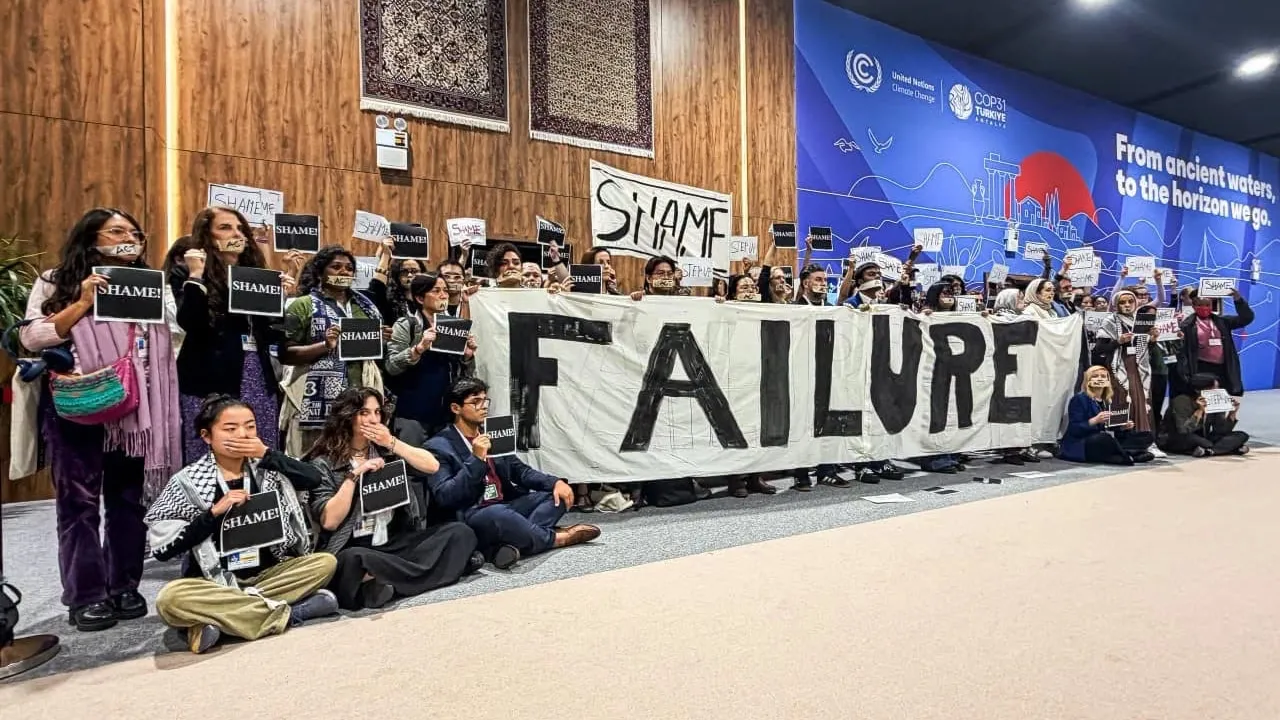
The United Nations' biggest annual climate conference ended without a final agreement on Sunday after countries failed to overcome deep divisions over fossil fuels, climate finance and how to protect vulnerable nations from rising temperatures.
The collapse of COP31 in Turkey exposed how difficult it remains for nearly 200 countries to agree on a common response to the climate crisis.
Why Fossil-Fuel Language Became the Core Dispute
The main disagreement centered on whether the final agreement should explicitly call for a transition away from fossil fuels, the biggest driver of climate change. Some countries insisted that the commitment must be included, while others threatened to reject any deal containing such language. Russia said reducing oil and gas supplies faster than demand could trigger energy shortages and higher prices, while Saudi Arabia argued that no potential climate solutions should be excluded.
The European Union refused to support an agreement that did not mention fossil fuels, saying the proposed drafts failed to address the climate emergency. Vanuatu and the Marshall Islands also criticized the proposed outcome for failing to confront the role of oil and gas, warning that weak commitments could put vulnerable communities and future generations at risk.
Negotiators could not settle on an overarching political statement, known as the cover decision. COP31 President Murat Kurum said there would be no new draft after countries failed to reach consensus, adding that negotiations would instead move forward using decisions already agreed upon. He also warned that the process could not continue without producing results.
Developing Nations' Call for Climate Finance
Developing countries voiced frustration that the summit did not deliver stronger financial support. The Philippines said climate finance was essential for reducing emissions, adapting to climate impacts, transferring technology and addressing climate-related losses and damage. Its delegation warned that targets without the money and resources to achieve them were meaningless.
Kenya criticized the proposed outcome for failing to recognize Africa's specific needs, arguing that countries responsible for a larger share of emissions must take the lead in providing financial support. The Least Developed Countries Group also said the negotiations had failed to deliver meaningful outcomes for nations most exposed to climate risks.
Global Leaders React to the Failure
United Nations Secretary-General Antonio Guterres said he was deeply disappointed that governments had failed to reach consensus, adding that there was no uncertainty in the scientific evidence about the climate crisis. China's delegation also expressed disappointment but argued that the failure should encourage countries to strengthen multilateral negotiations rather than abandon them.
The United Kingdom and Norway said the proposed agreement fell short of previous commitments and the urgency of the climate crisis. Brazil's negotiator, meanwhile, said the final outcome should have addressed climate adaptation, increased finance and the needs of vulnerable communities.
What the Collapse Means for Future Climate Diplomacy
Although the main agreement fell apart, delegates signed an electrification pledge that was endorsed by more than 90 countries. The pledge commits signatories to accelerate the shift to electric power in transport, industry and public services, but participants acknowledged that the pledge alone cannot compensate for the lack of a collective deal.
The failure highlights a pattern that has recurred at previous conferences: the tension between ambitious language on phasing out fossil fuels and the economic concerns of oil-producing nations. At COP26 in Glasgow, a similar divide over coal language led to a watered-down final text. The current deadlock suggests that without a clear, enforceable mechanism, future summits may continue to produce fragmented outcomes.
How the UN Climate Process Works
Each COP follows the United Nations Framework Convention on Climate Change (UNFCCC) rules. Nations negotiate a "cover decision" that sets the political tone for the conference and often includes language that will later be incorporated into the Paris Agreement's rulebook. The cover decision does not create legally binding obligations, but it signals the level of ambition that the global community is willing to endorse.
When consensus cannot be reached, the UN Secretariat may adopt a "facilitative decision" that records the positions of parties without requiring unanimity. This mechanism was used at COP31 after Murat Kurum announced that no new draft would be produced.
Practical Implications for Countries and Businesses
For vulnerable island nations such as Vanuatu and the Marshall Islands, the absence of a firm fossil-fuel phase-out clause means that projected sea-level rise and extreme weather events remain inadequately addressed in international policy. Without increased climate finance, developing economies may struggle to fund resilient infrastructure, renewable-energy projects and loss-and-damage compensation.
Energy-exporting countries, including Russia and Saudi Arabia, are likely to maintain current production levels for the near term, citing concerns about energy security and price stability. Corporations in the fossil-fuel sector can interpret the outcome as a signal that regulatory pressure may remain limited, at least until national policies shift.
Conversely, the electrification pledge offers a pathway for manufacturers of batteries, solar panels and electric vehicles to anticipate increased demand from the 90-plus signatories. Investors may look to align portfolios with the pledge's targets, even as broader climate policy remains uncertain.
What Comes Next for the UN Climate Agenda
The UN will convene a special session in early 2025 to review the implementation of decisions already adopted at COP31. Delegates are expected to present progress reports on the electrification pledge and on climate-finance contributions from developed nations.
Meanwhile, the UNFCCC secretariat is preparing a revised draft of the cover decision that omits explicit fossil-fuel language but includes a reference to "enhanced mitigation pathways". The draft will be circulated to parties for informal consultation before the next conference, scheduled for 2026 in Africa.
Stakeholders are advised to monitor the secretariat's forthcoming technical papers, which will outline the criteria for measuring climate-finance delivery and the methodology for tracking electrification commitments. These documents will shape the agenda for the 2025 review and influence bilateral climate-finance negotiations that are already underway.